
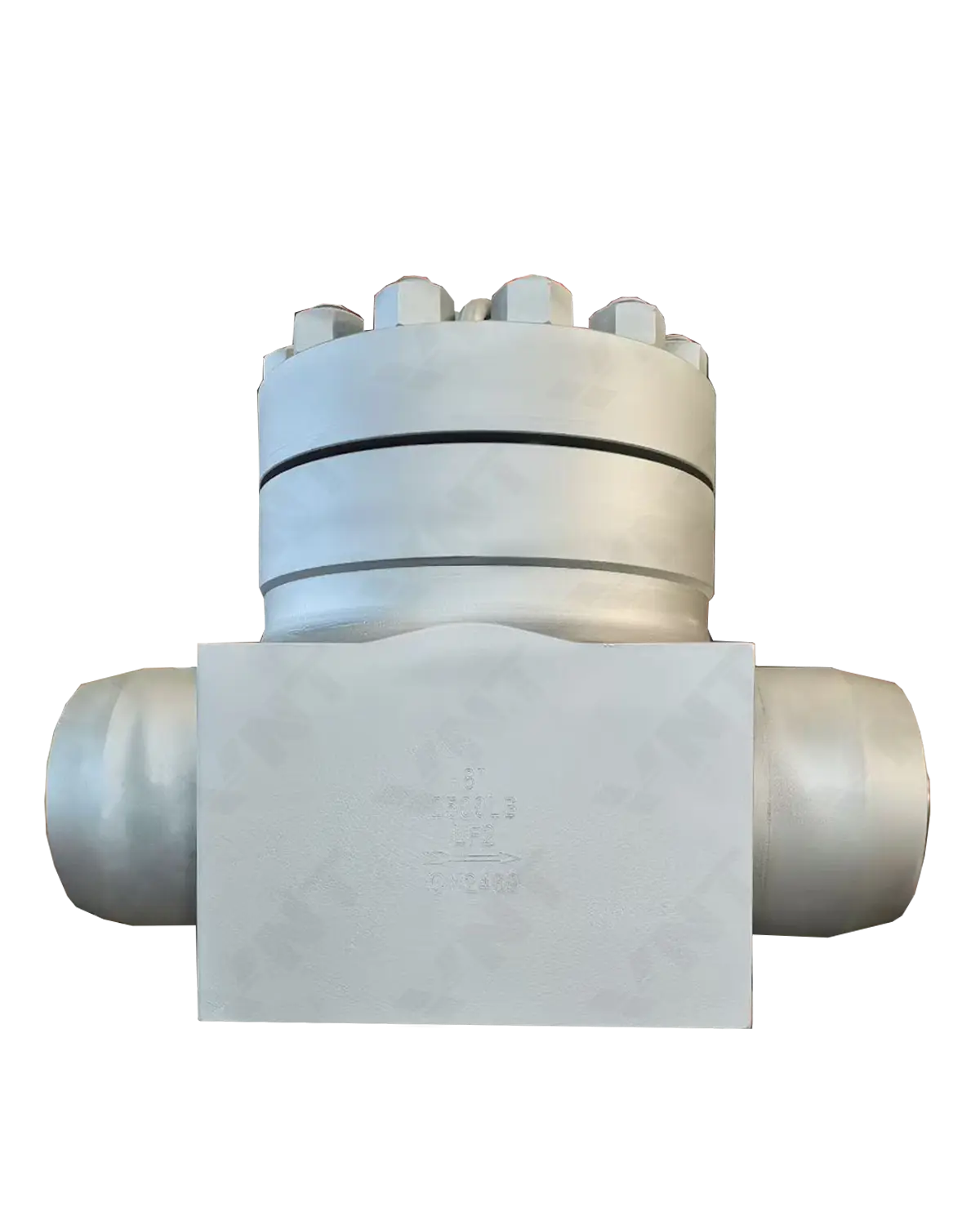
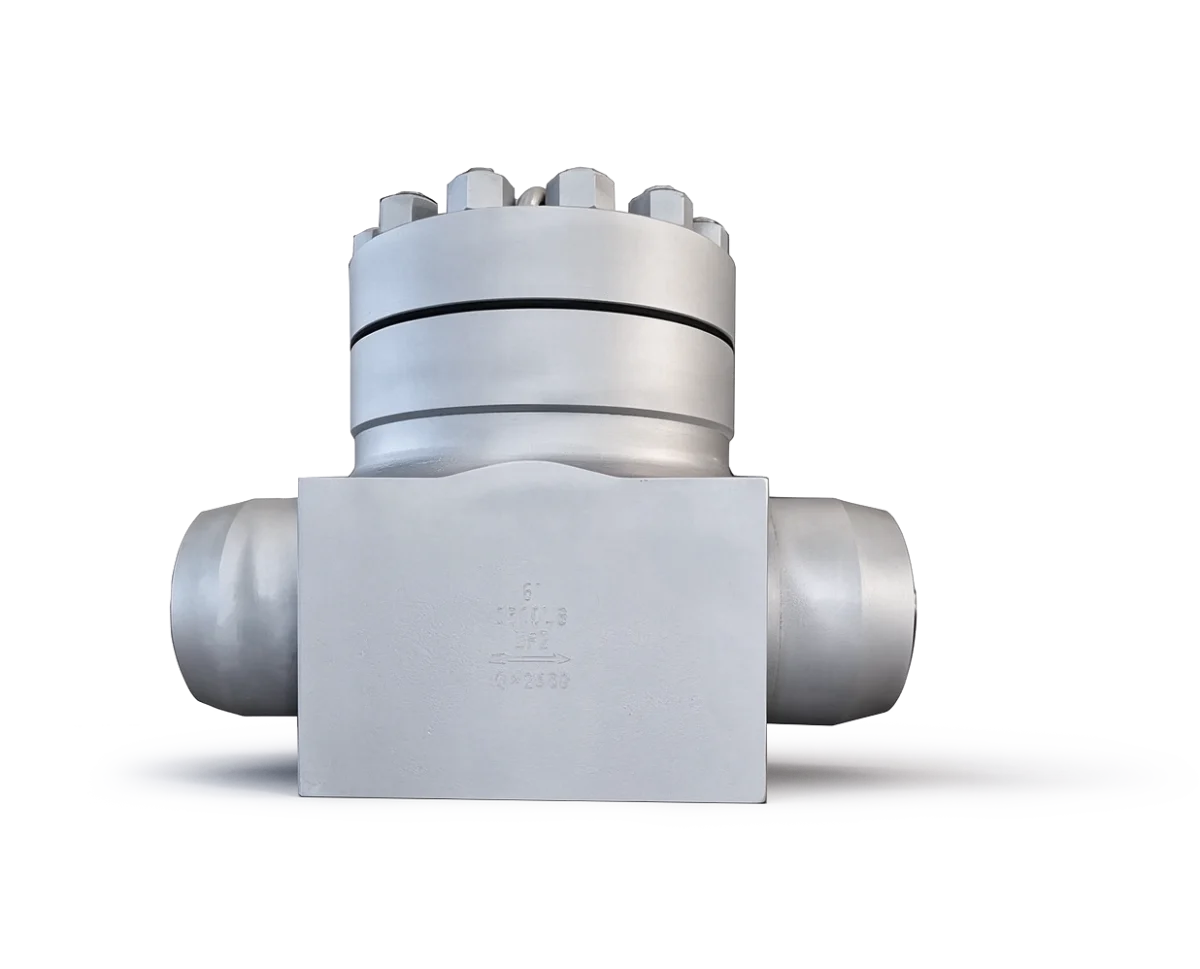
Forged Steel Bolted Bonnet Check Valve for High-Pressure Process Piping
Product Description
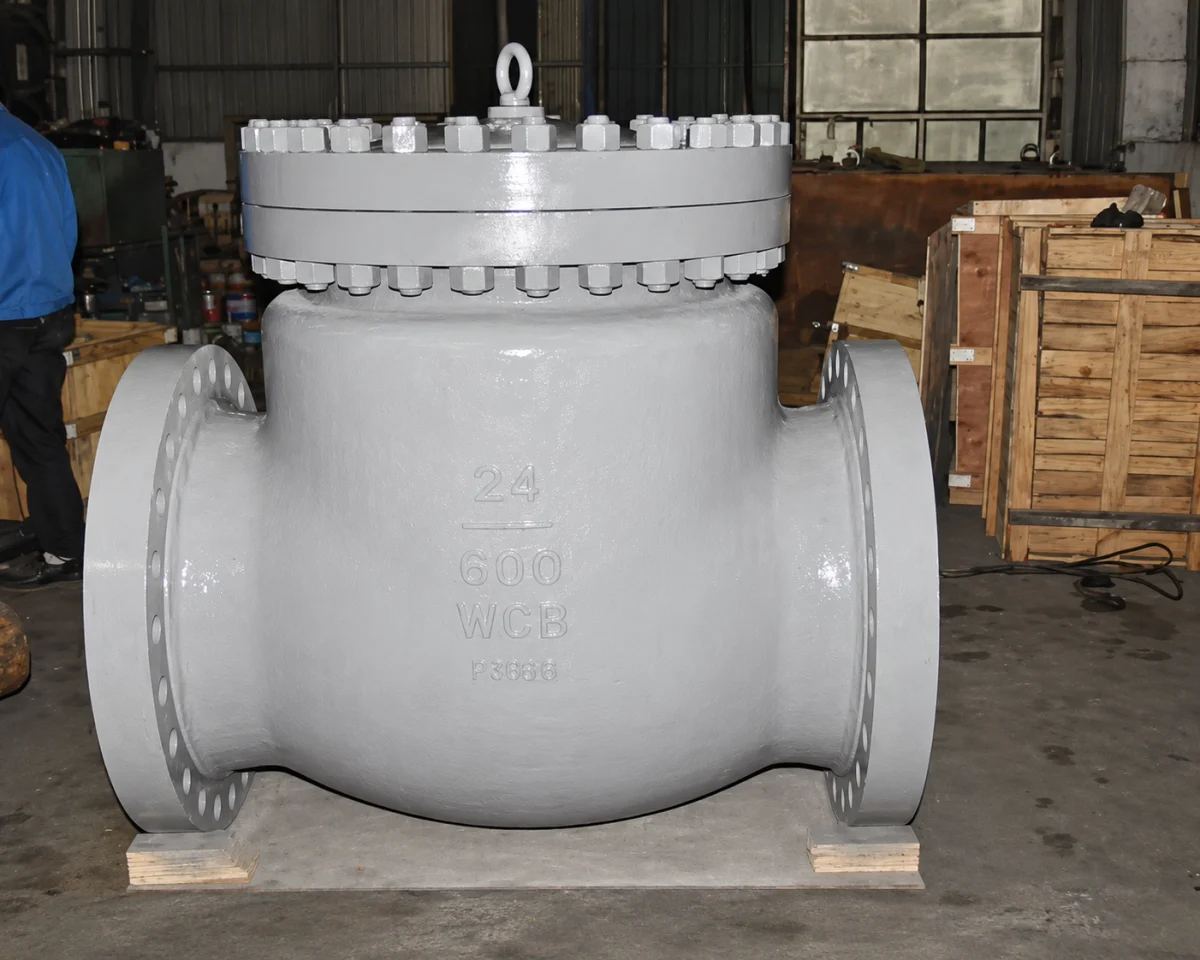
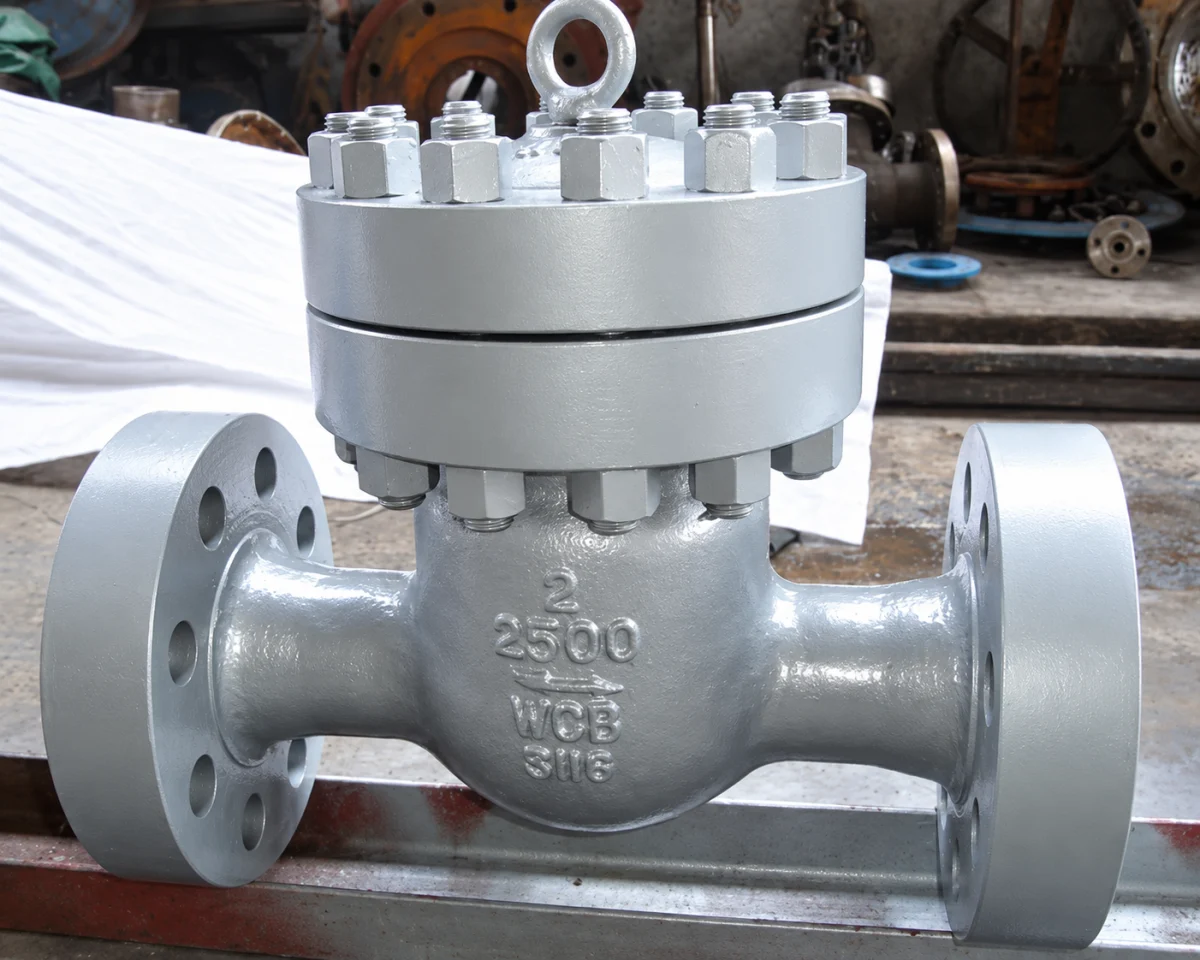
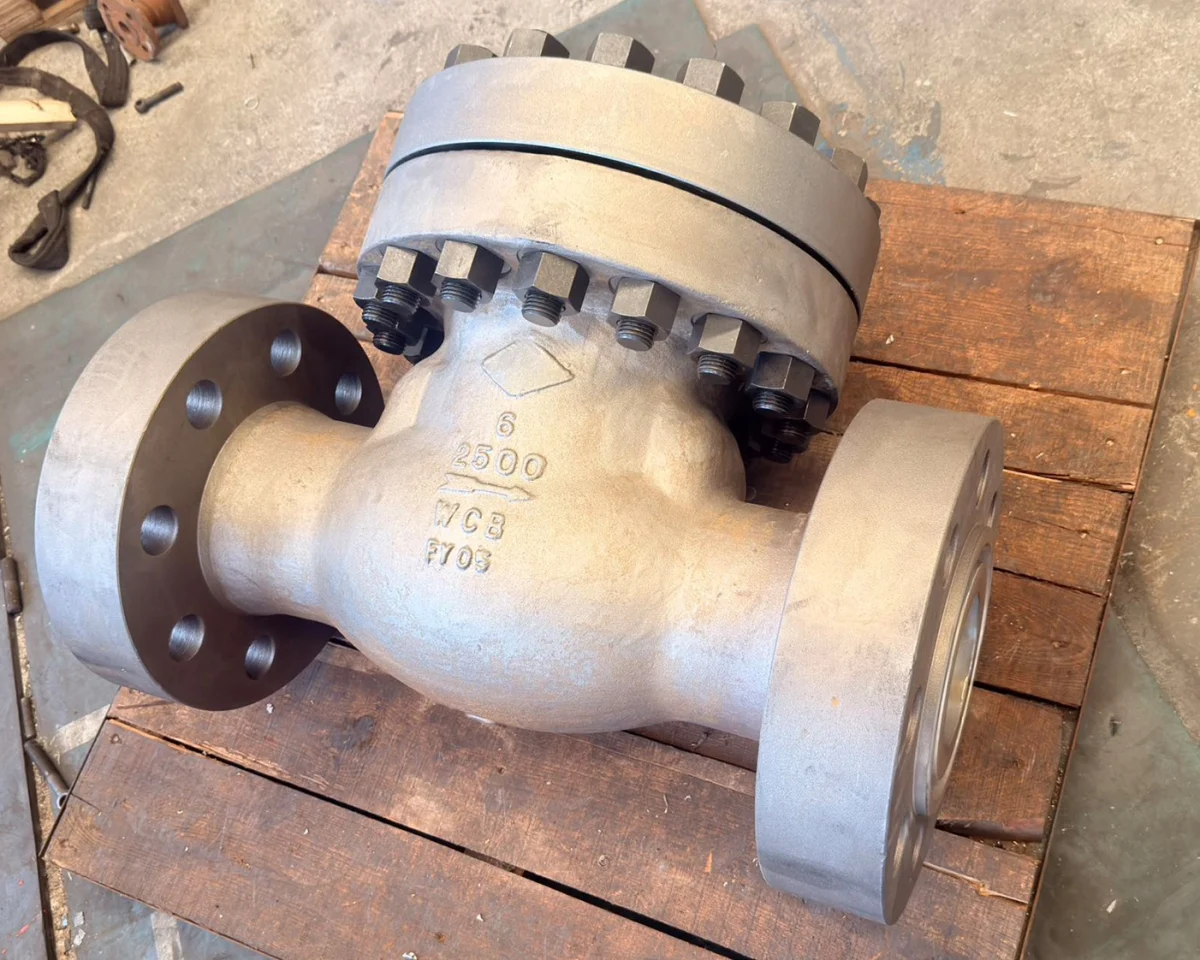
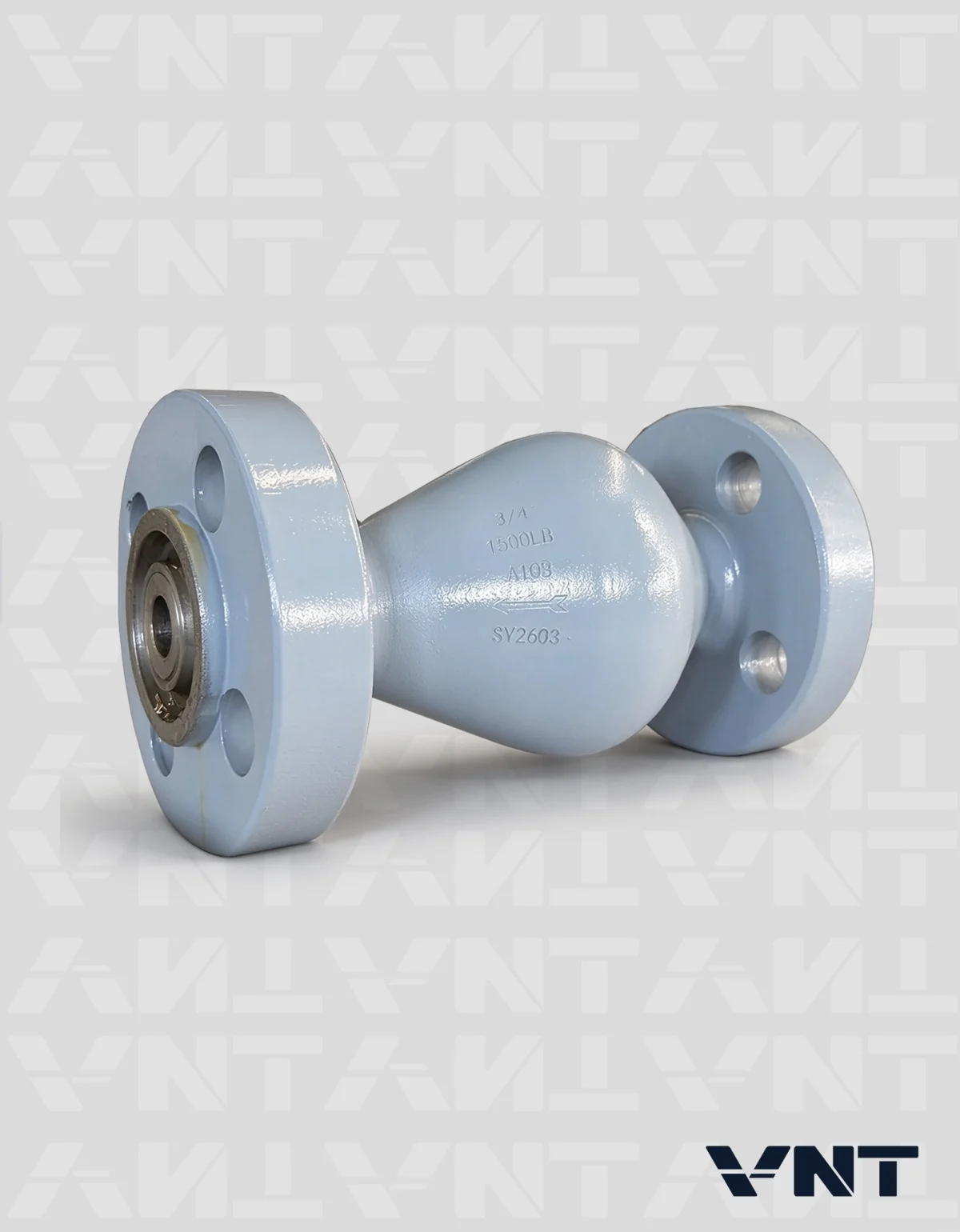
Vornet’s full-opening forged steel check valves are designed, manufactured and inspected in accordance with API 6D and ASME B16.34, with soft-seated or metal-seated configurations available.
The forged steel check valve range covers NPS 2–30, in Class 150–2500.
The full-bore, full-opening swing check valve design allows pigs to pass through the valve for pipeline maintenance.
An optional damping device controls disc closing time to help reduce water hammer damage associated with closure. The bolted bonnet check valve operates automatically to rapidly prevent reverse flow.
Key Features
- Swing-Type Design: Automatic non-return operation
- Full-Bore, Full-Opening Design: Allows pigs to pass through for pipeline maintenance
- Seat Options: Soft seats or metal seats
- Standard Seat Construction: Forged steel valves use welded-in metal seats as standard
- Optional Counterweight: Available upon request
General Information
| Size Range | 2”–30” (DN50–DN750) |
|---|---|
| Pressure Rating | Class 150–2500 (PN16–PN420) |
| Body Material | Carbon steel, stainless steel, alloy steel, duplex steel |
| Temperature Range | −46°C to +650°C |
| Operation | Automatic |
| Design Standard | ASME B16.34 |
| Face to Face Dimension | ASME B16.10 |
| Ends Connections | ASME B16.5 / ASME B16.25 |
| Test & Inspection | API 598 |
Valve Project
Case Studies
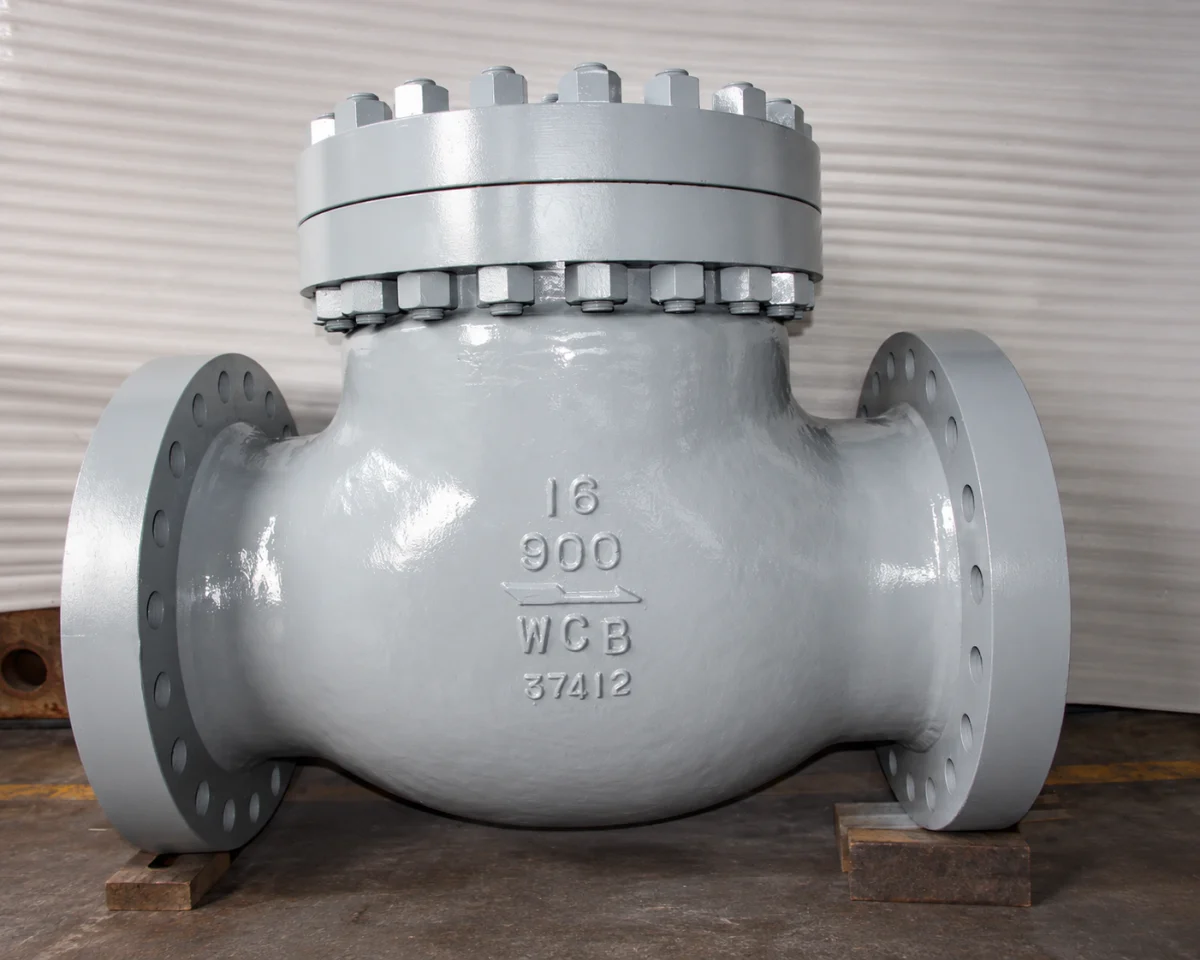
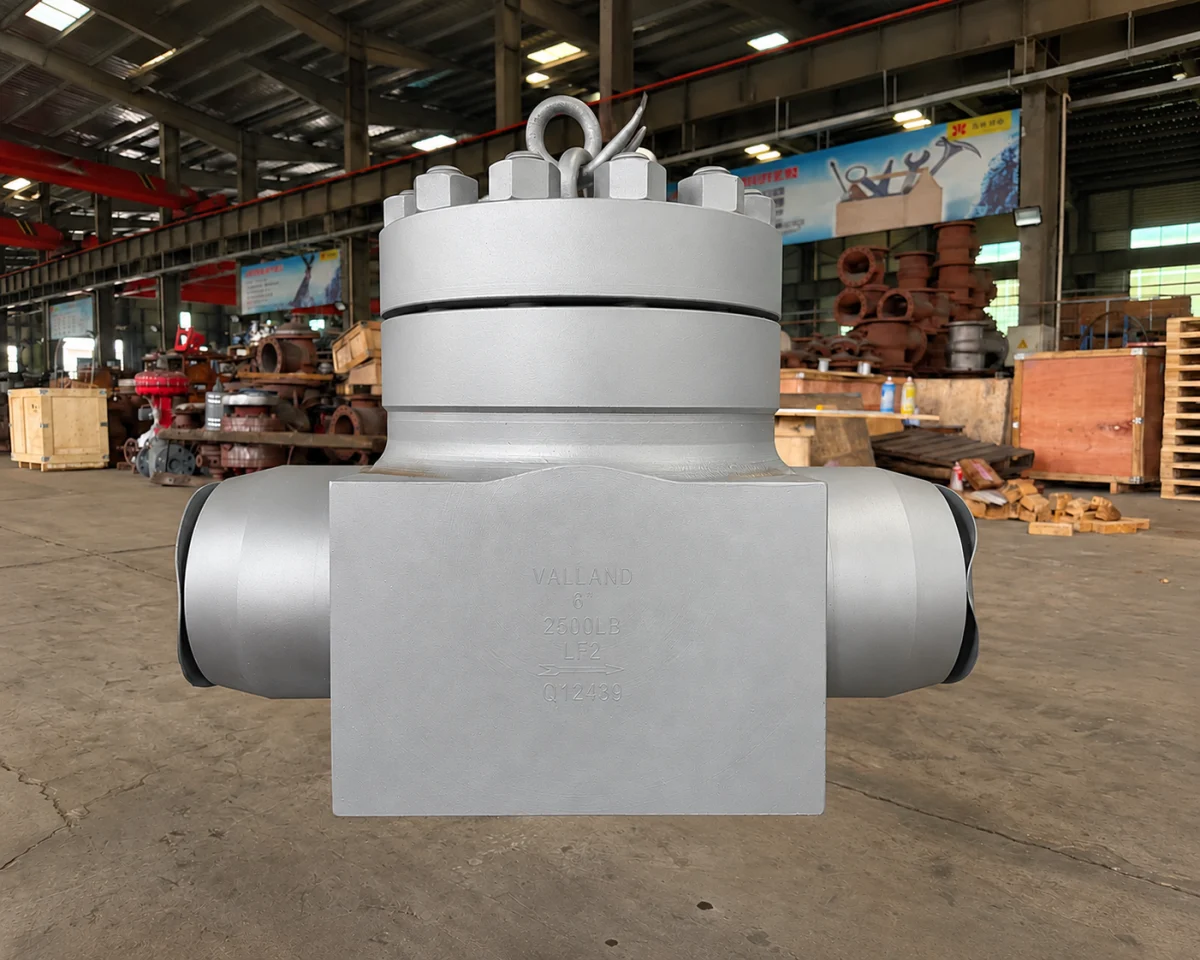
Explore selected Vornet valve project news. These case studies cover other valve configurations; project suitability must be reviewed separately.
View All Case StudiesRelated Industrial Valves
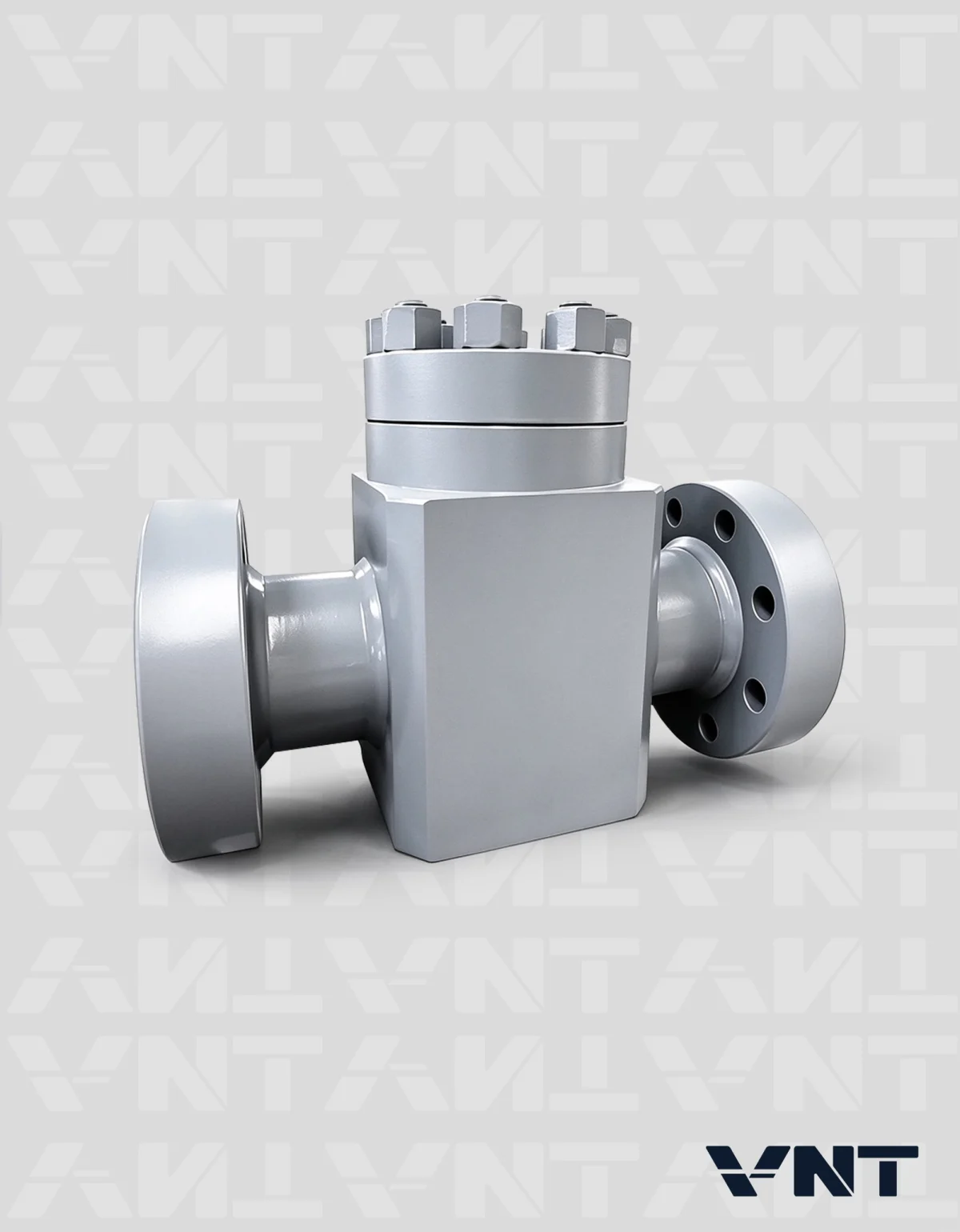
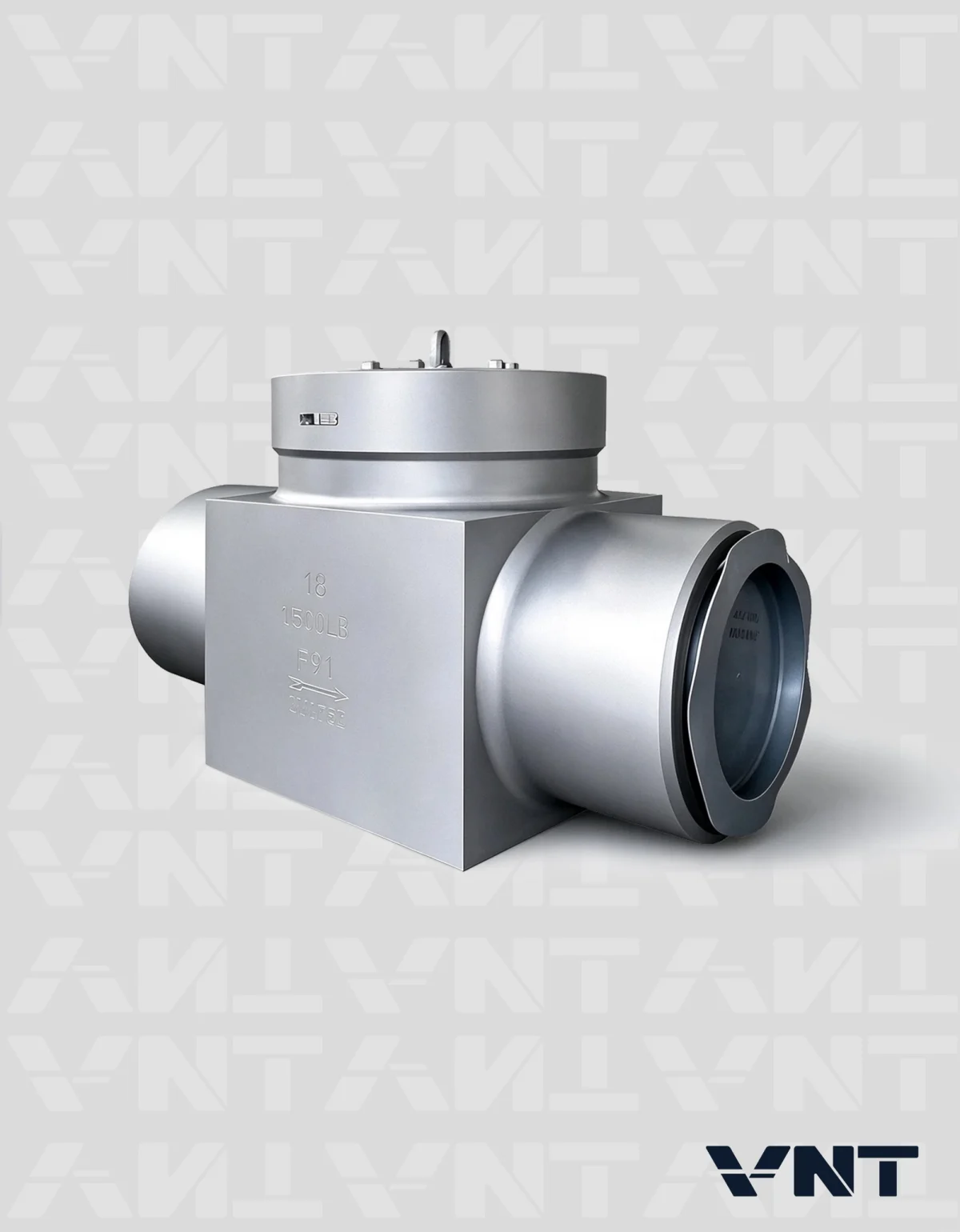
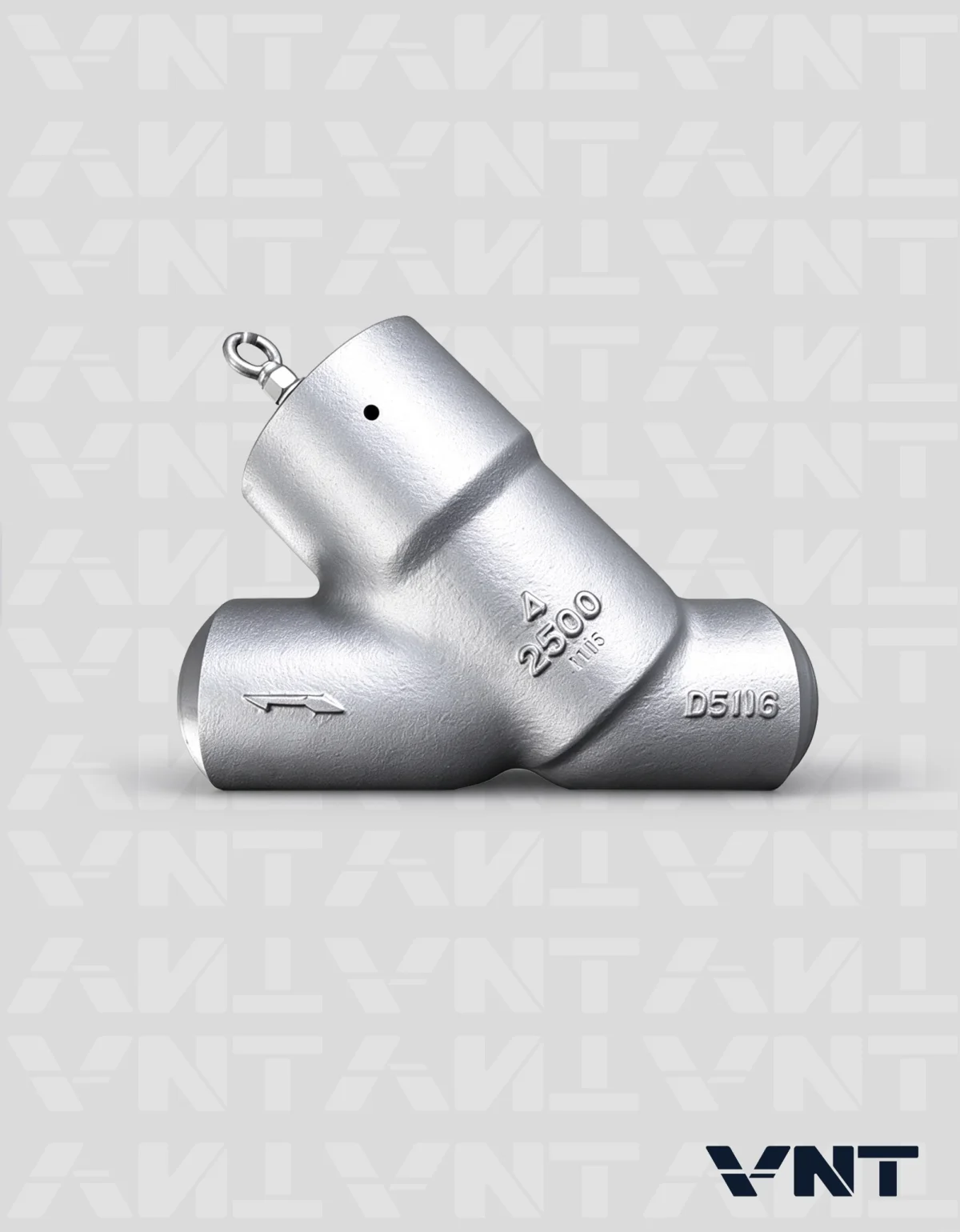
Related
Documents
Download valve catalogues and submit forged steel check valve specifications for technical review.
Explore All Downloads ↗
Is this forged steel check valve a swing type?
Yes. The confirmed internal structure is a swing-type check mechanism. The bolted bonnet, also called a bolted cover, refers to the pressure-retaining body-to-bonnet joint.
Which installation orientation is permitted?
Install the valve in horizontal piping with the bonnet facing upward. Vertical upward-flow installation is permitted only when confirmed by the approved drawing.
Which pressure classes are available?
Available pressure ratings are Class 150–2500 (PN16–PN420), subject to size, material and project requirements.
Which end connections are available?
RF, BW and RTJ end connections are available, subject to valve size, pressure class and the approved piping specification.
What information is needed for a forged steel check valve enquiry?
Provide NPS or DN, pressure class, design pressure, operating temperature, medium, body and trim materials, end connection, flow direction and installation orientation. Include the expected flow range, potential slam or water-hammer conditions, and testing and documentation requirements.
Which inspection documents should be specified?
Specify material certificates, heat-treatment records, dimensional reports, shell and seat test reports, and PMI or NDE when required by the contract. Seat, disc, hinge components, bolting and gasket selections must suit the medium, pressure-temperature rating and corrosion requirements.