
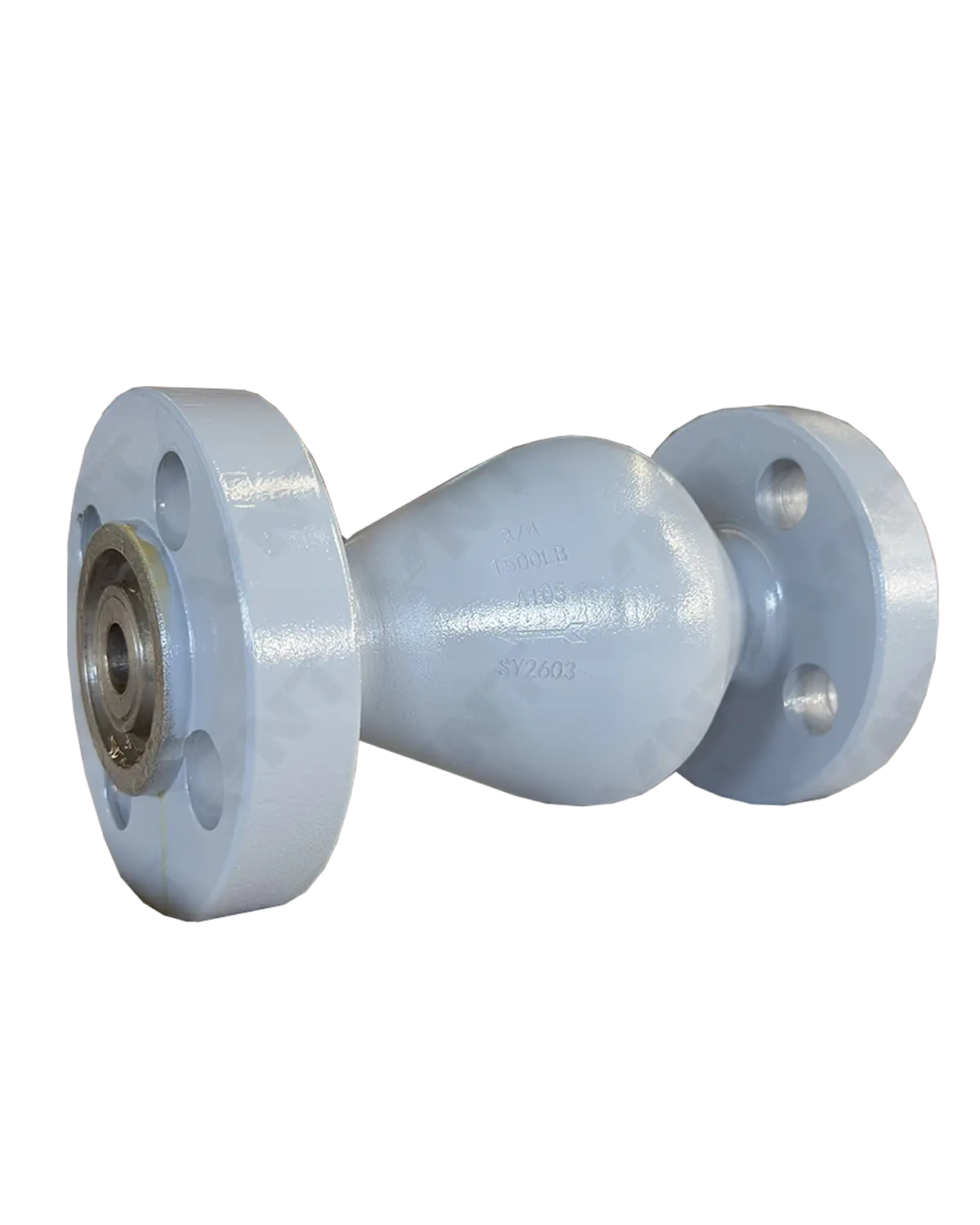
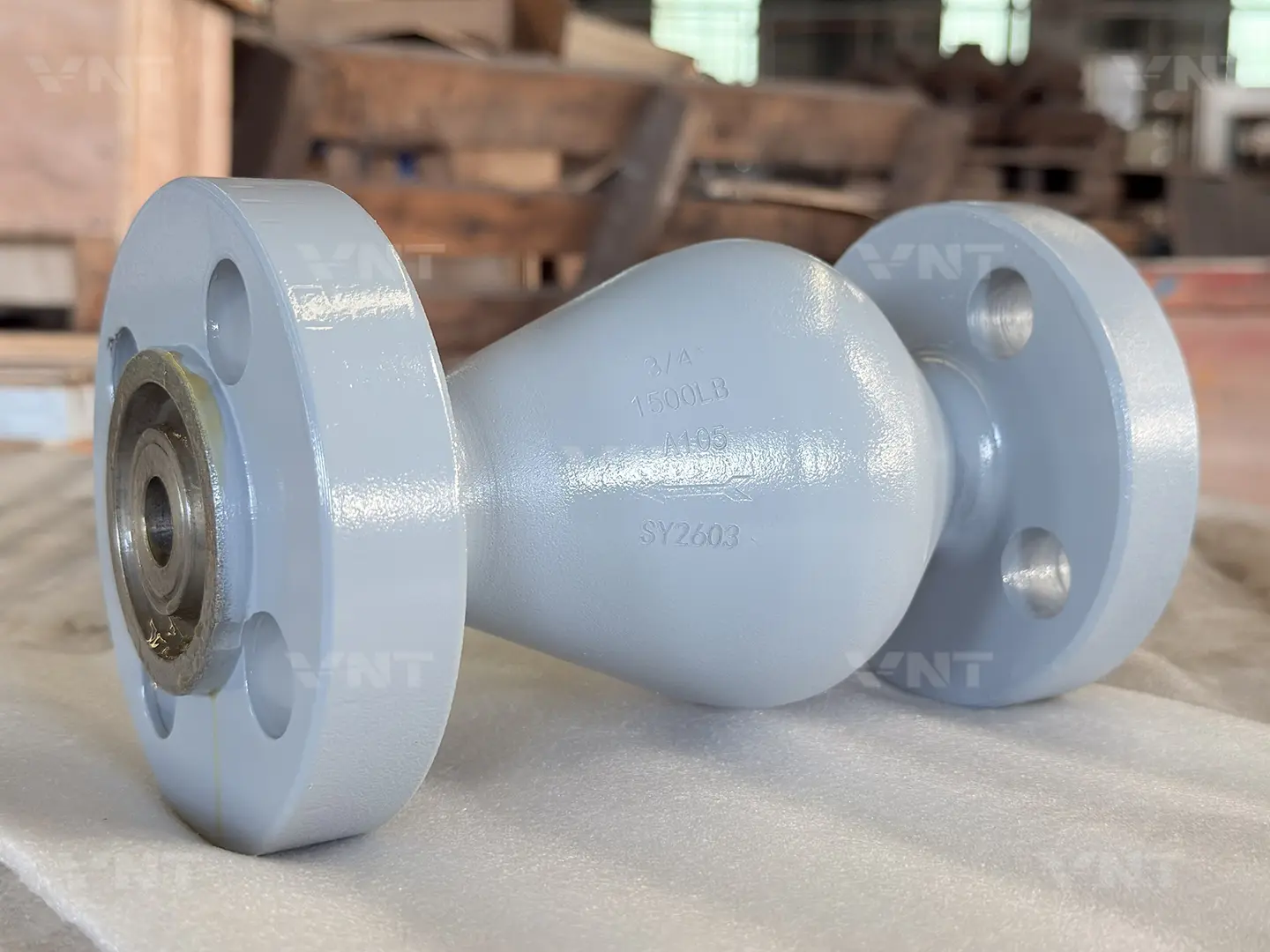
Axial Flow Non-Slam Check Valve for Compressor and Pump Protection
A self-actuated axial flow check valve with spring-assisted closing for rapid reverse-flow control in compressor, pump and high-pressure process systems.
| Size Range | NPS 2″–48″ (DN50–DN1200) |
|---|---|
| Pressure Rating | Class 150–2500 (PN10–PN420) |
| End Connection | RF, RTJ, BW, etc. |
| Body Material | Carbon steel, alloy steel, stainless steel, duplex steel, etc. |
| Operation | Self-actuated, spring-assisted axial closing |
Frequently Asked Questions
The closure element travels axially through a short stroke, while the spring starts closing it as forward flow decays. This helps limit reverse velocity and mechanical impact before seating.
No. The design reduces slam risk, but actual transient pressure depends on the fluid, line profile, operating velocity, pump or compressor trip condition and the selected spring characteristic.
No. Normal operation is self-actuated by flow and differential pressure, with an internal spring assisting axial closing.
Orientation influences the moving element and spring selection. Confirm flow direction, approved orientation and straight-pipe requirements on the certified drawing.
Provide fluid phase and properties, size, pressure and temperature, minimum, normal and maximum flow, allowable pressure drop, pump or compressor trip scenario, orientation, end connection and surge requirements.
Product Overview
The axial flow non-slam check valve is a self-actuated reverse-flow protection valve for compressor discharge, pump discharge and high-pressure process systems. Its streamlined internal flow path guides the closure element in the direction of the pipeline axis rather than through a swinging motion.
As forward flow and differential pressure decrease, the internal spring moves the closure element toward the seat through a short axial stroke. Closing before significant reverse velocity develops helps reduce impact, vibration and pressure transients associated with conventional slam-prone closure.
“Non-slam” describes the intended dynamic response, not a guarantee of zero surge. Selection must consider fluid density and compressibility, minimum and maximum flow, allowable pressure drop, cracking pressure, line velocity, pump or compressor shutdown behavior and system transient analysis.
Confirm the pressure-temperature rating, carbon, alloy, stainless or duplex steel body material, RF, RTJ or BW ends, seat and guide materials, spring characteristic and installation orientation against the approved project datasheet.
- Axial Short-Stroke Closure: responsive movement along the pipeline axis.
- Spring-Assisted Response: closing begins as forward differential pressure decays.
- Streamlined Flow Path: engineered to balance pressure drop and flow capacity.
- Self-Actuated Operation: no external actuator required for normal check-valve action.
Related Check Valve Selection Guides
← Back to Check Valve ProductsDiscuss Your Axial Flow Non-Slam Check Valve Requirements
Send the operating envelope and transient conditions for engineering review and quotation.
Applications, Materials and Engineering Selection
Use the full operating envelope and transient duty to confirm valve size, spring response, pressure drop, materials, end connection, orientation and inspection scope.
Typical Applications
- Gas transmission and process compressor discharge
- High-pressure pump discharge and injection systems
- Power, petrochemical and critical utility piping
Materials and End Connections
Carbon, alloy, stainless and duplex steel body materials are available with RF, RTJ or BW ends. Seat, guide, spring, stem and sealing materials must match the fluid, pressure-temperature rating and corrosion requirements.
Technical Points to Verify
- Fluid phase, density, compressibility and solids content
- Minimum, normal and maximum flow with allowable pressure drop
- Cracking pressure, spring response and reverse velocity
- Trip conditions, surge analysis and installation orientation
Related resources: Check Valve Selection Guide · High-Pressure Valve Solutions · Contact Vornet
Procurement and Inspection Checklist
Select this valve from the complete compressor, pump and piping duty. Flow capacity, spring response, pressure drop and transient behavior should be reviewed together.
- Service data: state fluid phase and properties, NPS or DN, class or PN, design pressure, temperature and corrosion requirements.
- Flow data: provide minimum, normal and maximum flow, allowable pressure drop, required flow coefficient and expected operating range.
- Transient review: define pump trip or compressor shutdown cases, reverse velocity, allowable surge pressure, cracking pressure and required closing response.
- Installation: confirm RF, RTJ or BW ends, flow direction, approved orientation, straight-pipe conditions and maintenance clearance.
- Inspection: request material certificates, dimensional checks, NDE when specified, shell and seat tests, free axial movement and spring-function verification.
Review the check valve selection guide, compare high-pressure valve solutions, or send the operating datasheet for engineering review.