
API 6D Forged Steel Ball Valve – Professional Industrial Valve Guide
API 6D forged steel ball valves are quarter-turn isolation valves designed per API Specification 6D for oil & gas pipelines, petrochemical plants, refineries, and power generation. Available in sizes 1/2″ to 48″ (DN15–DN1200) with pressure ratings from Class 150 to 2500, these valves offer floating or trunnion-mounted ball designs in forged materials including A105 carbon steel, F304, and F316 stainless steel. Fire-safe certified per API 607, they provide reliable bidirectional sealing, double block and bleed capability, and NACE compliance for sour service environments.
📋 Key Takeaways
- API 6D forged steel ball valves comply with the strictest pipeline valve standard for pressure containment, sealing, and fire safety.
- Forged steel (A105, F304, F316) offers superior strength, uniformity, and resistance to shock loading compared to cast steel alternatives.
- Available in floating ball design (1/2″–8″) for lower pressure and trunnion-mounted design (6″–48″) for high-pressure Class 600+ service.
- NACE MR0175/MR0103 compliant materials available for sour (H₂S) oil and gas environments.
- All API 6D ball valves from Vornet Valve are 100% hydrostatically tested per API 598 and fire-safe certified per API 607.
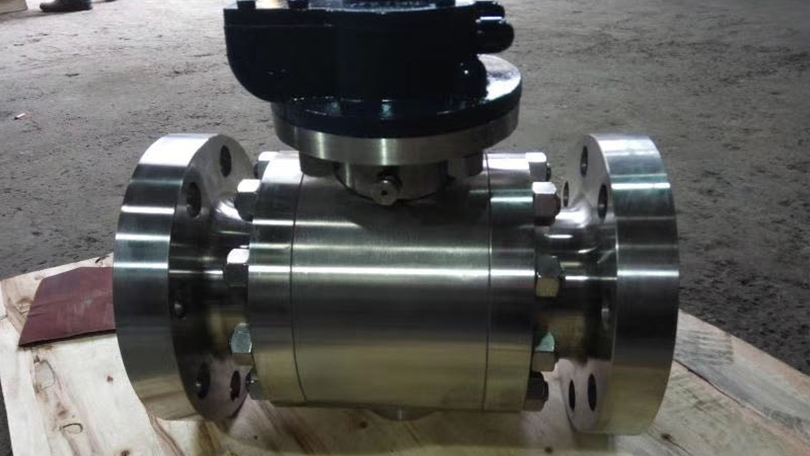
Quick Answer: What Is an API 6D Ball Valve?
An API 6D ball valve is a quarter-turn valve designed per API Specification 6D for pipeline and piping system isolation in oil & gas, petrochemical, and power industries. Available in sizes 1/2″–48″ (DN15–DN1200) with pressure ratings from Class 150 to 2500, API 6D ball valves can be floating or trunnion mounted, in forged or cast steel materials, with flanged, butt-weld, or socket-weld end connections.
Key Specifications at a Glance
| Parameter | API 6D Ball Valve | Specification |
| Size Range | 1/2″ – 48″ (DN15 – DN1200) | ASME B16.10 face-to-face |
| Pressure Class | 150, 300, 600, 900, 1500, 2500 | ASME B16.34 |
| Materials | Forged A105, F304, F316; Cast WCB, CF8, CF8M | ASTM standards |
| End Connections | Flanged (ASME B16.5), Butt-Weld, Socket Weld | ASME B16.5 / B16.25 |
| Operation | Lever, Gear, Pneumatic, Electric Actuator | ISO 5211 mounting |
| Design Standard | API 6D, ASME B16.34 | API / ASME |
| Fire-Safe | API 607 / ISO 10497 certified | API 607 |
What Is API 6D Standard?
API 6D is the American Petroleum Institute specification for pipeline and piping valves used in the petroleum and natural gas industries. It covers the design, manufacturing, testing, and documentation of ball valves, gate valves, check valves, and plug valves. The standard ensures valves meet stringent requirements for pressure containment, sealing performance, and operational reliability in demanding oil and gas applications.
Key requirements of API 6D include: hydrostatic and pneumatic shell testing per API 598, fugitive emission testing, fire-safe design per API 607, anti-static devices, double block and bleed (DBB) capability for trunnion-mounted valves, and full material traceability throughout the manufacturing process.
API 6D Ball Valve Design Features
Floating Ball Design
In smaller API 6D ball valves (typically 1/2″ to 8″), a floating ball design is used where the ball moves between two seat rings. Upstream pressure pushes the ball against the downstream seat to create a seal. This design is simple, cost-effective, and suitable for lower-pressure applications up to Class 600.
Trunnion Mounted Design
For larger API 6D ball valves (6″ and above) or high-pressure applications (Class 600+), trunnion mounted design is preferred. The ball is anchored by top and bottom trunnions, reducing seat stress and ensuring reliable operation even at high pressures. This design supports double block and bleed (DBB) functionality, allowing the valve body cavity to be vented while the valve is in both open and closed positions.
Fire-Safe Design
API 6D ball valves can be certified fire-safe per API 607. In the event of a fire destroying the soft seats, a secondary metal-to-metal seal activates to prevent leakage. This is a critical requirement for oil and gas facilities handling flammable media. Vornet Valve API 6D ball valves are fire-safe certified as standard.
Forged Steel vs Cast Steel API 6D Ball Valves
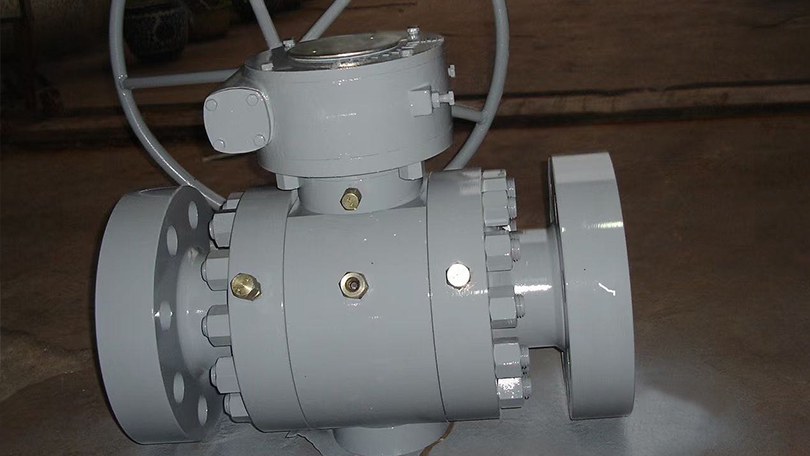
API 6D ball valves are manufactured in both forged steel and cast steel constructions, each offering distinct advantages depending on the service conditions:
| Property | Forged Steel | Cast Steel |
|---|---|---|
| Manufacturing Process | Hot forging produces directional grain flow | Molten metal poured into mold |
| Strength & Durability | Superior — 30–50% higher tensile strength | Good — but porosity risk exists |
| Pressure Ratings | Class 150 to 2500 (full range) | Typically Class 150 to 1500 |
| Size Range | 1/2″ to 24″ (larger sizes available on request) | 2″ to 48″+ |
| Shock/Vibration Resistance | Excellent — ideal for cyclic services | Moderate — brittle fracture risk |
| Material Uniformity | Dense, consistent grain structure | Variable; risers required |
| NACE Compatibility | Excellent (A105, F304, F316) | Good (WCB, CF8, CF8M with NACE trim) |
| Cost | Higher for same size/class | Lower — economical for large diameters |
| Best Applications | High-pressure gas, sour service, critical safety | Large-diameter pipelines, general service |
Material Grades for API 6D Forged Steel Ball Valves
Material selection is critical for API 6D ball valve performance and longevity. Below are the standard forged steel grades available:
ASTM A105 — Forged Carbon Steel
A105 is the most common forged carbon steel grade for general-service API 6D ball valves. Suitable for oil, gas, water, and steam applications across all pressure classes. Temperature range: -29°C to 425°C (-20°F to 800°F). A105 is NACE MR0175 compliant when properly heat-treated and hardness-controlled.
ASTM A182 F304 / F304L — Forged Stainless Steel
F304 (304 stainless steel) offers excellent corrosion resistance in oxidizing environments including nitric acid, organic chemicals, and food processing. F304L (low carbon variant) prevents sensitization during welding, making it ideal for welded end connections. Temperature range: -254°C to 815°C. Common in chemical processing, pharmaceutical, and food & beverage industries.
ASTM A182 F316 / F316L — Forged Molybdenum Stainless Steel
F316 contains 2–3% molybdenum, providing superior pitting and crevice corrosion resistance compared to F304. Ideal for chloride-containing environments such as seawater, brine, and chemical processing with sulfuric or phosphoric acids. F316L (low carbon) is preferred for welded construction. NACE MR0173 compliant for sour service up to certain H₂S partial pressures.
ASTM A350 LF2 — Low Temperature Carbon Steel
LF2 is the standard low-temperature grade for API 6D ball valves, impact-tested to -46°C (-50°F). Used in cryogenic gas processing, LNG terminals, and cold-climate pipeline installations.
| Material Grade | Type | Max Temperature | Typical Applications |
|---|---|---|---|
| A105 | Forged Carbon Steel | 425°C | Oil, gas, water, steam — general service |
| LF2 | Low Temp Carbon Steel | -46°C to 345°C | LNG, cryogenic, cold climate |
| F304/L | Forged 304 SS | 815°C | Oxidizing chemicals, food, pharma |
| F316/L | Forged 316 SS | 815°C | Seawater, chlorides, chemical processing |
| F51 | Duplex SS | 315°C | Sour gas, offshore, high chloride |
| F55 | Super Duplex SS | 315°C | Extreme corrosion, subsea |
Size Ranges and End Connections
API 6D forged steel ball valves are manufactured in standard sizes from NPS 1/2″ to NPS 24″ (DN15 to DN600) as forged constructions. Larger sizes up to 48″ are available in cast steel or fabricated designs. The most common end connections include:
- Flanged Ends (ASME B16.5): Class 150, 300, 600, 900, 1500, and 2500 raised-face (RF) or ring-type joint (RTJ) configurations. Standard facing per ASME B16.5.
- Butt-Weld Ends (ASME B16.25): Beveled ends for direct welding to pipe — ideal for high-integrity pipeline systems that eliminate flange leakage paths.
- Socket Weld Ends (ASME B16.11): For smaller sizes (1/2″ to 2″) in high-pressure applications where threaded connections are not permitted.
- Threaded Ends (NPT/BSP): For small-bore general service applications (1/2″ to 2″).
Pressure Ratings for API 6D Ball Valves
API 6D ball valves are rated per ASME B16.34 pressure-temperature tables. The maximum working pressure depends on the material grade and temperature:
| Class | A105 @ 100°F | F304 @ 100°F | F316 @ 100°F | Test Pressure (Shell) |
|---|---|---|---|---|
| 150 | 290 psi | 275 psi | 275 psi | 435 psi |
| 300 | 750 psi | 720 psi | 720 psi | 1,125 psi |
| 600 | 1,500 psi | 1,440 psi | 1,440 psi | 2,250 psi |
| 900 | 2,250 psi | 2,160 psi | 2,160 psi | 3,375 psi |
| 1500 | 3,750 psi | 3,600 psi | 3,600 psi | 5,625 psi |
| 2500 | 6,250 psi | 6,000 psi | 6,000 psi | 9,375 psi |
Higher temperatures reduce the allowable working pressure per ASME B16.34 de-rating curves. Always consult the pressure-temperature chart for your specific material grade.
NACE Compliance for Sour Service
API 6D ball valves used in sour oil and gas environments containing hydrogen sulfide (H₂S) must comply with NACE MR0175/ISO 15156 (upstream) or NACE MR0103 (downstream). Key requirements include:
- Hardness Control: Maximum hardness of 22 HRC for carbon steel and 26 HRC for stainless steel wetted parts.
- Material Selection: A105 with normalized and tempered heat treatment; F316/L for corrosion-resistant alloys; Inconel 625 or 825 for critical trim components.
- Heat Treatment: Full anneal or normalize-and-temper to eliminate residual stresses that could cause sulfide stress cracking (SSC).
- Testing: Hardness testing per ASTM E10 or E18 on all pressure-containing parts and trim.
- Trim Selection: NACE-compliant soft seats (PTFE, reinforced PTFE, PEEK) and metal seat backups.
Vornet Valve supplies API 6D ball valves with full NACE compliance documentation, including material test reports (MTRs) and hardness certification.
Applications of API 6D Ball Valves
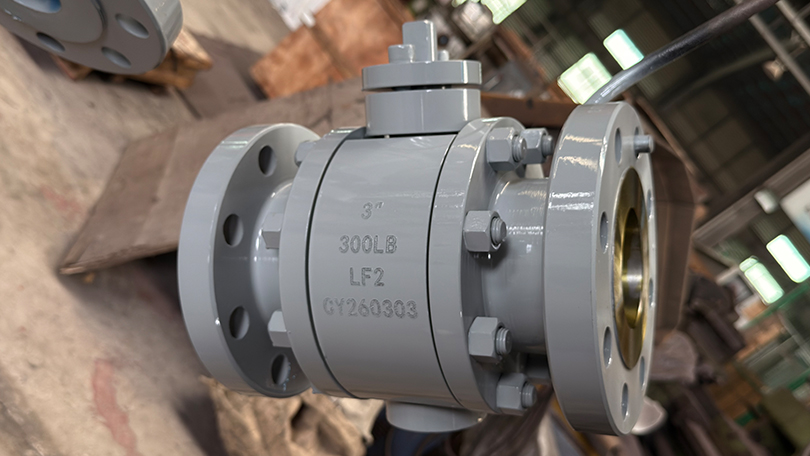
API 6D ball valves are used across a wide range of industrial applications:
- Oil & Gas Pipelines: On-off isolation, pigging operations, emergency shutdown, compressor station isolation
- Petrochemical Plants: Process line isolation, reactor feed, product transfer, cracking unit feed
- Power Generation: Cooling water systems, fuel gas supply, steam isolation, turbine bypass
- Refineries: Crude oil processing, product storage, loading/unloading, hydrotreater feed
- Offshore Platforms: Subsea isolation, topside piping, wellhead control, chemical injection
- LNG & Cryogenic: Liquefaction unit isolation, storage tank isolation, vaporizer feed
- Mining & Minerals: Slurry isolation, leaching circuit isolation, process water
Materials of Construction
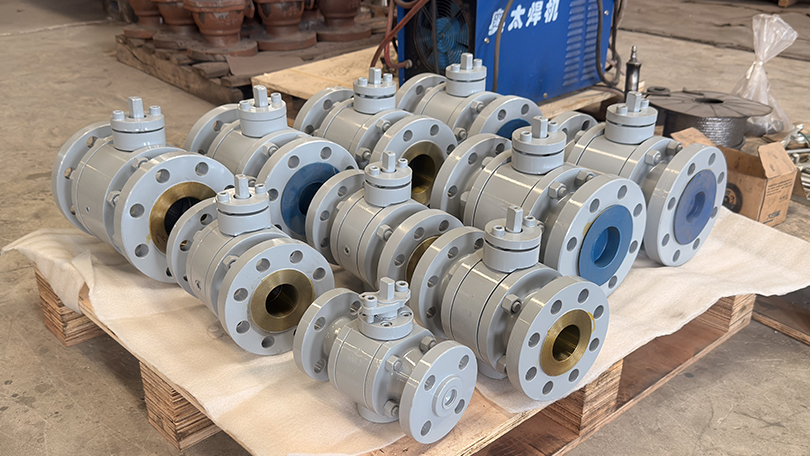
API 6D ball valves are available in a variety of materials to suit different service conditions. Contact Vornet Valve for a complete material availability list and recommendation for your application.
| Material | Type | Common Applications |
|---|---|---|
| A105 | Forged Carbon Steel | General service, oil, gas, water |
| F304 / F316 | Forged Stainless Steel | Corrosive media, chemical processing |
| WCB | Cast Carbon Steel | Standard pipeline applications |
| CF8 / CF8M | Cast Stainless Steel | Corrosive environments, food processing |
| LF2 | Low Temp Carbon Steel | Low temperature service (-46°C) |
API 6D vs API 600: Key Differences
Both API 6D and API 600 are common valve standards, but they serve different purposes:
- API 6D: Covers ball, gate, check, and plug valves for pipeline service. Includes both cast and forged valves.
- API 600: Covers only cast steel bolted bonnet gate valves for petroleum and gas industries. More stringent wall thickness.
- API 6D includes fire-safe, DBB, and anti-static requirements that API 600 does not.
- API 600 requires heavier wall construction than API 6D for the same pressure class.
Why Choose Vornet Valve for API 6D Ball Valves?
Vornet Valve is a professional manufacturer of API 6D ball valves serving oil & gas, petrochemical, and power industries worldwide. Our valves are:
- Manufactured per API 6D, ASME B16.34, and ISO 9001
- Fire-safe certified per API 607
- 100% pressure tested per API 598
- Available with full material traceability and NACE compliance
- Customizable with various trim materials, seat options, and actuation
Contact Vornet Valve today for competitive pricing and technical support on API 6D ball valves. Check our range of API 6D forged steel ball valves and other certified industrial valve products for oil and gas applications.
Need an API 6D Forged Steel Ball Valve?
Vornet Valve supplies API 6D ball valves in sizes 1/2″ to 48″, Class 150 to 2500, in forged A105, F304, F316, and NACE-compliant materials. Contact our engineering team for sizing, material selection, and pricing.
Frequently Asked Questions
What is the difference between API 6D and API 608 ball valves?
API 6D covers pipeline ball valves of all sizes and includes requirements for fire-safe design, anti-static devices, and DBB capability. API 608 covers metal ball valves with flanged or butt-welding ends for general service in smaller sizes (NPS 1/2″ to 12″).
What pressure testing is required for API 6D ball valves?
Per API 598, each API 6D ball valve must pass a hydrostatic shell test (1.5 × rated pressure), hydrostatic seat test (1.1 × rated pressure), and optional pneumatic test. Vornet Valve performs 100% testing on all ball valves before shipment.
Can API 6D ball valves be used for throttling?
No. API 6D ball valves are designed for on-off isolation service. Using them for throttling causes seat and ball damage. For flow control applications, use a control valve or V-port ball valve specifically designed for regulation.
Are API 6D ball valves bidirectional?
Most API 6D floating ball valves are bidirectional, sealing equally from both directions. Some trunnion mounted ball valves with DBB seats are also bidirectional. Vornet Valve can supply API 6D ball valves with bidirectional sealing as standard.
What is the price range of an API 6D forged steel ball valve?
Pricing depends on size, pressure class, material, and actuation. A standard 2″ Class 150 forged steel floating ball valve starts at approximately USD 40. Larger sizes, higher pressure classes, and special materials increase the price. Contact Vornet Valve for a customized quotation based on your specifications.
What is the difference between forged and cast API 6D ball valves?
Forged API 6D ball valves are manufactured by hot-working steel into dense, uniform grain structures, offering superior strength, pressure resistance, and shock tolerance compared to cast valves. Forged valves are preferred for high-pressure (Class 600+), sour service, and critical safety applications. Cast valves are more economical for large diameters (14″+) and general pipeline service.
Are API 6D ball valves NACE compliant?
Yes, API 6D ball valves can be supplied with NACE MR0175 (upstream) or NACE MR0103 (downstream) compliance. This requires controlled hardness (max 22 HRC for carbon steel), appropriate material selection, and certified heat treatment. Vornet Valve offers NACE-compliant API 6D ball valves with full documentation.