
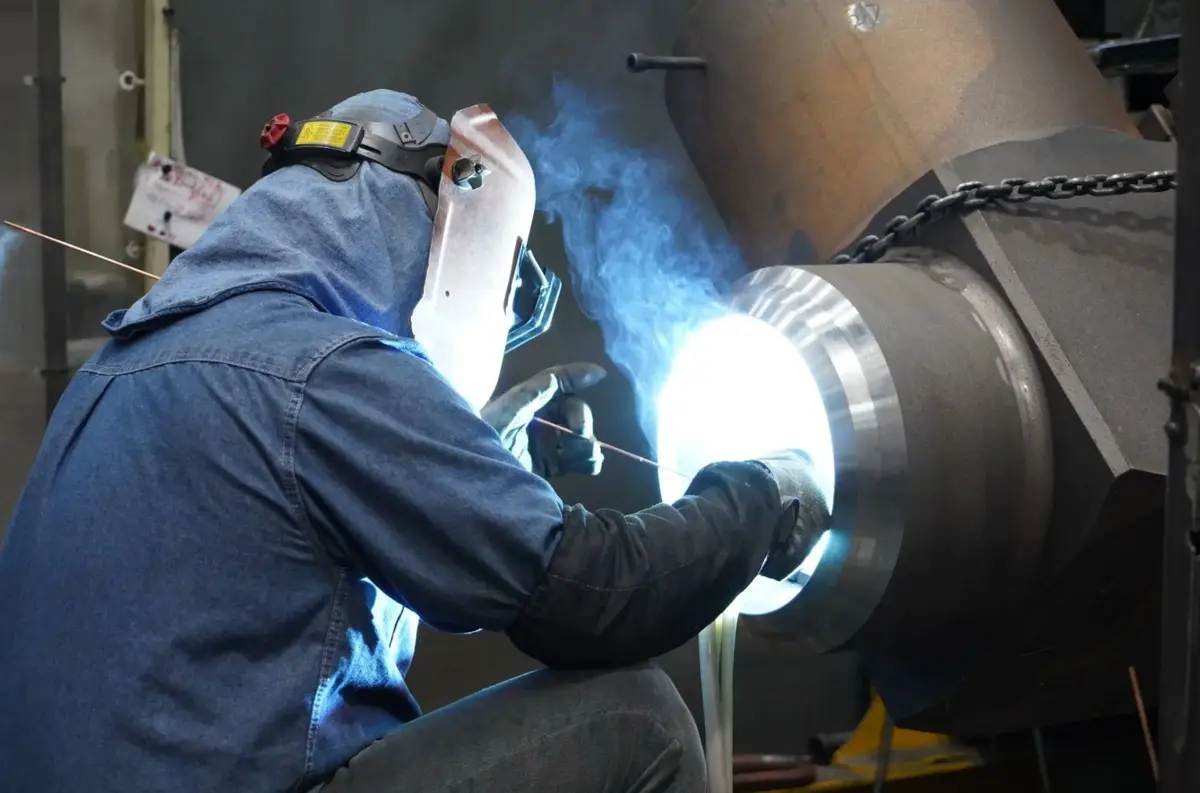
Key Characteristics of Industrial Power Plant Valves | Procurement Guide for Thermal Power Units
📋 Key Takeaways
- Power plants rely on gate, globe, check, and ball valves for steam, feedwater, and cooling systems.
- High-pressure and high-temperature service requires valves built to ASME B16.34 and power industry standards.
- Valve selection must consider cycling frequency, shut-off tightness, and erosion resistance for reliability.
- Regular maintenance and proper material selection prevent unplanned outages in critical power plant operations.
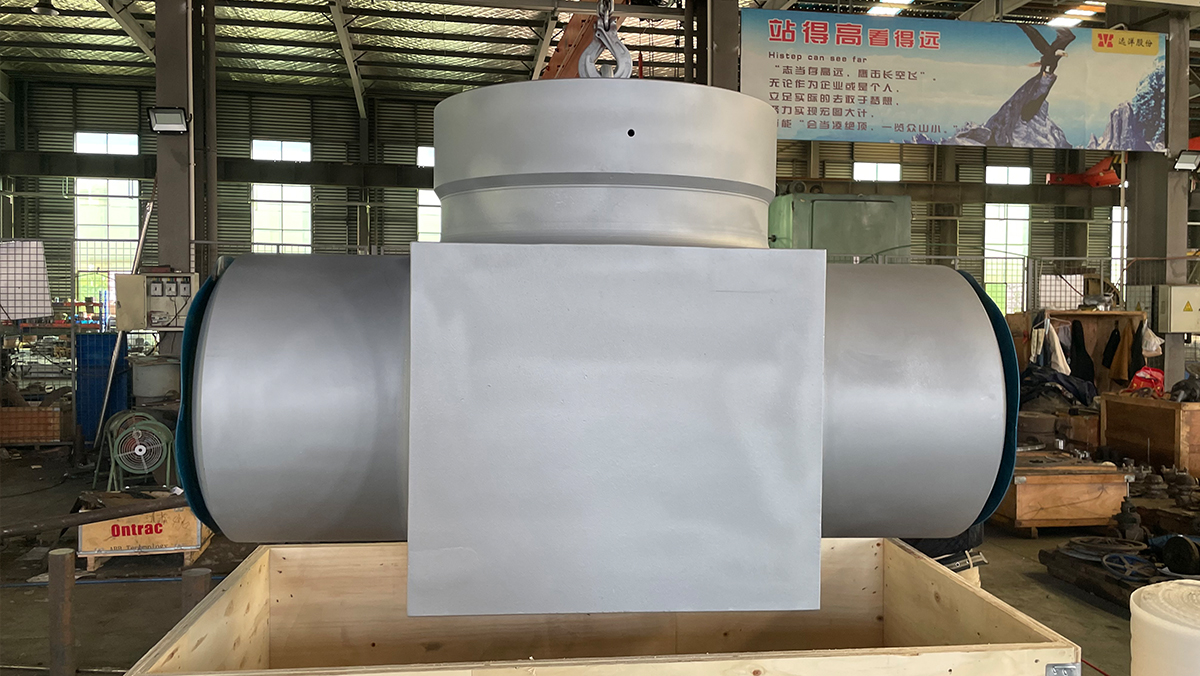
power plant valves: 1. Extreme Harsh Operating Conditions — Procurement Guide
1.1 Ultra-High Temperature and Pressure
Therefore, This power plant valves procurement guide covers selecting the right power plant valves is critical for the safety, efficiency, and reliability of thermal power generation systems. Modern supercritical (SC) and ultra-supercritical (USC) thermal power units operate at main steam temperatures reaching 600°C to 620°C and pressures exceeding 25 MPa to 30 MPa. Valves in the main steam line, hot reheat line, and high-pressure bypass systems must maintain structural integrity and sealing performance at these extreme parameters day after day, year after year.
However, At these elevated temperatures, common carbon steel valves would experience creep deformation, oxidation, and accelerated material degradation within months of service. The selection of appropriate high-temperature alloys is therefore not optional but mandatory for safe, reliable operation.
1.2 Severe Thermal Shock and Cyclic Temperature Variation
Therefore, Thermal power plants undergo frequent load cycling — startups, shutdowns, and load-following ramps. During a cold startup, valve components at ambient temperature may be exposed to steam at 500°C+ within minutes, creating thermal shock stresses exceeding 400°C differential in seconds. Valves must incorporate generous fillet radii, controlled wall thickness transitions, and materials with high thermal conductivity to withstand these aggressive thermal cycles.
1.3 High-Velocity Erosion and Cavitation
Furthermore, Fluid velocities in power plant piping routinely exceed 30 to 60 m/s in critical paths. High-velocity steam carrying entrained oxide particles progressively erodes valve seats and discs. Cavitation — where collapsing vapor bubbles generate localized pressures exceeding 1000 MPa — causes severe pitting in feedwater control valves. Anti-cavitation trim designs including multi-stage pressure reduction and Stellite hardfacing are essential countermeasures.
1.4 Complex Corrosive Service Environment
However, Water-Steam Circulation Corrosion: Despite rigorous chemical treatment, flow-accelerated corrosion (FAC) attacks carbon steel components, while dissolved oxygen drives pitting and stress corrosion cracking in stainless steels at high temperatures.
Therefore, FGD Slurry Corrosion: Flue gas desulfurization systems present the most corrosive environment — abrasive limestone-gypsum slurries with pH 4.5-6.0, chloride concentrations exceeding 20,000 ppm, and temperatures of 50-80°C. Duplex stainless steels, super-austenitic alloys, and lined valves are commonly specified.
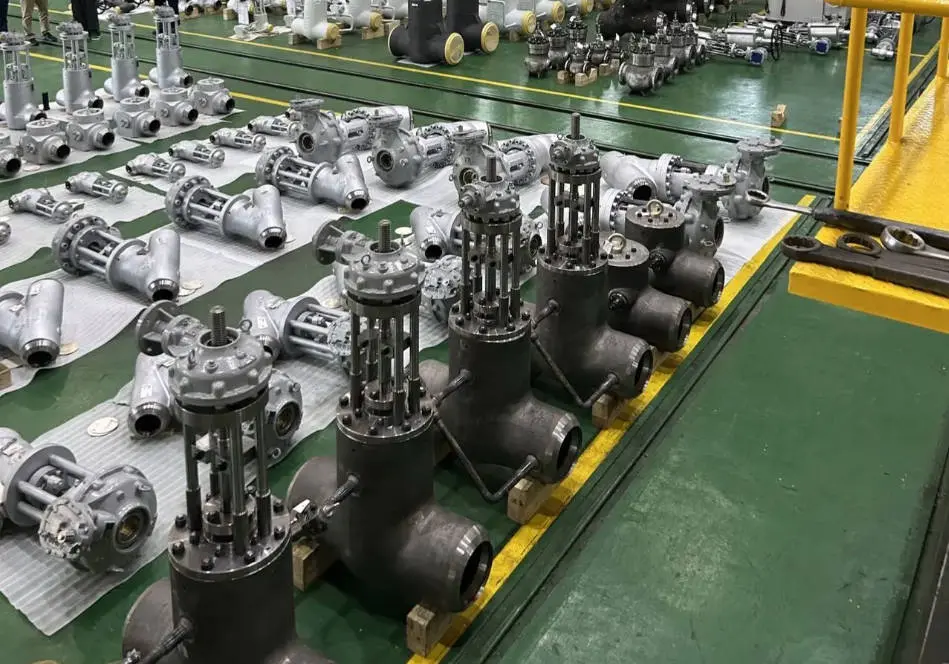
2. Ultra-High Comprehensive Performance Requirements — Power plant valves
2.1 Stringent Internal and External Sealing
Furthermore, Sealing integrity operates on two fronts: seat leakage (internal) and fugitive emissions (external). Power plant specifications demand Class V or Class VI shutoff per ANSI/FCI 70-2. Fugitive emission standards such as ISO 15848-1 and TA-Luft set strict limits on stem leakage measured in parts per million. Modern designs employ live-loaded packing with Belleville spring washers maintaining constant compression on graphite rings, achieving leakage rates below 50 ppm.
2.2 Premium Reliability and Extended Service Lifespan
An unplanned shutdown of a 600 MW coal-fired unit can cost $500,000 to $1,000,000 per day. Power plant valves must deliver service lives of 20 to 30 years — matching the plant design life — with only routine maintenance during scheduled outages every 4-6 years. This demands generous safety factors in actuator sizing, end-of-life corrosion allowances in material selection, and designs facilitating in-situ maintenance.
2.3 Stable Operability and Fail-Safe Function
In emergency situations — turbine trip, boiler overpressure, loss of cooling water — valves must respond within seconds, every time, without exception. Critical isolation valves default to the safe position upon loss of power or control signal. Safety relief valves provide the last line of defense against overpressurization, certified to ASME Boiler and Pressure Vessel Code standards.
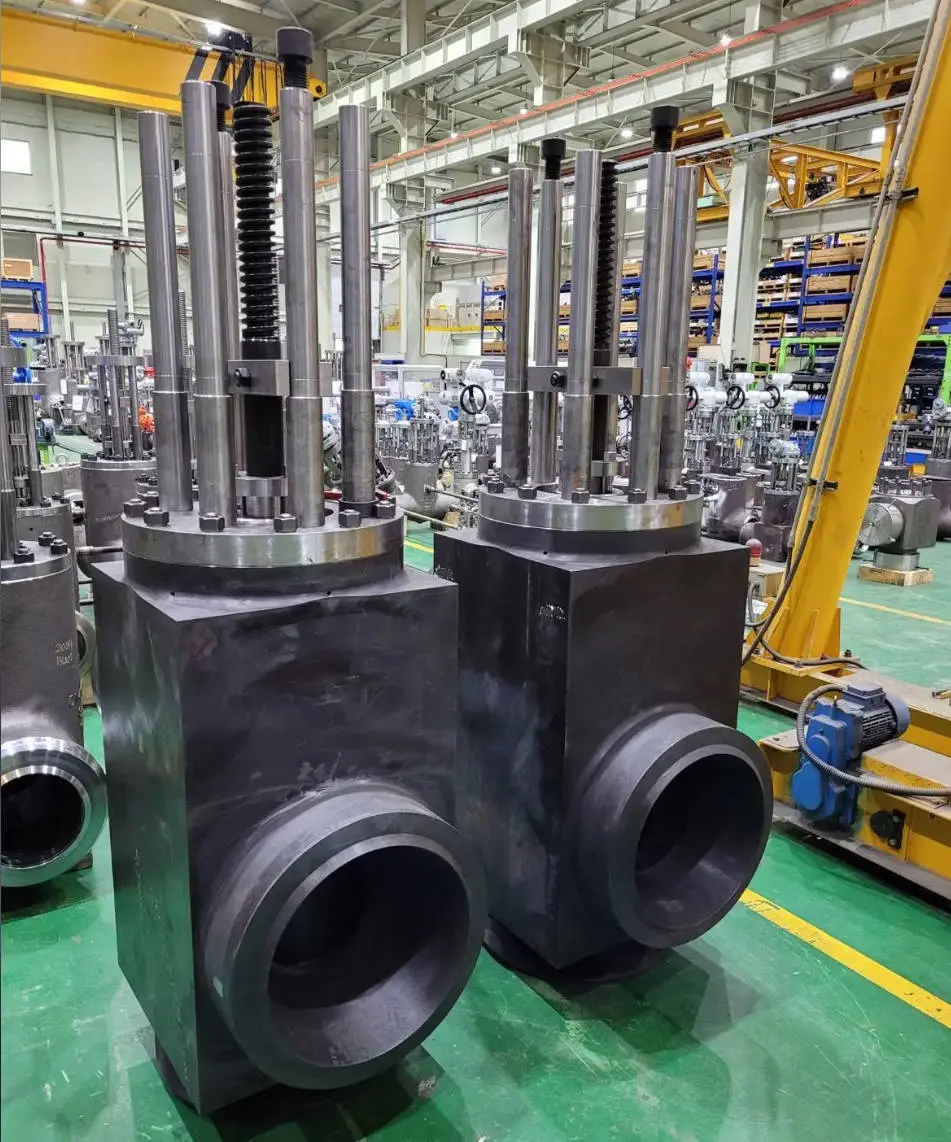
3. Specialized Material Selection and Custom Structural Design — Power plant valves
3.1 Heat-Resistant and Anti-Corrosion Special Alloys
P91/T91 (9Cr-1Mo-V): Max service ~620°C. Excellent creep strength and oxidation resistance. Standard for USC main steam and hot reheat valves.
P92/T92 (9Cr-0.5Mo-1.8W-V-Nb): Max service ~630°C. Superior creep strength via tungsten addition for advanced USC applications.
WC6 (1.25Cr-0.5Mo): Max service ~575°C. Economical cast alloy for subcritical and early supercritical steam service.
WC9 (2.25Cr-1Mo): Max service ~595°C. Higher creep strength than WC6 for supercritical steam valves.
For detailed maintenance procedures, refer to our extraction steam check valve maintenance guide.
F91/F22: Forged equivalents of P91/P22 chemistries, providing excellent toughness and fatigue resistance for forged bodies, bonnets, and trim.
Stellite 6 Hardfacing: Industry standard for seating surfaces — exceptional hardness (38-46 HRC) and wear resistance at temperatures up to 800°C.
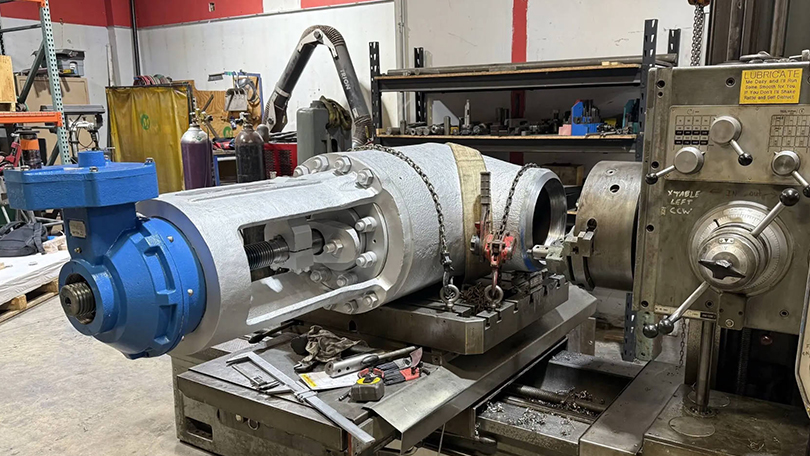
3.2 Pressure Self-Sealing Bonnet — Exclusive High-Parameter Design
The pressure self-sealing bonnet harnesses internal system pressure to augment sealing force. As pressure increases, a graphite seal ring is pressed more tightly against the bonnet and body. Advantages include: (1) weight reduction — eliminating large bolted flanges saves 30-50% weight; (2) superior thermal cycling performance — adapts to expansion without relaxation; (3) enhanced safety — seal tightens as pressure rises. Standard for ASME Class 600+ gate and globe valves in main steam and feedwater services.
4. Core Conclusion: “Three Highs, One Stringent”
The industrial power plant valve market can be distilled into the “Three Highs, One Stringent” principle:
- High Temperature: Continuous service at 540-620°C+ requiring Cr-Mo and Cr-Mo-V alloy steels
- High Pressure: Operating pressures from 16 MPa to 30 MPa+ demanding robust pressure-containing designs per ASME B16.34
- High Reliability: 20-30 year design life with minimal maintenance and fail-safe actuation
- Stringent Sealing: Class V/VI shutoff, ISO 15848-1 fugitive emission compliance, pressure-energized seals
Valves that satisfy this framework demand specialized manufacturers with proven track records, full material traceability, and documented third-party testing including chemical analysis, NDE (RT, UT, PT, MT), and pressure testing per API 598 or ISO 5208.
Frequently Asked Questions
Q1: What is the main difference between P91 and P22 materials for power plant valves?
P91 (9Cr-1Mo-V) provides significantly better oxidation resistance and creep strength than P22 (2.25Cr-1Mo), operating up to 620°C vs ~575°C. P91’s higher strength enables 40% thinner walls, improving thermal fatigue resistance during load cycling. For new USC construction, P91/P92 is standard; P22 is found in older subcritical units.
Q2: How do pressure-seal bonnets compare to bolted bonnets?
Pressure-seal bonnets are preferred for ASME Class 600+ service: self-energizing seal that tightens with pressure, 30-50% lighter weight, superior thermal cycling performance with no bolt relaxation, and compact envelope. Bolted bonnets remain for lower pressure classes and valves requiring frequent internal access.
Q3: What valve types are most commonly used in thermal power plants?
Five types dominate: Gate valves (isolation — main steam, feedwater), Globe valves (throttling/control — feedwater, spray water), Check valves (backflow prevention), Butterfly valves (large-bore isolation — cooling water, FGD), and Ball valves (fuel gas isolation, instrument air). Each has optimal application envelopes based on pressure, temperature, and function.
Q4: What standards govern power plant valve design and testing?
Key design standards: ASME B16.34, API 600/602 (gate), API 623/BS 1873 (globe), API 594 (check), API 609 (butterfly). Testing: API 598, ISO 5208, ISO 15848-1 (fugitive emissions), ANSI/FCI 70-2 (seat leakage). ASME BPVC Section I/VIII applies to safety relief valves.
Q5: How do you specify valves for FGD slurry service?
Duplex stainless steels (UNS S31803/S32205) offer best chloride resistance-to-cost ratio. Super-duplex (S32750) for aggressive chlorides. Stellite or ceramic-coated internals for abrasion. Full-port designs to minimize solids accumulation. Pneumatic actuators with 1.5x+ sizing factors to overcome slurry friction.
Q6: What is the expected service life of power plant valves?
With proper specification and maintenance: 20-30 years for valve bodies. Trim components: 8-12 year refurbishment intervals. Packing: adjusted/replaced at 4-6 year intervals coinciding with major outages. Premature failures are almost invariably traceable to misapplication or water chemistry excursions.
Q7: What documentation is required when procuring power plant valves?
Complete package: EN 10204 Type 3.1 MTCs with full traceability, NDE reports (RT/UT/PT/MT), hydrostatic test certificates per API 598, fugitive emission test certificates, dimensional inspection reports, ASME B16.34 P-T rating charts, IOM manuals, and certificates of conformance.
Q8: Can you provide custom power plant valves for international EPC projects?
Yes. We deliver full-spectrum power plant valve solutions: custom material grades (P91/P92/WC6/WC9/F91/F22), pressure-seal bonnet designs, Stellite hardfacing, live-loaded packing systems to ISO 15848-1, and complete EN 10204 3.2 documentation packages. Contact our engineering team for technical inquiry and project quotation.
For technical inquiries, custom valve solutions, or bulk procurement, contact our engineering team. All material specifications reference ASTM International standards and ASME codes.
• Control Valve Selection Guide
• Safety Valve vs Relief Valve
• Valve Material Selection Guide