
Safety Valve vs Relief Valve: Complete Guide to Types, Selection, and Standards
📋 Key Takeaways
- Safety valves provide rapid full-opening discharge for overpressure protection of compressible fluids like steam and gas.
- Relief valves open proportionally to increasing pressure and are designed for liquid service with gradual discharge.
- Safety relief valves combine both functions and serve dual-purpose in systems handling either compressible or incompressible media.
- Proper set pressure and capacity selection must follow ASME Section VIII code requirements for code-compliant installation.
Safety valves and relief valves serve different purposes. Safety valves open rapidly (pop action) for compressible fluids like gas and steam. Relief valves open gradually for liquids. Safety relief valves (SRV) combine both functions. Choosing the wrong type can create a serious safety hazard.
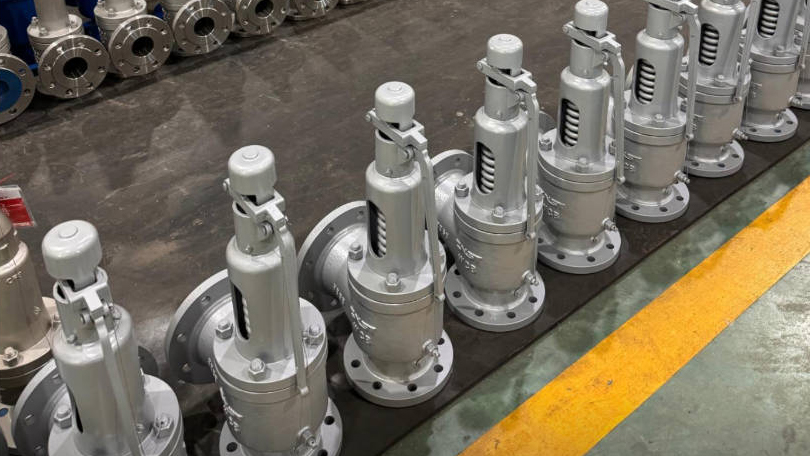
What Is a Safety Valve? — Safety Valve Relief Valve
A safety valve is an automatic pressure-relieving device designed to open rapidly with a “pop” action when the set pressure is exceeded. It is primarily used for compressible fluids — gases, vapors, and steam. Safety valves are the last line of defense against overpressure in boiler systems, pressure vessels, and piping systems. This guide covers essential safety valve relief valve information.
What Is a Relief Valve?
A relief valve opens gradually in proportion to the pressure increase above the set point. For example, Used for incompressible fluids (liquids), relief valves modulate flow to prevent pressure from exceeding a safe limit without the sudden pop action of a safety valve.
Safety Valve vs Relief Valve: Key Differences
| Factor | Safety Valve (SV) | Relief Valve (RV) | Safety Relief Valve (SRV) |
|---|---|---|---|
| Fluid type | Gas, vapor, steam | Liquid | Gas and liquid |
| Opening action | Pop (full lift at 5-10% overpressure) | Modulating (proportional to pressure) | Pop for gas; modulating for liquid |
| Blowdown (reclosing pressure) | Typically 4-10% below set pressure | 5-20% below set pressure | Depends on fluid |
| Typical standard | ASME Section I, VIII Div. 1 | API 520 / 521, ASME VIII | API 526, ASME VIII |
| Lift | Full lift (disc lifts ≥ 1/4 bore diameter) | Smooth, proportional lift | Dual-mode lift |
| Application | Boilers, steam systems, air receivers | Pump discharge, liquid pipelines | Multi-purpose, refinery, chemical |
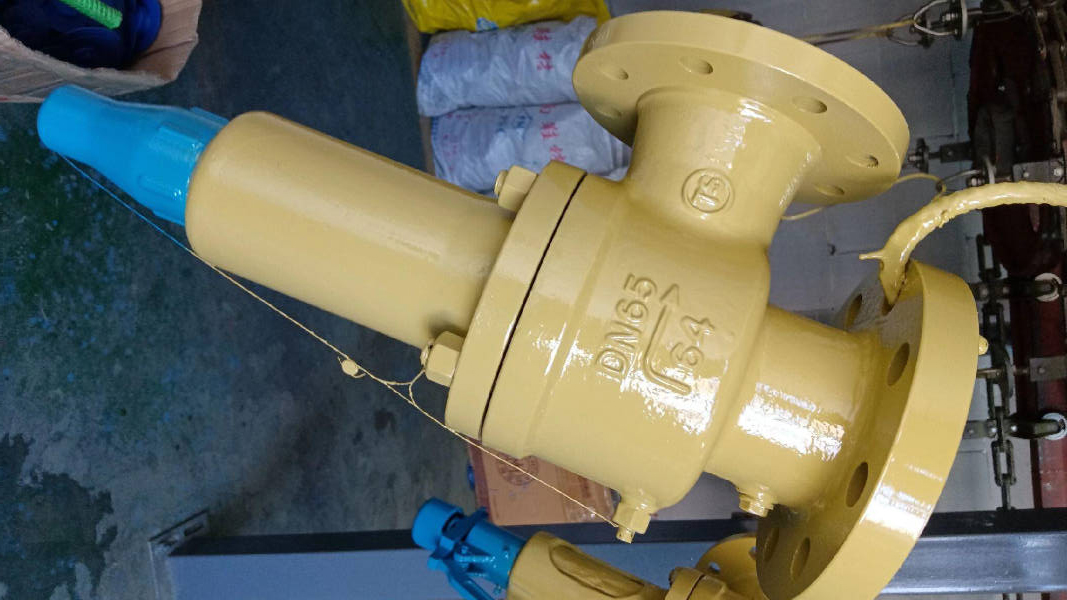
Main Types of Safety and Relief Valves
1. Spring-Loaded Safety Valve
The most common type. A spring holds the disc closed. When inlet pressure exceeds the spring set pressure, the disc lifts. Simple, reliable, and widely used for steam, air, and gas.
2. Pilot-Operated Safety Valve
Uses a small pilot valve to control the main valve. Consequently, The pilot senses pressure and enables the main valve to open at set pressure. Offers tighter blowdown, higher capacity, and backpressure compensation.
Best for: High-pressure gas, backpressure-sensitive systems, large-capacity applications.
3. Balanced Bellows Safety Valve
Incorporates a bellows that isolates the spring from the bonnet, compensating for backpressure. Notably, Prevents media from reaching the spring area (useful for corrosive or toxic fluids).
Best for: Corrosive media, toxic service, variable backpressure applications.
4. Thermal Relief Valve
Small-capacity valve designed to relieve pressure caused by thermal expansion in liquid-filled, blocked-in sections of piping. Specifically, Common on heat exchanger outlets, long liquid-filled pipeline sections, and between isolation valves.
5. Vacuum Relief Valve
Prevents vacuum conditions from collapsing tanks or vessels. Opens when internal pressure drops below atmospheric pressure.
Safety Valve Selection Criteria
- Determine required capacity — Based on the maximum flow the vessel or system can generate. ASME Section VIII requires the relief capacity to handle the worst-case scenario (e.g., fire case, blocked discharge, cooling water failure)
- Select set pressure — Must not exceed the MAWP (Maximum Allowable Working Pressure) of the protected equipment
- Choose valve type — Spring-loaded (general service), pilot-operated (high pressure, critical), balanced bellows (corrosive/backpressure)
- Select materials — Body (WCB, CF8M, chrome-moly), trim (316 SS, Hastelloy, Monel), seat (PTFE, metal-to-metal)
- Check backpressure — Conventional spring-loaded valves capacity is reduced by backpressure. Balanced bellows or pilot-operated valves compensate for backpressure
- Verify certifications — ASME UV/UV-stamp, CE-PED, API 520/526, National Board certification
Key Standards and Codes
| Standard | Scope |
|---|---|
| ASME Section I | Safety valves for power boilers |
| ASME Section VIII Div. 1 | Pressure vessel relief devices |
| API 520 Part I | Sizing, selection, and installation of pressure-relieving devices |
| API 520 Part II | Flare systems and relief system design |
| API 526 | Flanged steel pressure relief valves (dimensions and ratings) |
| API 527 | Seat tightness of pressure relief valves |
| ISO 4126 | Safety devices for protection against excessive pressure |
| PED 2014/68/EU | European Pressure Equipment Directive |
Material Selection for Safety Valves
| Component | Standard Service | Corrosive Service | High Temperature |
|---|---|---|---|
| Body | WCB Carbon Steel | CF8M / CF3M SS | WC9 Chrome-Moly |
| Nozzle / Seat | 316 SS + Stellite | Hastelloy C276 | Inconel + Stellite |
| Disc | 316 SS | Hastelloy / Monel | Inconel 718 |
| Spring | Chrome silicon steel | Hastelloy / Inconel | Inconel X-750 |
| Bellows | 316L SS | Hastelloy C276 | Inconel 625 |
Common Applications by Industry
| Industry | Typical Application | Valve Type |
|---|---|---|
| Power Generation | Boiler drum, superheater, steam turbine protection | ASME Section I safety valve |
| Oil & Gas | Separator, compressor, pipeline overpressure | API 526 SRV, pilot-operated |
| Chemical Processing | Reactor, distillation column, storage tank | Balanced bellows, pilot-operated |
| Pharmaceutical | Sterile vessel, clean steam, bioreactor | Sanitary relief valve, full-lift SS |
| Water Treatment | Pump discharge, thermal expansion protection | Thermal relief valve |
| HVAC & Refrigeration | Chiller, condenser, refrigerant receiver | ASME VIII relief valve |
Safety Valve Installation Best Practices
- Install vertically above the protected equipment (spring-loaded type)
- Ensure inlet piping is short, straight, and at least the same diameter as the valve inlet
- Never install an isolation valve between the vessel and the safety valve (unless locked open with administrative controls)
- Discharge piping must be supported independently — not on the valve itself
- For steam service, drain the discharge piping to prevent water accumulation
- Test and recertify safety valves annually per jurisdictional requirements
Common Safety Valve Problems and Troubleshooting
| Problem | Likely Cause | Solution |
|---|---|---|
| Chatter (rapid open-close cycling) | Undersized inlet line, excessive backpressure | Increase inlet pipe size, reduce backpressure |
| Simmer (leakage before set point) | Damaged seat, debris, thermal expansion of trim | Clean or lap seat, inspect for debris |
| Failure to open at set pressure | Spring set too high, binding of trim | Recertify spring setting, inspect for corrosion |
| Leakage after reseating | Debris on seat, seat damage, thermal shock | Manual lift to clear debris, inspect seat |
| External leakage (body/bonnet joint) | Gasket failure, thermal cycling | Replace gasket, retorque bolts |
Need a Safety or Relief Valve for Your System?
Vornet Valve supplies spring-loaded safety valves, pilot-operated relief valves, and thermal relief valves for steam, gas, liquid, and corrosive service. ASME and API certified. Available NPS 1/2″ to 12″, Class 150 to 2500.