
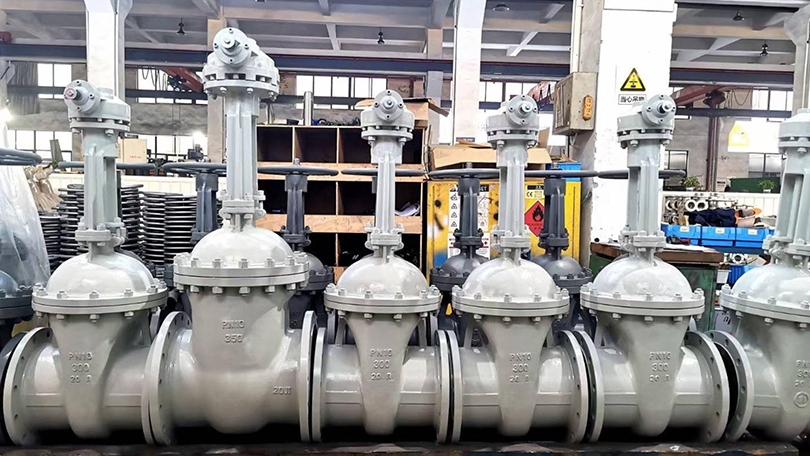
API 600 vs API 602 Gate Valve: Complete Specification and Selection Guide
📋 Key Takeaways
- API 600 governs bolted bonnet steel gate valves for general refinery and pipeline service.
- API 602 covers compact forged steel gate, globe, and check valves for smaller-bore applications.
- API 600 valves suit larger sizes and higher pressures; API 602 fits compact, high-pressure lines.
- Selection depends on size range, pressure class, temperature limits, and material specifications.
Table of Contents
furthermore, Every piping engineer who specifies gate valves for a project has encountered the choice between API 600 and API 602. At first glance, the two standards appear to cover the same product — steel gate valves with rising stems and bolted bonnets. But the differences in wall thickness, material traceability, shell design, pressure-temperature ratings, and quality assurance requirements are substantial enough that selecting the wrong standard can result in an under-specified valve that fails in service, or an over-specified valve that wastes capital budget. For a complete overview of gate valve types and how to choose between them, see our gate valve selection guide.
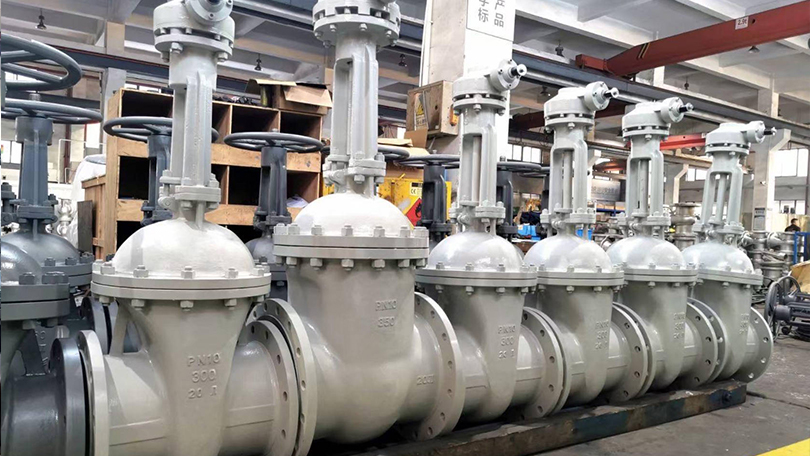
additionally, The distinction begins with scope. API 600 covers heavy-duty, bolted-bonnet steel gate valves for petroleum and natural gas industry applications, primarily in cast steel construction, from NPS 4 through NPS 24 (and larger for special applications). These are the gate valves you find on mainline pipelines, refinery process units, power plant steam systems, and critical isolation points where reliability over decades of service is non-negotiable.
API 602 covers compact, forged steel gate valves for the same petroleum and natural gas industries, but in smaller sizes — NPS 4 and smaller. These valves use forged steel components rather than castings, giving them superior material density and grain structure at the cost of a more limited size range. They are the workhorses of instrument connections, small-bore bypass lines, drain and vent valves, and high-pressure auxiliary systems.
Here is why this matters in practice: specifying an API 600 valve for a NPS 1 drain line is not just wasteful — it may be physically impossible due to the large body casting required. Conversely, installing an API 602 compact gate valve in a NPS 8 mainline where API 600 is the code-required standard could result in a wall thickness inadequate for the mechanical and thermal stresses of the service. Understanding the design envelope of each standard is the foundation of every correct gate valve specification.
Api 602 vs api 600 gate valve: 2. API 600 Gate Valve — The Heavy-Duty Bolted Bonnet Standard
Design and Construction Philosophy
API 600 (Steel Gate Valves — Flanged and Butt-Welding Ends, Bolted Bonnets) is the most widely referenced gate valve manufacturing standard in the hydrocarbon processing industry. The standard defines minimum requirements for body wall thickness, shell design, bonnet bolting, stem connections, seat design, and material traceability.
The defining characteristics of API 600 gate valves include:
- Cast steel or forged steel body construction (cast is typical for NPS 6 and above; forged is permitted for smaller sizes)
- Bolted bonnet design with a minimum specified number and diameter of bonnet studs
- Minimum body wall thickness requirements that exceed ASME B16.34 standard wall by 10-20% for corrosion allowance
- Integral or renewable seats with minimum seat ring thickness and specific seal width requirements
- Rising stem with backseat design for stem seal maintenance under pressure
- Minimum stem diameter requirements to prevent stem bending under differential pressure
- Full material traceability with documented chemical and mechanical properties
Design Envelope (Vornet Valve Product Range)
| Parameter | API 600 Specification |
|---|---|
| Size Range | NPS 2″ – 24″ (DN 50 – 600) |
| Pressure Class | Class 150 – 2500 (PN 16 – 420) |
| Body Construction | Cast steel (standard), Forged steel (NPS 2-4) |
| Bonnet Type | Bolted bonnet (standard), Pressure seal (Class 900+) |
| Wall Thickness | ASME B16.34 minimum + 10-20% corrosion allowance |
| Seat Type | Integral or renewable (threaded-in or welded) |
| Stem Design | Rising stem with backseat, lubricated or non-lubricated |
| Wedge Type | Solid wedge, flexible wedge, or split wedge per API 600 |
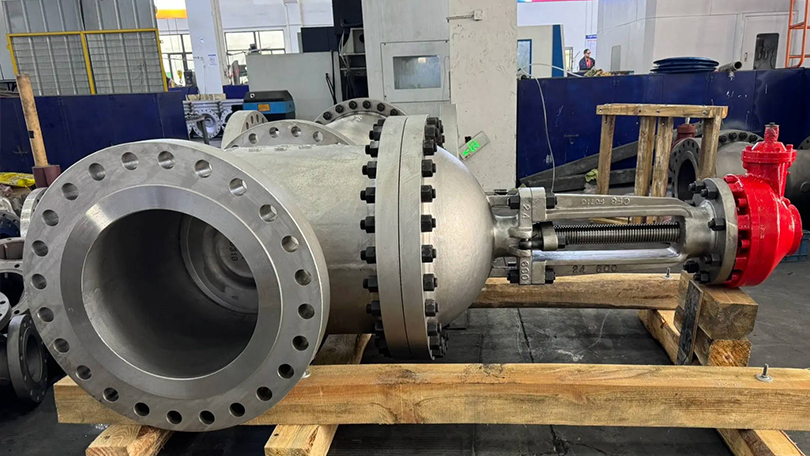
Where API 600 Gate Valves Perform Best
Refinery process units — Crude distillation, FCC, hydrocracker, and reformer units require API 600 gate valves with the corrosion allowance and material traceability that API 600 mandates.
Mainline pipeline isolation — API 600 valves on cross-country pipelines and transmission lines provide the mechanical integrity required for both normal operation and emergency shutdown scenarios.
Power plant steam systems — Main steam, reheat steam, and feedwater isolation where high pressure (up to Class 2500), high temperature (up to 650°C), and thermal cycling demands heavy-duty construction.
Emergency shutdown (ESD) valves — Safety-critical isolation points where zero-leakage under fire conditions is required.
Where API 600 Valves Are Not Suitable
Small-bore instrument and auxiliary lines — The cast body construction for sizes NPS 2 and below is mechanically excessive and cost-prohibitive.
Socket-weld or threaded end connections — API 600 primarily covers flanged and butt-weld end valves.
3. API 602 Gate Valve — The Compact Forged Steel Standard
Design and Construction Philosophy
API 602 (Compact Steel Gate Valves — Flanged, Threaded, Welding, and Extended Body Ends) covers the smaller end of the gate valve spectrum. Originally developed as a rationalization of the many different compact gate valve designs used in the industry, API 602 provides a unified standard for forged steel gate valves that are lighter, more compact, and more economical than their API 600 counterparts in the same size range.
The defining characteristics of API 602 gate valves include:
- Forged steel body construction in all sizes — superior grain structure, no casting porosity, and full traceability from the ingot to the finished forging
- Compact face-to-face dimensions that reduce piping stress and allow installation in tight piping layouts
- Threaded, socket-weld, flanged, or butt-weld ends with full coverage of small-bore piping connection types
- Bolted bonnet or welded bonnet designs available
- Minimum wall thickness based on ASME B16.34 standard wall (does not include extra corrosion allowance)
- Integral seats machined directly into the body forging (no renewable seat rings)
- Reduced material and manufacturing cost compared to API 600 in the same size range
Design Envelope (Vornet Valve Product Range)
| Parameter | API 602 Specification |
|---|---|
| Size Range | NPS 1/4″ – 4″ (DN 8 – 100) |
| Pressure Class | Class 150 – 2500 (PN 16 – 420) |
| Body Construction | Forged steel (exclusively) |
| Bonnet Type | Bolted bonnet or welded bonnet |
| Wall Thickness | ASME B16.34 standard wall (no additional allowance) |
| Seat Type | Integral seat (machined into body forging) |
| End Connections | Flanged (RF/RTJ), Socket Weld, Threaded (NPT/BSPT), Butt Weld |
| Wedge Type | Solid wedge (standard), Flexible wedge (optional) |
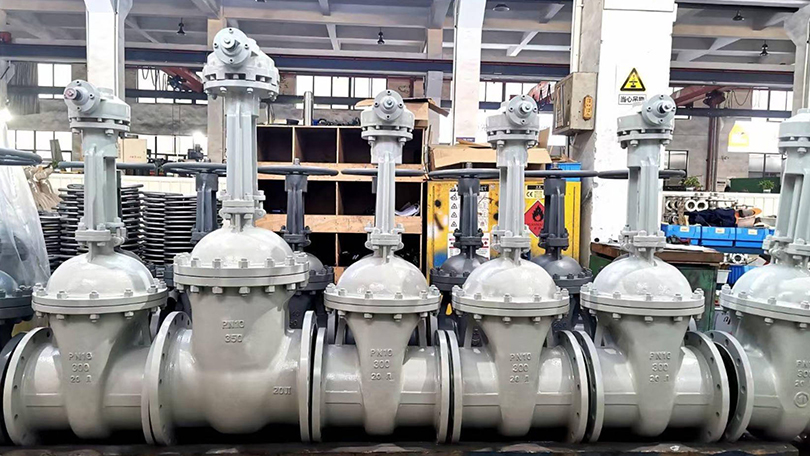
Where API 602 Gate Valves Perform Best
Bypass and equalization lines — Small-bore lines around larger valves — browse forged API 602 gate valves, pumps, and control valves where the gate valve provides isolation during warm-up or pressure equalization.
Instrument root valves — Isolation at the tap point for pressure gauges, level transmitters, flow meters, and analyzers.
Drain and vent valves — At low points in piping systems where condensate must be drained, and at high points where air must be vented.
Sample connections — Points where process fluid must be extracted for laboratory analysis.
High-pressure auxiliary systems — Hydraulic power units, seal oil systems, and gas boost compressors where working pressures exceed Class 1500 but line sizes are NPS 2 or smaller.
api 600 vs api 602 gate valve: 4. Side-by-Side Comparison Matrix
| Comparison Factor | API 600 Gate Valve | API 602 Gate Valve |
|---|---|---|
| Size Range | NPS 2 – 24 (larger on request) | NPS 1/4 – 4 |
| Body Construction | Cast steel (typical), forged permitted | Forged steel exclusively |
| Wall Thickness | B16.34 + 10-20% corrosion allowance | B16.34 standard wall |
| Seat Design | Integral or renewable | Integral only |
| Stem Diameter | Minimum specified per standard | Smaller — compact design |
| Face-to-Face | Per ASME B16.10 (long pattern) | Short pattern or manufacturer std |
| End Connections | Flanged, Butt Weld | Flanged, SW, NPT, BW |
| Corrosion Allowance | ≥ 2 mm (0.08 in) typical | None — limited to B16.34 minimums |
| Cost Factor (NPS 2-4) | 1.4 – 2.0x | 1.0x (baseline) |
| Weight (NPS 3, Class 600) | ~45 kg (cast body) | ~18 kg (forged body) |
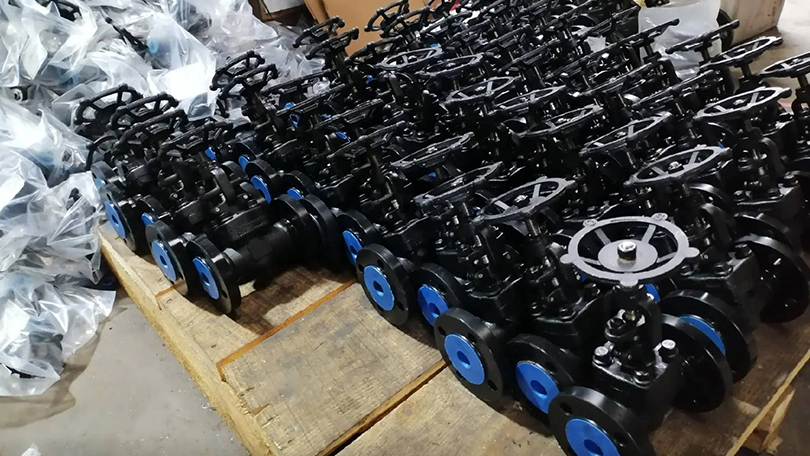
5. The Size Overlap Zone — NPS 2 to NPS 4
The most common source of confusion in gate valve specification is the size overlap between NPS 2 and NPS 4, where both API 600 and API 602 valves are available. In this zone, the engineer must evaluate the specific service requirements to determine which standard is appropriate.
Choose API 600 in the overlap zone when: The service is corrosive (corrosion allowance needed), the valve is in critical safety or emergency shutdown path, the operator requires renewable seats for maintenance, or the process fluid contains erosive particles.
Choose API 602 in the overlap zone when: Space and weight constraints are critical (skid-mounted equipment, offshore platforms), the service is non-corrosive (clean hydrocarbon, instrument air, water), or cost reduction is a primary project driver.
| Decision Factor | API 600 | API 602 |
|---|---|---|
| Corrosive service (H₂S, CO₂, acid) | ✅ Yes | ❌ No |
| Fire-safe / ESD service | ✅ Yes | With restrictions |
| Socket-weld or threaded ends | ❌ Not standard | ✅ Yes |
| Weight-sensitive (offshore, skid) | ❌ Heavy | ✅ Light |
| High cycle (>500 cycles/year) | ✅ Yes | ⚠️ Verify stem design |
| Renewable seats required | ✅ Yes | ❌ Integral only |
| Budget constraint | ❌ Higher cost | ✅ Lower cost |
6. Industry-by-Industry Selection Guide
| Industry | Application | Size | Standard | Reason |
|---|---|---|---|---|
| Oil & Gas Gas Upstream | Wellhead isolation | NPS 2-4 | API 602 | Forged body for HPHT; compact spacing |
| Refining | Main process isolation | NPS 10-24 | API 600 | High-temp, corrosive, heavy-wall |
| Refining | Instrument root valves | NPS 1/2-1 | API 602 | Socket-weld ends; compact |
| Petrochemical | Reactor feed line | NPS 6-16 | API 600 | Thermal cycling; hydrogen service |
| Pipeline | Mainline block valve | NPS 16-24 | API 600 | High pressure; ESD capable |
| Power Generation | Main steam isolation | NPS 8-20 | API 600 | Class 1500-2500; creep-resistant |
| Power Generation | Boiler drain | NPS 1-2 | API 602 | Forged body for frequent draining |
| Chemical | Chlorine service | NPS 1-2 | API 602 | Forged body eliminates porosity |
| Offshore | Platform utility header | NPS 2-4 | API 602 | Weight critical; crack resistance |
7. Pressure-Temperature Ratings and Wall Thickness
Both API 600 and API 602 reference ASME B16.34 for pressure-temperature ratings, but API 600 requires additional wall thickness beyond the ASME B16.34 standard wall. This extra thickness does not increase the pressure-temperature rating number — both standards at Class 600 have the same maximum allowable working pressure at the same temperature.
| Class | Max Pressure @ 100°F | API 600 (NPS 6) | API 602 (NPS 2) | B16.34 Std |
|---|---|---|---|---|
| 150 | 285 psig | 0.36″ / 9.1 mm | N/A | 0.28″ / 7.1 mm |
| 300 | 740 psig | 0.48″ / 12.2 mm | 0.33″ / 8.4 mm | 0.38″ / 9.7 mm |
| 600 | 1,480 psig | 0.63″ / 16.0 mm | 0.45″ / 11.4 mm | 0.52″ / 13.2 mm |
| 900 | 2,220 psig | 0.81″ / 20.6 mm | 0.56″ / 14.2 mm | 0.66″ / 16.8 mm |
| 1500 | 3,705 psig | 1.00″ / 25.4 mm | 0.72″ / 18.3 mm | 0.84″ / 21.3 mm |
| 2500 | 6,170 psig | 1.38″ / 35.1 mm | 0.98″ / 24.9 mm | 1.16″ / 29.5 mm |
Note: API 600 thickness values include built-in corrosion allowance; API 602 values follow ASME B16.34 standard wall. In the NPS 2-4 overlap zone, the actual wall thickness of an API 600 valve can be 30-50% greater than an API 602 valve of the same size and class.
8. Bonnet Designs: Bolted vs. Pressure Seal vs. Welded
Bolted Bonnet (Both Standards)
The most common bonnet design for both API 600 and API 602 gate valves. The bonnet is secured to the body with stud bolts and nuts, with a gasket providing the pressure seal. The bolted bonnet allows access to internal components for inspection and repair without removing the valve from the line.
Pressure Seal Bonnet (API 600 Only, Class 900+)
For API 600 valves in Class 900 and above, the pressure seal bonnet design is common. Higher pressure forces the seal ring tighter against the body. The bonnet is retained by a yoke or segmented ring rather than heavy stud bolts. Preferred for high-pressure steam service in power plants.
Welded Bonnet (API 602 Only)
API 602 allows a welded bonnet design for non-serviceable applications where the valve is expected to be replaced rather than repaired. The welded bonnet eliminates the potential leak path at the bonnet gasket and reduces overall valve weight by 15-25%.
9. Materials, Trim, and Seat Design
Body and Bonnet Materials
| Material | Standard | API 600 Use | API 602 Use |
|---|---|---|---|
| WCB (Carbon Steel) | ASTM A216 | General refinery, pipeline | General auxiliary, drain |
| WCC (Carbon Steel) | ASTM A216 | Higher-strength applications | High-pressure small bore |
| LCB/LCC (Low Temp) | ASTM A352 | Cryogenic, cold climate | Low-temp instrument lines |
| WC6/WC9 (Cr-Mo) | ASTM A217 | High-temp steam (650°C) | High-temp small bore |
| CF8/CF8M (SS) | ASTM A351 | Corrosive service | Corrosive auxiliary lines |
| Duplex 2205 | ASTM A995 | Offshore, chloride service | Offshore small bore |
Seat Design Comparison
API 600: Allows both integral seats (machined directly into the body casting) and renewable seats (threaded-in or welded seat rings). Renewable seats are preferred for mainline valves where seat damage can be repaired by replacing the seat ring.
API 602: Typically uses integral seats machined directly into the body forging. The forged body has superior material density compared to castings, reducing the risk of seat-face porosity, but the integral seat cannot be replaced.
10. Procurement Specification Checklist
| # | Specification Item | Your Data |
|---|---|---|
| 1 | Pipe size (NPS): Under 4″ → API 602; 4″+ → API 600 | ________ |
| 2 | Pressure class (150 / 300 / 600 / 900 / 1500 / 2500) | ________ |
| 3 | End connection type | ________ |
| 4 | Body material and ASTM grade | ________ |
| 5 | Is the fluid corrosive? | ________ |
| 6 | Is space or weight critical? | ________ |
| 7 | Are renewable seats required? | ________ |
| 8 | Operating temperature range | ________ |
| 9 | Wedge type: Solid / Flexible / Split | ________ |
| 10 | Bonnet type: Bolted / Pressure seal / Welded | ________ |
| 11 | NACE MR0175 / MR0103 required? | ________ |
| 12 | Fire-safe certification? (API 6FA / API 607) | ________ |
| 13 | Fugitive emissions? (ISO 15848-1) | ________ |
| 14 | Actuation type | ________ |
| 15 | Testing per API 598 | ________ |
Need API 600 or API 602 gate valves? View our gate valve product range with full API specification compliance, various trim options, and custom engineering support.
11. Common Specification Mistakes to Avoid
After reviewing hundreds of gate valve RFQs, our engineering team has identified five recurring specification errors that lead to delivery delays, cost overruns, or incorrect valve selection:
Mistake 1: Specifying API 600 for small-bore non-critical drain lines
Using API 600 for NPS 1-2 instrument root valves or drain valves wastes budget. API 602 forged steel valves at 40-60% lower cost provide adequate service life for non-corrosive auxiliary applications. Reserve API 600 for mainline process isolation.
Mistake 2: Omitting NACE MR0175 requirement for sour service
If the process fluid contains H2S above the NACE threshold (partial pressure >0.05 psia), both body material and trim must comply with NACE MR0175/ISO 15156. For API 600, specify WCB with hardness maximum HRC 22. For API 602, specify A350 LF2 Class 1. Missing this spec can cause sulfide stress cracking within months.
Mistake 3: Ignoring bonnet gasket material for thermal cycling
Standard spiral-wound graphite gaskets perform well for steady-state operation. For frequent thermal cycling (refinery start-up/shutdown cycles), specify flexible graphite with a stainless steel inner ring — it maintains seal integrity through differential thermal expansion and prevents fugitive emissions.
Mistake 4: Confusing pressure class with wall thickness
A Class 600 API 602 valve and a Class 600 API 600 valve have the same pressure-temperature rating per ASME B16.34 — but the API 600 body is 10-20% thicker. The extra thickness is NOT for higher pressure; it is corrosion allowance. In corrosive service, the API 602 valve may require upgrading to a higher class or a more corrosion-resistant material to compensate for the thinner wall.
Mistake 5: Skipping fire-safe certification for ESD valves
Emergency shutdown gate valves in hydrocarbon service require fire-safe certification per API 6FA or API 607. API 600 valves are inherently fire-safe due to their metal-to-metal seat design. API 602 compact valves may need a fire-safe seat design upgrade — verify before specifying for ESD duty.
Best practice: Submit a complete valve datasheet with your RFQ — fill in the 15-point checklist above and include the process fluid composition, operating temperature range, and any special coating requirements. This eliminates the most common sources of specification error.
For technical support on API 600 or API 602 gate valve specifications, contact our valve engineering team.
12. Frequently Asked Questions
Q1: What is the main difference between API 600 and API 602 gate valves?
A: API 600 covers heavy-duty bolted-bonnet gate valves (NPS 2-24, typically cast steel) with extra wall thickness for corrosion allowance. API 602 covers compact forged steel gate valves (NPS 1/4-4) with standard wall thickness. API 600 is for critical process service; API 602 is for auxiliary and small-bore service.
Q2: Can API 602 replace API 600 in NPS 2 to NPS 4?
A: Not automatically. API 602 is acceptable if the service is non-corrosive, does not require renewable seats, and space/weight constraints apply. For corrosive, fire-safe, or critical safety service, API 600 is correct.
Q3: Why does API 600 require thicker walls than API 602?
A: API 600 provides 10-20% extra wall thickness above ASME B16.34 standard for long-term corrosion allowance in refinery and hydrocarbon service.
Q4: What is the maximum size for API 602 gate valves?
A: API 602 officially covers sizes NPS 4 and smaller. For NPS 6 and above, API 600 or ASME B16.34 standard values apply.
Q5: Do API 600 and API 602 use the same pressure-temperature ratings?
A: Yes — both reference ASME B16.34. The extra wall thickness in API 600 does not increase the pressure rating; it provides corrosion allowance.
Q6: Are API 600 valves always cast steel?
A: No. API 600 permits both cast and forged steel construction. In smaller sizes (NPS 2-4), forged steel API 600 valves are available.
Q7: What is the typical delivery time?
A: API 602 standard valves: 1-3 weeks. API 600 cast steel (NPS 4-12, Class 150-600): 4-8 weeks. API 600 high-pressure or exotic trim: 10-16 weeks.
Q9: Do I need NACE MR0175 for API 600 or API 602 gate valves?
A: If the fluid contains H2S (sour service per NACE MR0175/ISO 15156), YES. For API 600, specify WCB body with HRC 22 max and trim per NACE. For API 602, specify A350 LF2 Class 1 or A182 F316 with appropriate hardness limits. Both standards can be supplied with NACE compliance — specify it clearly in your RFQ.
Q8: How do I identify the wall thickness difference?
A: Measure body wall with an ultrasonic thickness gauge at the body centerline. API 600 will be 10-20% greater than B16.34 standard wall; API 602 matches standard wall.
• API 602 Gate Valve Guide
• Forged Steel Gate Valve Selection Guide
• API 600 Globe Valve vs Gate Valve