
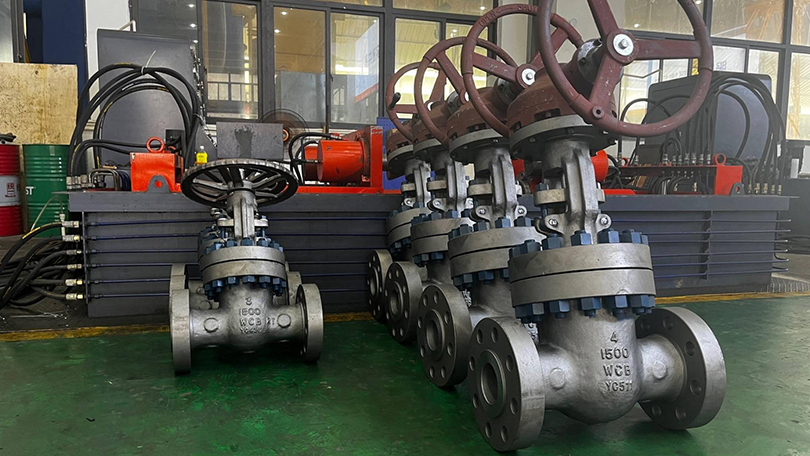
API 602 Gate Valve: Complete Guide to Features, Specifications, and Applications
📋 Key Takeaways
- API 602 covers compact forged steel gate valves for refinery, chemical, and power plant services in sizes NPS 1/4 to 4.
- Threaded, socket-weld, and flanged end connections accommodate diverse piping system requirements.
- Standard- and full-bore options may be available; confirm minimum bore and Cv/Kv on the certified drawing.
- ASTM material grades and any NACE MR0175/ISO 15156 sour-service requirements must be specified and documented for the actual duty.
This guide explains compact API 602 gate-valve configurations within the standard’s scope through DN 100 (NPS 4). Detailed size, class/rating, end-connection, bore, stem, and bonnet provisions depend on the selected construction. Apply the current API 602 edition together with the relevant ASME pressure-temperature rating and purchaser specification; a forged valve marketed at a pressure class outside the configuration-specific API 602 scope is not automatically an API 602 valve.
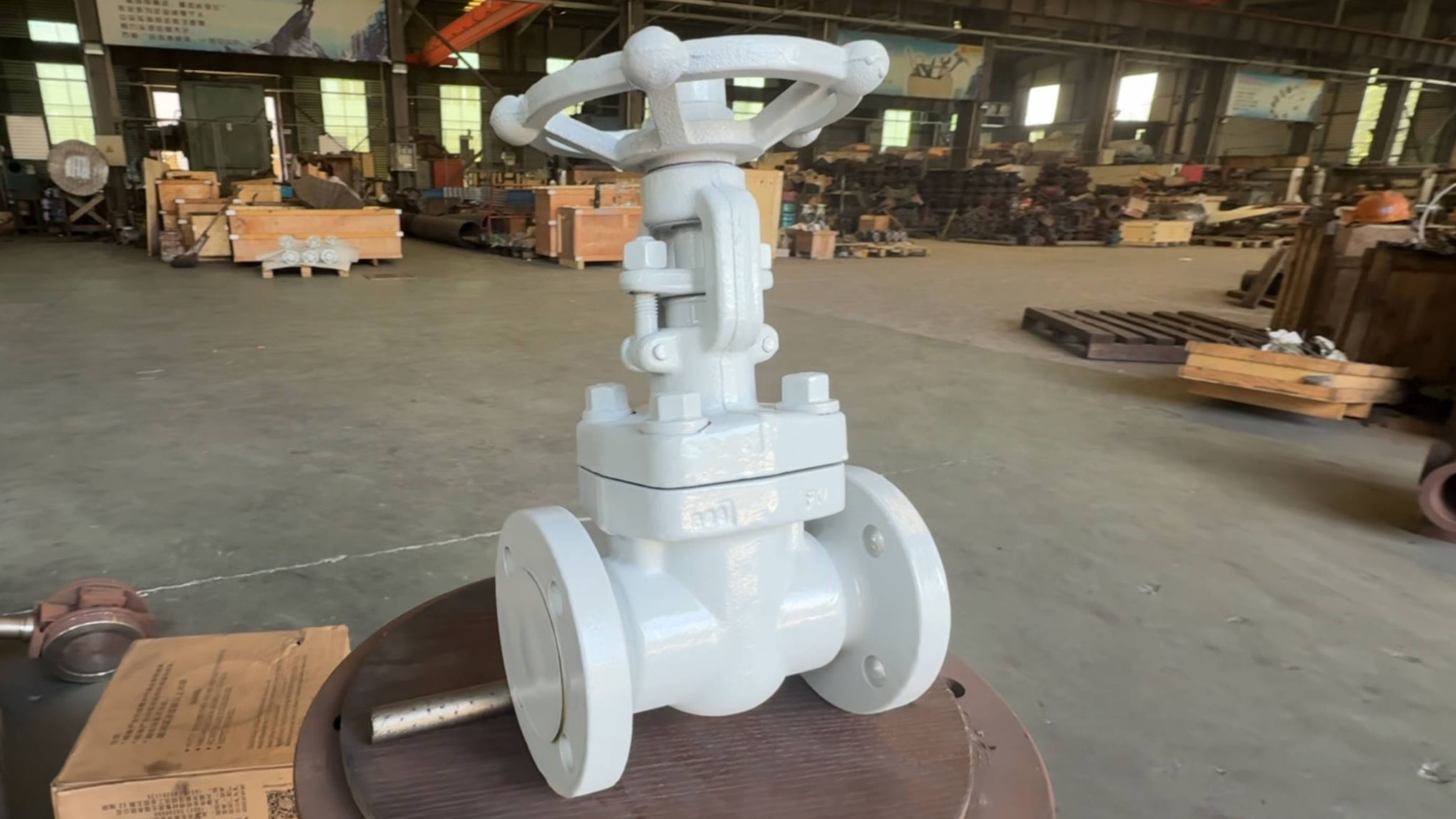
API 602 compact valves use forged steel components within the applicable configuration. Manufacturing route alone does not establish mechanical performance or fitness for critical service; confirm material grade, heat treatment, examination, testing and approved design data.
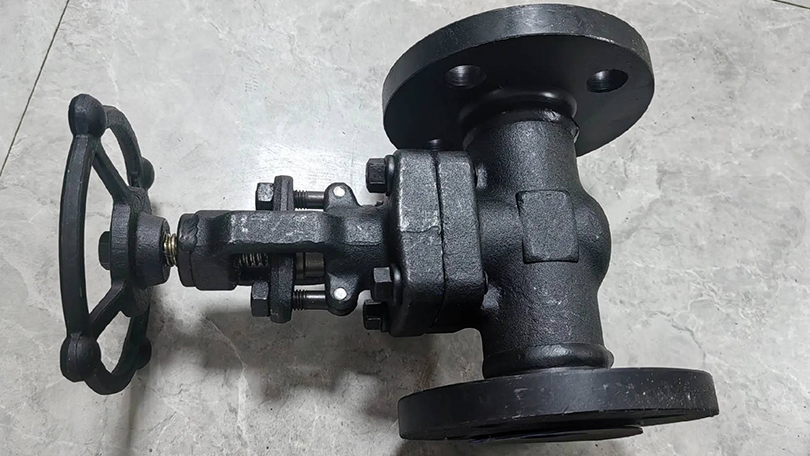
Key Features of API 602 Gate Valves
1. Forged Steel Body Construction
API 602 compact valves are commonly produced from forged steel. Forging can reduce casting-related discontinuities, but mechanical properties and pressure integrity still depend on the specified material grade, heat treatment, manufacturing controls, examination, and test results. Common options include carbon, low-temperature, stainless, alloy, and duplex grades selected for the actual fluid and design conditions.
2. Bonnet Joint Options
Bonnet-joint construction is configuration- and edition-dependent. Confirm the permitted joint type, pressure rating, sealing detail, maintainability and the manufacturer’s approved drawing for the ordered valve.
3. Rising Stem and OS&Y Configuration
Outside-screw-and-yoke rising-stem construction is common and provides visible position indication while keeping the stem threads outside the pressure boundary. API 602 also contains configuration-specific provisions, so verify the stem arrangement, size, class, and operating direction for the selected valve.
4. Full Port or Reduced Port Options
Standard- and full-bore seat-opening options may be available. Bore designation does not by itself guarantee a pipe-matching inside diameter or piggability; confirm the minimum bore, flow coefficient, and any pig-passage requirement on the certified drawing.
5. Flexible Wedge or Solid Wedge Disc
The closure element may use a solid or flexible wedge, subject to the selected design. A flexible wedge can accommodate some seating distortion, but suitability for thermal cycling or high-pressure service must be established from the complete design, materials, clearances, and qualification—not from wedge type alone.
6. Seat Construction Options
Seat construction and attachment vary by design. Replaceable or hardfaced seating may improve repairability or wear resistance, but confirm the permitted construction, base material, hardfacing alloy, corrosion compatibility, and repair procedure for the ordered valve. For a detailed comparison of Stellite, tungsten carbide and chromium carbide overlays, see our valve trim coating selection guide.
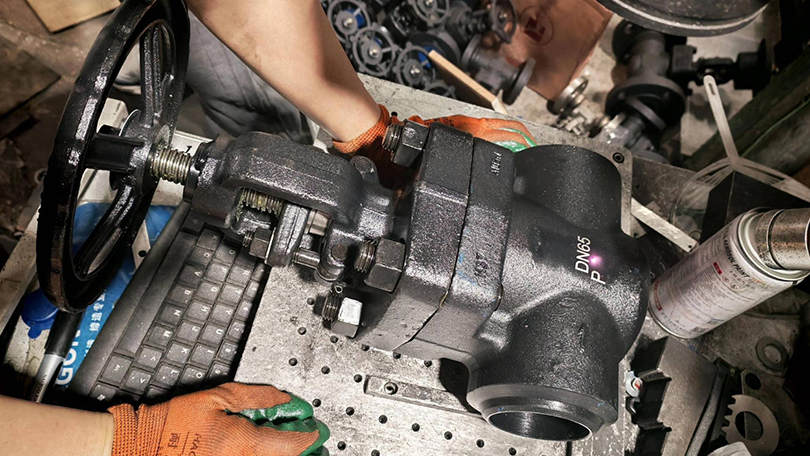
Api 602 gate valve: API 602 Technical Specifications
| Parameter | Specification |
|---|---|
| Size Range | NPS 1/4″ to 4″ (DN 8 to DN 100) |
| Pressure Classes | Configuration-dependent; API 602 includes specified class/rating combinations such as Class 150, 300, 600, 800 and 1500. Verify the current edition and end connection. |
| Temperature Range | Not a universal API 602 range; limited by material, class, packing, bolting, trim, fluid, and ASME pressure-temperature rating |
| Body Materials | Common candidate forged grades; exact ASTM grade, heat treatment, availability and suitability are configuration- and order-dependent. |
| Trim Materials | Project-specified stem, wedge, seat and hardfacing materials; verify compatibility and the applicable trim requirements |
| End Connections | Threaded (NPT/BSPT), Socket Weld, Butt Weld, Flanged (RF/RTJ) |
| Bonnet Type | Configuration-dependent bonnet joint; confirm permitted construction and class |
| Design Standards | API 602 plus the connection, dimension, material, and rating standards invoked by the selected configuration and purchase specification |
| Testing Standards | API 598 or the contractually specified test standard and acceptance criteria |
| Operation | Handwheel, Gearbox, Pneumatic, Electric Actuator |
Industry Applications of API 602 Gate Valves
API 602 gate valves are commonly evaluated for compact on-off isolation where space, forged construction and project-specific end connections matter. The standard designation does not approve a service by itself; the piping class, fluid, pressure, temperature, material, trim, testing and documentation still control the final selection.
Oil, Gas & Refining
Small-bore drains, vents, bypasses, utility lines and process-isolation points, subject to the refinery piping class and hazardous-fluid requirements.
Power & Energy
Steam auxiliaries, boiler feedwater support lines, fuel systems and plant utilities after pressure-temperature, thermal-cycle and material review.
Chemical Processing
Compact isolation in process and utility piping where the complete chemical composition, concentration, temperature and corrosion mechanism are defined.
Offshore & Marine
Selected process and utility duties requiring project-specific corrosion protection, material traceability, inspection and documentation.
For demanding duties, review the NACE MR0175 sour-service requirements and confirm pressure, temperature, and materials in the datasheet before finalizing the selection.
Procurement Considerations for Middle East and South Asia Projects
API 602 enquiries for Saudi Arabia and the UAE commonly form part of refinery, petrochemical and sour-service packages. When NACE MR0175/ISO 15156 is specified, identify the governing edition, service environment, complete material scope, hardness limits, testing, inspection and documentation requirements. Do not treat API 602 or a material grade alone as sour-service approval.
Indian power, process-plant and EPC packages should state piping class, size and rating, end connection, material and trim, design pressure and temperature, test standard, ITP/MTC requirements and any purchaser-specific documentation. IBR should be included only when the actual project specification requires it. For all three markets, use “when specified” and “subject to project requirements” for optional standards, third-party inspection and documentation, and confirm the final configuration in the approved datasheet and quotation.
Project Case Video
2″ Class 600 Forged Slab Gate Valve Assembly
This workshop video records the internal assembly of a 2-inch Class 600 forged slab gate valve, including the stem-to-gate connection, sealing components and internal positioning. It is included as a related forged-valve manufacturing case. Slab-gate geometry and API 602 scope are not interchangeable, so the video should not be treated as proof that every shown configuration is an API 602 valve.
2″
Class 600
Internal assembly
Review the related forged steel slab gate valve. For a compact wedge design within the API 602 selection path, use the API 602 forged steel gate valve product page.
API 602 vs API 600: Key Differences
| Characteristic | API 602 (Compact Forged) | API 600 (Cast Steel) |
|---|---|---|
| Body Construction | Forged Steel | Cast Steel |
| Size Range | NPS 1/4″ – 4″ | NPS 2″ – 36″+ |
| Pressure Rating | Configuration-specific; verify the current API 602 edition, valve type, material, size, end connection and temperature. | Configuration-specific; verify the current API 600 edition, material, size, end connection and temperature. |
| Impact Resistance | Material- and process-dependent | Material- and process-dependent |
| Typical Applications | High-pressure small bore | Large diameter main lines |
| Cost per Unit | Compare like-for-like quotations; size, class, material, testing and quantity dominate | |
For a more detailed comparison, see our API 600 vs API 602 Gate Valve: Complete Specification Guide.
For the broader procurement sequence, use the industrial valve selection guide to define service conditions first, then review the forged steel gate valve selection guide for materials, end connections, actuation and acceptance documents.
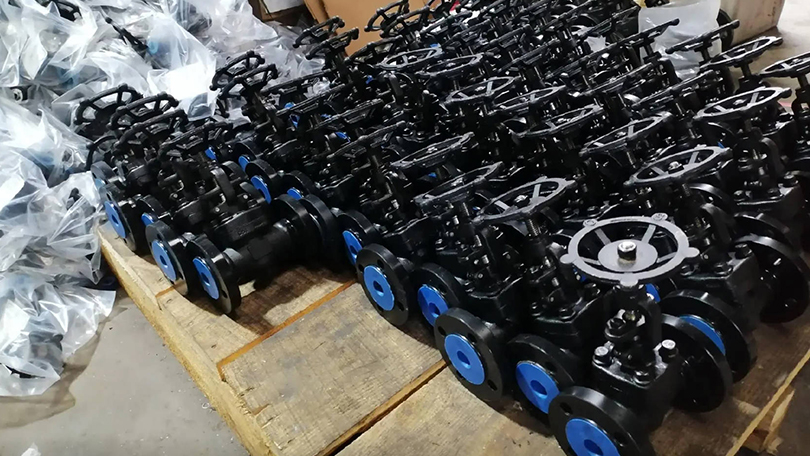
Looking for a purchasable configuration? Review the API 602 forged steel gate valve product page and confirm the exact size, class, end connection, materials, testing and documentation in the quotation.
API 602 Gate Valve FAQ
What is the difference between API 602 and API 600 gate valves?
API 602 covers compact steel gate, globe, and check valves through NPS 4, with detailed limits that depend on valve type, class/rating, end connection, and construction. API 600 covers bolted-bonnet steel gate valves for flanged and butt-welding-end applications across a broader size range. Select by the current standard edition and project specification, not by forged-versus-cast shorthand alone.
What materials are available for API 602 gate valves?
Common forged grades include carbon, low-temperature, stainless, chrome-moly, and duplex steels. Material availability does not establish suitability: check pressure-temperature ratings, corrosion and H₂S requirements, impact testing, heat treatment, hardness, trim, bolting, packing, and certification.
What is the maximum pressure rating for API 602 gate valves?
There is no single maximum working pressure that applies to every API 602 valve. The standard defines configuration-specific class/rating combinations, while allowable pressure falls with temperature and varies by material. Confirm the current API 602 edition, ASME rating table, end connection, and manufacturer datasheet. A Class 2500 forged valve should not automatically be described as API 602.
Can API 602 gate valves be used for sour gas service?
They may be supplied for sour service when the complete pressure-containing and wetted material set, heat treatment, hardness, manufacturing route, bolting, trim, and documentation meet the specified NACE MR0175/ISO 15156 requirements and the purchaser’s service conditions. State the H₂S environment and sour-service requirements at enquiry.
What end connections are available for API 602 gate valves?
Depending on size, class/rating, and configuration, API 602 valves may use threaded, socket-welding, butt-welding, or flanged ends. Permitted combinations are not interchangeable across the full size and rating range, so confirm the current standard and project piping specification.
Need an API 602 gate valve for your project? Send the complete datasheet for a configuration and documentation review.
Next Step: Send the API 602 Datasheet
Review the API 602 product configuration, then send the project RFQ with size, class, end connection, body and trim materials, fluid, temperature, test standard, inspection points and required documentation.
Looking for a Reliable Forged Steel Gate Valve Manufacturer?
Vornet Valve supplies industrial valve configurations for international projects. For an API 602 enquiry, state the valve type, NPS/DN, class or rating, end connection, body and trim materials, design temperature, fluid, corrosion requirements, testing, inspection, and documentation. Any Class 2500 forged-valve requirement should be reviewed separately against the applicable design basis rather than assumed to fall within API 602.
Contact us today for a quote or technical consultation:
- Email: jessamyn@vornetvalve.com
- WhatsApp: +86 17888190118
- Website: www.vornetvalve.com