
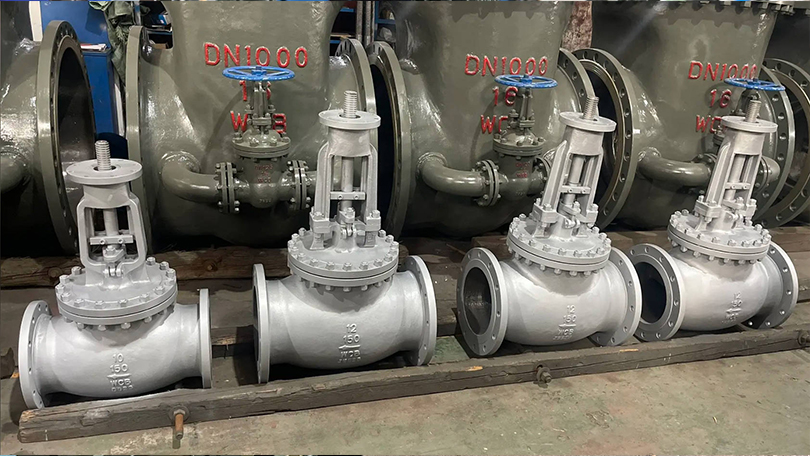
How to Select the Right Globe Valve for Different Working Conditions | B2B Industrial Selection Guide
📋 Key Takeaways
- Globe valves excel at throttling and regulating flow due to their linear motion disc design.
- Key selection criteria include flow characteristics, pressure drop, shut-off tightness, and stem type.
- Angle-pattern globe valves reduce erosion by minimizing flow directional changes in high-velocity service.
- Material selection for seat and disc must match media corrosiveness, temperature, and pressure requirements.
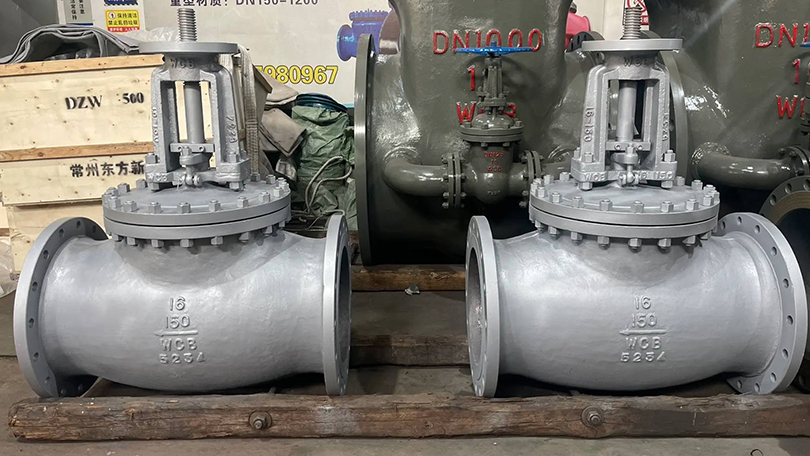
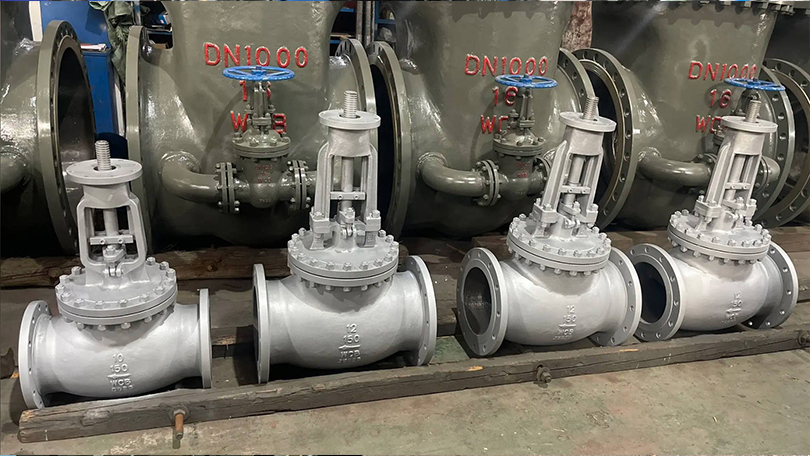
Therefore, This globe valve selection guide helps this globe valve selection guide covers all major globe valve types, materials, and sizing considerations for industrial applications. As a core linear industrial globe valve, the globe valve is widely used for flow throttling and medium isolation in oil & gas, chemical, power generation and water treatment process piping. Different working conditions impose distinct structural, material and performance requirements on globe valves. This guide provides a systematic selection framework for global B2B valve buyers and EPC procurement teams.
1. Core Globe Valve Selection Principles: Master Basic Structural Features for Industrial Applications
For example, global industrial buyers must master industrial globe valve core pros, cons and application scope before project procurement decision.
1.1 Key Advantages
- Better bubble-tight sealing performance than standard gate valves
- Short opening-closing stroke minimizes disc wear
- Standard replaceable seat design facilitates onsite maintenance
- Superior flow regulation linearity
1.2 Disadvantages & Application Limitations
- Higher fluid resistance causes obvious pipeline pressure drop
- Larger operating torque than gate valves, requiring auxiliary actuation for large-diameter service
- Directional installation required (low-in high-out)
- Not suitable for particle-laden or high-viscosity media prone to deposition
1.3 Core Working Function
However, Integrated dual function: precise flow regulation and full medium cut-off. It is a mainstream regulating isolation valve for diversified industrial process piping.
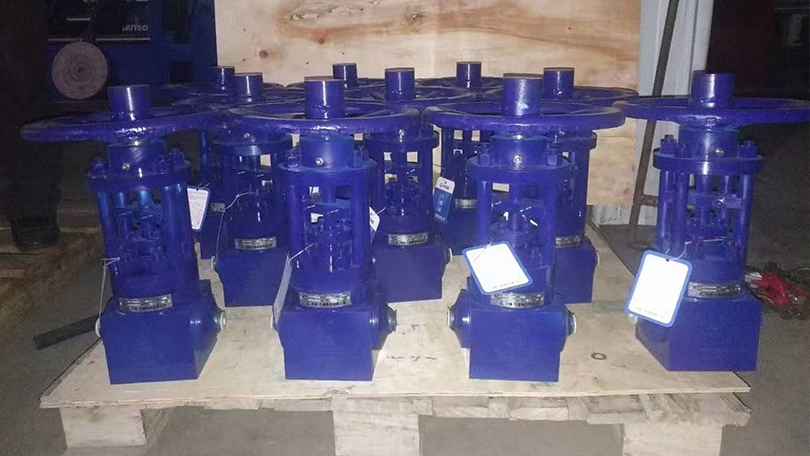
2. Step-by-Step Globe Valve Selection Process for Diversified Working Conditions
Step 1: Select Body & Seat Material Based on Process Medium Properties
Therefore, Medium compatibility determines industrial globe valve service life and site adaptability. Confirm medium composition, temperature range, corrosivity and particle content before material grade selection.
2.1 Common Non-Corrosive Medium: Water, Air, Fuel Oil, Saturated Steam
Furthermore, Body Material Matching: HT200 grey cast iron & QT400 ductile iron for general water and air pipelines; WCB cast carbon steel for above 200°C oil, steam and industrial medium pipelines.
However, Sealing Trim Matching: Copper alloy for ambient water/air; 13Cr/304 stainless steel for oil and regular steam; Stellite hardfacing for severe services.
2.2 Corrosive Medium: Acid, Alkali, Salt Solution
Therefore, Body Material Matching: 304/316/316L stainless steel for mild corrosive fluid; duplex steel and Hastelloy for strong corrosive chemical pipelines.
Furthermore, Sealing Trim Matching: Homogeneous metal seal for metal-sealed globe valves; PTFE, RPTFE and PPL soft seals for zero-leakage chemical globe valve requirements.
2.3 Crystallizable, High-Viscosity, Particle-Laden Medium
Choose Y-type globe valve or angle globe valve with straight flow passage to avoid medium deposition and valve jamming from particle accumulation.
2.4 Toxic, Flammable Explosive, Radioactive Medium
Bellows sealed globe valve is the only zero-leakage globe valve option for toxic, flammable and radioactive medium. The double-layer metallic bellows provides hermetic stem sealing with zero fugitive emission, complying with ISO 15848 and TA-Luft fugitive emission standards.
Step 2: Select Structure Based on Working Pressure & Temperature Class
Working pressure and temperature define industrial globe valve structural safety. Global projects adopt PN metric and ASME Class dual pressure rating systems.
2.5 Low Pressure & Ambient Temperature: PN≤1.6MPa, T≤200°C
Pressure class: PN10/PN16; Standard rising stem globe valve with flange or thread end, installed low-in high-out. Cost-efficient for general utility pipelines.
2.6 Medium Pressure & High Temperature: PN>1.6MPa, T>200°C (Steam, Hot Oil Loop)
Pressure class: PN25, PN40, Class300; WCB cast steel/WC6/WC9 chrome-moly steel globe valve body; Stellite 6 hardfaced seat and disc for high-temperature durability.
2.7 Ultra-High Pressure Service: PN≥10.0MPa (Boiler Feedwater, Fertilizer Process Pipeline)
Pressure class: PN100, PN160, Class600+; Butt-welded end & pressure self-sealing bonnet for ultra-high pressure service.
Step 3: Confirm End Connection & Actuator per Installation & Control Requirements
2.8 Four Common End Connection Types
- Flange connection: Universal for most pipelines, easy maintenance, ideal for bulk valve procurement;
- Threaded connection: Compact for DN50 small-bore limited-space pipelines;
- Butt-welded connection: High-pressure high-temperature zero-leakage mainline use, non-detachable;
- Ferrule connection: Exclusive for instrument piping and small skid-mounted equipment.
2.9 Actuator Operation Mode Selection
- Handwheel operation: Standard for DN≤200 low-frequency globe valves, cost-saving for regular procurement;
- Gearbox operation: Equipped for DN>200 high-pressure globe valves to reduce operating torque;
- Electric/Pneumatic actuator: For remote control, frequent operation and DCS linkage; modulating actuators customized for precise flow control.
Globe Valve vs Gate Valve: Key Selection Differences
| Selection Factor | Globe Valve | Gate Valve |
|---|---|---|
| Primary Function | Throttling & flow control | On/off isolation |
| Flow Path | Z-shaped (high pressure drop) | Straight-through (low pressure drop) |
| Pressure Class | Class 150 — 2500 | Class 150 — 4500 |
| Size Range | NPS 1/2″ — 24″ (DN 15 — 600) | NPS 1/2″ — 60″ (DN 15 — 1500) |
| Flow Coefficient (Cv) | Moderate (restricted flow path) | High (full bore) |
| Shut-off Capability | Excellent (Class V-VI per FCI 70-2) | Good (Class IV-V per FCI 70-2) |
| Throttling Suitability | Excellent (regrindable seat) | Poor (seat damage risk) |
| Installation Space | Taller (rising stem, bonnet) | Longer (gate travel path) |
| Typical Applications | Steam drains, boiler feedwater, chemical injection, cooling water | Pipeline isolation, tank farm, mainline block |
| Flow Direction | Mandatory (under seat / over seat) | Bi-directional |
| Relative Cost (same size, Class 300) | ~15-25% higher than gate valve | Baseline |
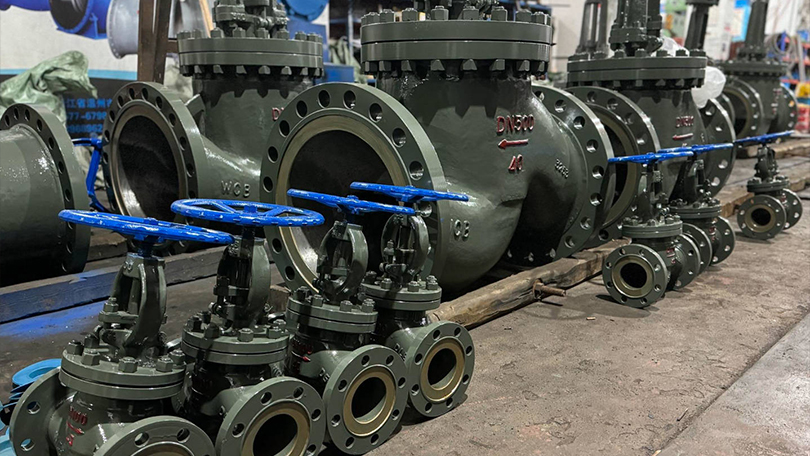
Body Material Selection by Process Medium
| Media Type | Examples | Recommended Body Material | Trim Material | Max Temp |
|---|---|---|---|---|
| Water & Non-Corrosive | Fresh water, cooling water, air, inert gas | WCB (ASTM A216) | 13Cr / F6a | 425°C |
| Steam & Condensate | Saturated steam, superheated steam | WCB / WC6 (ASTM A217) | 13Cr / Stellite overlay | 595°C |
| Oil & Hydrocarbon | Crude oil, fuel oil, lube oil | WCB / LCB (ASTM A352) | 13Cr / Monel | 345°C |
| Mild Acid / Alkali | Dilute H2SO4, NaOH solution | CF8 (304) / CF8M (316) | 304 / 316 | 400°C |
| Strong Acid / Chloride | HCl, H2SO4 concentrate, seawater | CF8M (316L) / Duplex 2205 | 316L / Hastelloy C276 | 250°C |
| High-Temp Steam (>500°C) | Superheated steam, heat transfer fluid | WC9 (1-1/4Cr-1/2Mo) | Stellite 6 (seat & disc) | 595°C |
| Cryogenic Service | LNG, liquid nitrogen, LPG | LCB / LCC (ASTM A352) | 316L / PTFE seat | -46°C |
| Corrosive Slurry | Phosphoric acid, mining slurry | Duplex 2507 / Super Duplex | Duplex / Stellite | 260°C |
Common End Connection Types for Globe Valves
| Connection Type | Size Range | Pressure Limit | Best For | Standard |
|---|---|---|---|---|
| Flanged | NPS 1/2″ — 24″ | Class 150 — 2500 | General industrial, easy maintenance | ASME B16.5 / B16.47 |
| Butt Weld (BW) | NPS 2″ — 24″ | Class 600 — 2500 | High-pressure, permanent installation | ASME B16.25 |
| Socket Weld (SW) | NPS 1/2″ — 2″ | Class 800 — 4500 | High-pressure small bore | ASME B16.11 |
| Threaded (NPT) | NPS 1/4″ — 2″ | Class 150 — 300 | Low-pressure, instrumentation | ASME B1.20.1 |
Core Checklist for Final Globe Valve Selection
Before finalizing your globe valve procurement, confirm the following 4 core items:
- Medium Attribute: Verify medium composition, phase state, corrosivity, viscosity, and solid particle content to determine compatible body and trim materials.
- Operating Parameters: Confirm working pressure (PN/Class rating), operating temperature range, and required flow characteristics for proper structural design selection.
- Functional Demand: Define whether the valve serves primarily as a shut-off isolation valve, a throttling control valve, or both — this determines seat design and actuation requirements.
- Site Control Demand: Assess installation space constraints, manual vs. automated actuation needs, DCS/PLC integration requirements, and maintenance accessibility.
Frequently Asked Questions (FAQ)
Q1: What is the main difference between a globe valve and a gate valve?
Globe valves use a disc-and-seat mechanism with linear motion, making them superior for flow regulation and throttling, whereas gate valves use a wedge that moves perpendicular to flow and are primarily designed for full-open or full-close isolation service. Globe valves provide tighter shut-off but have higher pressure drops than gate valves.
Q2: Can globe valves be used for steam applications?
Yes, globe valves are widely used in steam service. For saturated and superheated steam above 200°C, select WCB cast carbon steel or WC6/WC9 chrome-moly steel body materials with Stellite hardfaced trim for high-temperature durability and erosion resistance.
Q3: Why do globe valves have a flow direction requirement?
Globe valves are designed for low-in, high-out flow direction (fluid enters under the disc). This configuration reduces the required operating torque, minimizes water hammer effects during closing, and protects the packing from direct pressure exposure. Incorrect installation can cause leakage, excessive wear, and operational difficulty.
Q4: When should I choose a bellows-sealed globe valve?
Bellows-sealed globe valves are the mandatory choice for toxic, flammable, explosive, or radioactive media where zero fugitive emissions are required. The double-layer metallic bellows provides hermetic stem sealing with zero leakage to atmosphere, complying with ISO 15848 and TA-Luft standards.
Q5: What is a Y-type globe valve and when is it used?
A Y-type globe valve features a 45° angled seat and stem arrangement relative to the flow path, which significantly reduces flow resistance compared to standard straight-pattern globe valves. It is ideal for high-pressure steam, oil, and gas applications, and for media prone to coking or solids accumulation.
Q6: How do I select the right actuator for a globe valve?
For DN≤200 low-frequency manual operation, a standard handwheel suffices. For DN>200 high-pressure valves, a gearbox reduces operating torque. For remote control, frequent cycling, or DCS/PLC integration, select an electric or pneumatic actuator — with modulating control actuators for precise flow regulation applications.
Q7: What end connection type is best for high-pressure applications?
For ultra-high pressure services (PN≥10.0MPa, Class600+), butt-welded end connections with pressure self-sealing bonnets are the industry standard. Butt-welded connections provide superior joint integrity and eliminate potential leak paths associated with flanged or threaded connections under extreme pressure cycling.
Q8: How do I ensure chemical compatibility for corrosive media?
Start by confirming the full chemical composition, concentration, and operating temperature of the process medium. For mild corrosive fluids, 304/316/316L stainless steel bodies are standard. For strong acids, alkalis, or chlorides, specify duplex stainless steel, Hastelloy, or PTFE/RPTFE soft-seated trim. Always consult material compatibility charts and, for critical services, request corrosion test data from the valve manufacturer. All material specifications reference ASTM International standards and ASME codes.
• Globe Valve Types Guide
• API 600 Gate Valve vs Globe Valve
• Valve Material Selection Guide