
Knife Gate Valve Guide: Types, Applications & Selection
Knife gate valves are specialized isolation valves with a sharp-edged gate that cuts through slurries, sludge, and fibrous materials. Unlike conventional gate valves, they're designed for dirty service — pulp and paper, mining, wastewater, chemical processing. Available in sizes 2" to 48" with pressure ratings to Class 300, knife gate valves cost 30–50% less than equivalent gate valves in larger sizes.
📋 Key Takeaways
- Knife gate valves use a sharp-edged gate that cuts through slurries and solids to close — they’re designed for dirty service, not clean pipelines.
- The biggest difference from a conventional gate valve: knife gate valves are uni-directional and NOT intended for bubble-tight shut-off against full rated pressure.
- Metal-seated knife gate valves seal by gate-to-seat contact. Resilient-seated (lined) models use elastomer sleeves for better sealing in low-pressure applications.
- Knife gate valves cost 30–50% less than equivalent gate valves in sizes above 8″, but they cannot replace gate valves in high-pressure or bidirectional isolation service.
- These valves are standard in pulp and paper, mining, wastewater, and chemical plants — anywhere the fluid carries solids that would destroy a conventional gate valve seat.
What Is a Knife Gate Valve?
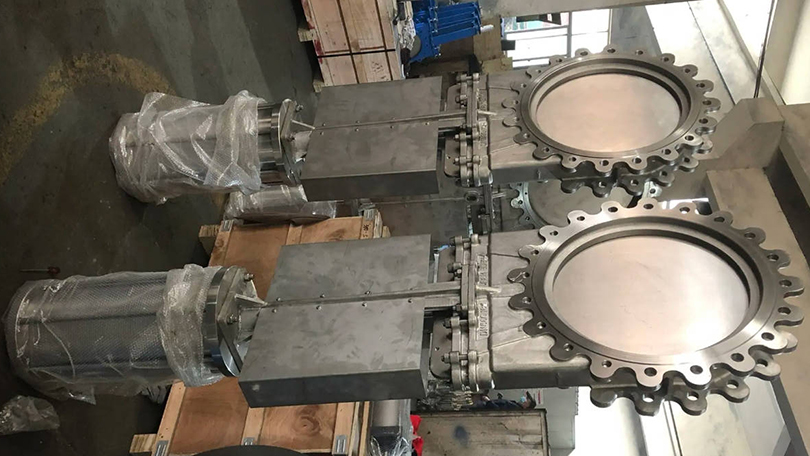
A knife gate valve is a specialized isolation valve with a sharp, knife-like gate that cuts through fluids containing solids. The gate slides vertically between two seat rings (or a one-piece liner) to open or close the flow path. The "knife edge" is the key feature — it slices through slurry, sludge, or fibrous material as the valve closes, providing positive shut-off even in heavy debris service.
Unlike a conventional gate valve, the knife gate valve body has a narrow profile. The gate exits the flow path through a chest above the body, with a packing gland around the stem. This compact design makes knife gate valves ideal for tight installations where space is limited. The face-to-face dimension is significantly shorter than a flanged gate valve of the same nominal size.
Key Specifications at a Glance
| Parameter | Knife Gate Valve | Standard |
| Size Range | 2" – 48" (DN50 – DN1200) | MSS SP-81 / TAPPI TIS 405-8 |
| Pressure Rating | Class 150 (PN10/PN16) | ASME B16.34 |
| Body Material | Cast iron, ductile iron, carbon steel, stainless steel | ASTM standards |
| Seat Type | Metal-seated or resilient-seated (EPDM, PTFE, NBR) | — |
| End Connections | Wafer, lug, flanged (ASME B16.5) | ASME B16.5 |
| Operation | Handwheel, bevel gear, pneumatic, electric, hydraulic | ISO 5211 mounting |
| Design Standard | MSS SP-81, TAPPI TIS 405-8 | MSS / TAPPI |
How a Knife Gate Valve Works
The knife gate valve operates by raising or lowering a flat gate with a sharpened leading edge through the flow path. In the open position, the gate is fully retracted into the upper chest, creating an unobstructed full-bore flow path. This is one of the key advantages over standard gate valves — no body cavity to trap solids.
When closing, the knife edge cuts through any accumulated solids, slurry, or fibrous material. The gate seats against a metal or elastomer sealing surface. The seal is achieved by the mechanical contact between the gate edge and the seat — NOT by wedging action like a conventional gate valve. This means knife gate valves require less operating torque and are less prone to seizing in high-temperature service where thermal expansion could jam a wedge gate.
Metal-Seated vs Resilient-Seated Knife Gate Valves
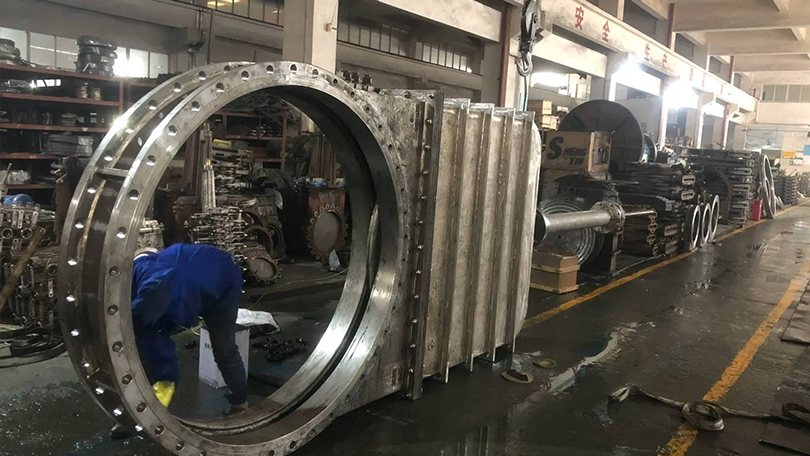
The choice between metal-seated and resilient-seated construction is the single most important decision when specifying a knife gate valve:
| Feature | Metal-Seated | Resilient-Seated (Lined) |
|---|---|---|
| Sealing Mechanism | Metal gate edge against metal seat faces | Gate edge seals against elastomer sleeve/liner |
| Leakage Rate | MSS SP-81 allowable (not zero-leakage) | Zero-leakage (bubble-tight) possible at low ΔP |
| Abrasion Resistance | Excellent — handles sand, rocks, minerals | Moderate — liner can be damaged by large solids |
| Temperature Range | Up to 1,000°F (540°C) depending on material | -40°F to 200°F (-40°C to 93°C) for standard elastomers |
| Chemical Compatibility | Depends on body material (316SS for corrosion) | Depends on liner material (PTFE for acids, EPDM for water) |
| Best Applications | Mining slurries, ash handling, high-temp, abrasive | Wastewater, low-pressure chemical, pulp stock |
| Cost | Lower initial cost | Higher — but lower maintenance in clean service |
Key Applications
Knife gate valves are used wherever the process fluid carries solids that would damage or jam a conventional valve:
- Pulp and Paper: Stock preparation, broke handling, white water, black liquor, chemical recovery — the #1 industry for knife gate valves.
- Mining and Minerals: Tailings pipelines, slurry transport, cyclone feed, flotation circuits, concentrate handling.
- Wastewater Treatment: Sludge lines, digester feed, return activated sludge, scum and grease lines.
- Chemical Processing: Abrasive slurry transfer, reactor discharge, filter feed, crystallizer isolation.
- Cement and Bulk Materials: Fly ash, clinker dust, raw meal, pneumatic conveying isolation.
- Power Generation: Bottom ash, fly ash slurry, FGD (flue gas desulfurization) slurry, limestone slurry.
Knife Gate Valve Selection Guide
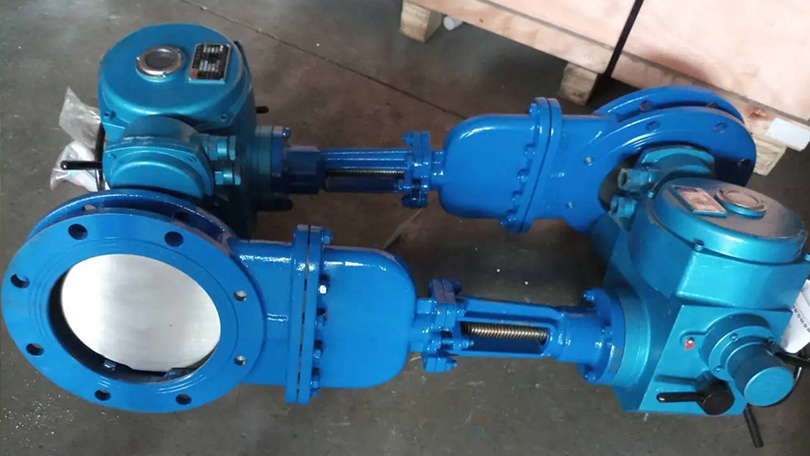
Selecting the right knife gate valve requires evaluating five key parameters:
1. Body Material
Cast iron (ASTM A126 Class B): Most economical, suitable for water, wastewater, and non-corrosive slurries up to Class 125.
Ductile iron (ASTM A536): Higher strength than cast iron, good for abrasive slurries, rated to Class 150.
Carbon steel (ASTM A216 WCB): Higher pressure/temperature capability, good for mining and industrial slurries.
Stainless steel (CF8M / 316SS): Required for corrosive chemicals, food-grade, and high-purity applications.
2. Gate Material
304 or 316 stainless steel is standard. The gate edge can be hard-faced with Stellite or hardened 440C for extended service life in abrasive conditions. A polished gate surface reduces friction and extends packing life.
3. Seat Type
Metal seat: For high-temperature, abrasive, or high-cycle applications. Resilient seat (EPDM, NBR, PTFE): For bubble-tight shut-off in clean or mildly abrasive service below 200°F.
4. Actuation
Handwheel: For sizes up to 24" where manual operation is acceptable. Bevel gear: For larger sizes or high-cycle applications. Pneumatic cylinder: For remote operation, emergency shutdown, or high-cycle automation. Electric actuator: For precise position control and integration with plant DCS.
5. Port Configuration
Full port: Unobstructed flow — essential for slurry service where solids can build up behind a reduced-port gate. Reduced port: Lower cost but higher risk of solids accumulation. NOT recommended for slurry applications.
Knife Gate Valve vs Standard Gate Valve
| Feature | Knife Gate Valve | Standard Gate Valve (API 600) |
|---|---|---|
| Gate Design | Flat plate with sharpened leading edge | Solid or flexible wedge |
| Sealing Method | Gate-to-seat contact (uni-directional) | Wedge action (bidirectional) |
| Face-to-Face Length | Short — compact installation | Longer — per ASME B16.10 |
| Solids Handling | Excellent — cuts through debris | Poor — solids jam the wedge |
| Pressure Rating | Typically Class 150 max | Class 150 to 2500 |
| Bubble-Tight Shut-Off | Not guaranteed (metal seat) | Yes (when properly seated) |
| Weight | Lighter — simpler construction | Heavier — thick-walled body |
| Cost | 30–50% less for same size | Higher — more material, more machining |
Need a Knife Gate Valve?
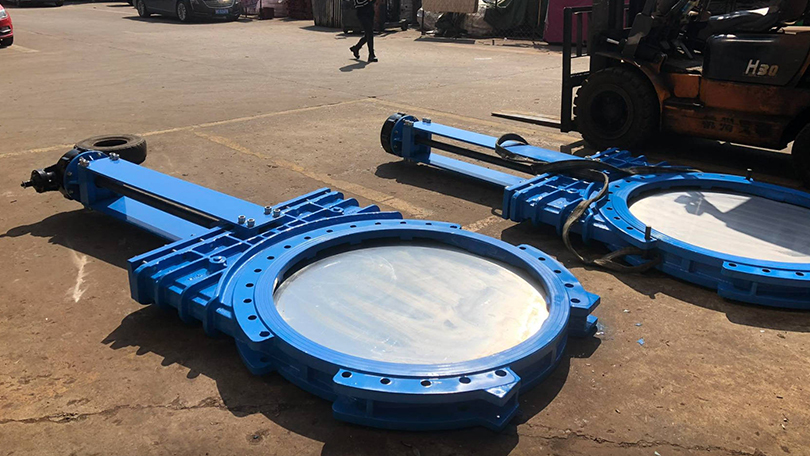
Vornet Valve supplies knife gate valves in sizes 2" to 48" in cast iron, ductile iron, carbon steel, and stainless steel. Metal-seated or resilient-seated — configured for your specific slurry or solids-handling application.
Frequently Asked Questions
What is the difference between a knife gate valve and a regular gate valve?
A: A knife gate valve has a sharp-edged gate that cuts through solids, a narrow lightweight body, and is designed for unidirectional slurry/solids service at lower pressures. A standard gate valve has a wedge gate, full-width body, bidirectional sealing, and is designed for clean fluid isolation at high pressures.
What pressure rating do knife gate valves typically have?
A: Most knife gate valves are rated for Class 150 (285 psi max at ambient). Some manufacturers offer Class 300 versions for higher-pressure applications, but the sealing performance at elevated pressures decreases compared to standard gate valves. Always verify the pressure-holding capability at the bidi seat for your specific application.
Can knife gate valves be used for bidirectional flow?
A: Most are designed for unidirectional flow (marked on the body). Installing a unidirectional knife gate valve backward will cause leakage through the seat-backing cavity. Some specialty designs offer bidirectional capability, but this reduces sealing performance in the primary direction.
How do you actuate a knife gate valve?
A: Manually via handwheel (up to 12″), pneumatically via cylinder actuator (most common — standard on automated process lines), electrically (where no compressed air is available), or hydraulically (very large sizes 24″+). Pneumatic actuation is preferred for quick open/close cycles in slurry service.
What materials are knife gate valves made from?
A: Bodies: cast iron, ductile iron, cast steel (WCB), stainless steel (CF8M/CF3M). Gates: 304/316 stainless steel (standard), hardened 17-4PH (abrasive service), duplex (chloride service). Seats: metal (integral or replaceable), resilient (rubber, EPDM, Viton, PTFE).
What does MSS SP-81 mean?
A: MSS SP-81 is the manufacturer’s standard for knife gate valves published by the Manufacturers Standardization Society. It covers face-to-face dimensions (the key standard), pressure-temperature ratings, material requirements, and testing procedures for knife gate valves. Not all manufacturers comply — always specify MSS SP-81 on your purchase order.
How often should a knife gate valve be cycled to prevent sticking?
A: In dry or sticky service (cement, fly ash, sludge), cycle the valve at least once per week. In wet slurry service, once per month is sufficient. Valves left in the same position for 6+ months in dry solids service will require significantly more force to operate and may need internal cleaning before cycling.
What is the typical lifespan of a knife gate valve in slurry service?
A: With proper material selection, expect 3–5 years in continuous slurry service before gate or seat replacement. In clean service, 10+ years is achievable. The gate edge can be resurfaced 2–3 times before replacement is needed. Resilient seat liners typically last 2–4 years before requiring replacement.