
How to Read a Valve Tag: The Complete Guide — Valve Nameplate Markings
📋 Key Takeaways
- Valve tags encode critical specifications including pressure class, material grade, nominal size, and applicable standards.
- ANSI/ASME pressure class numbers indicate maximum working pressure at a given temperature for safe operation.
- Material designations identify body, bonnet, and trim compositions such as WCB carbon steel, CF8M stainless, or 316 SS.
- Always cross-reference tag information with the valve data sheet to verify ratings before field installation or repair work.
Valve tags encode critical specifications including pressure class, material grade, nominal size, and applicable standards. This guide explains every data field on a standard industrial valve nameplate so you can confidently identify valves in the field.
If you work in industrial procurement, maintenance, or operations, you’ve likely faced a valve with a worn or corroded tag and wondered what all those numbers and abbreviations mean. Understanding valve tag identification is essential for selecting replacement valves, verifying compliance with specifications, and ensuring safe operation within design limits. This guide covers essential valve nameplate markings information.
This guide explains every data field on a standard industrial valve nameplate, from NPS size and pressure class to body material, trim specification, and applicable manufacturing standards.
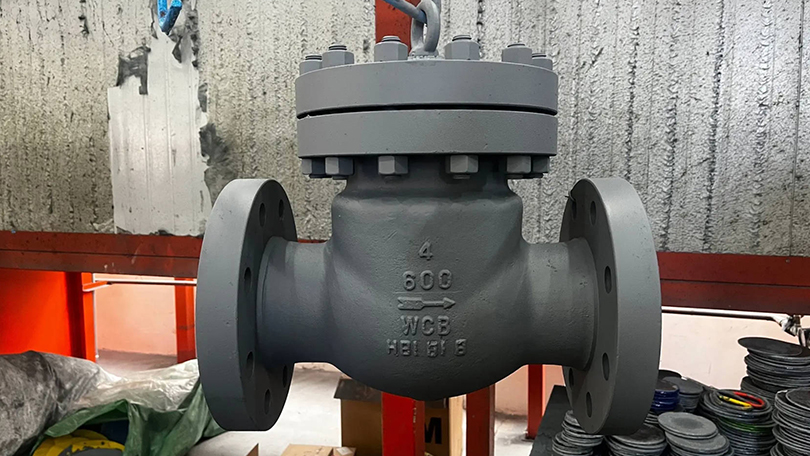
Standard Valve Tag Layout
A typical industrial valve nameplate (manufactured to MSS SP-25 Standard Marking System) will contain the following information:
+-----------------------------------------+
|         VORNET VALVE CO., LTD.           |
|  Model: VBS-150-FT   Size: 6"           |
|  Pressure Class: 150LB   CWP: 285 PSI    |
|  Body: WCB   Trim: 13Cr/Stellite        |
|  API 608 / ASME B16.34                   |
|  Max Temp: 800°F   Serial: V2024-18452  |
|  Made in China                           |
+-----------------------------------------+
Let’s break down each field.
1. Valve Size (NPS / DN)
The size is marked as NPS (Nominal Pipe Size) in inches, often with the DN (Diameter Nominal) equivalent in millimetres. Common markings include:
2"— NPS 2, DN 506"— NPS 6, DN 15012"— NPS 12, DN 300
NPS sizes range from 1/2″ to 60″ and beyond. The actual valve end connections (flange, threaded, welded) also match the nominal size.
2. Pressure Class
The pressure class indicates the maximum allowable working pressure at a specific temperature. For example, Standard pressure classes per ASME B16.34 are:
| Pressure Class | Pressure Rating (PSI at 100°F) | Typical Applications |
|---|---|---|
| 150LB | 285 PSI | Water, low-pressure steam, general utility |
| 300LB | 740 PSI | Medium-pressure process lines |
| 600LB | 1,480 PSI | High-pressure oil & gas, hydrocarbons |
| 900LB | 2,220 PSI | High-pressure steam, refinery applications |
| 1500LB | 3,705 PSI | Very high-pressure pipelines, critical service |
| 2500LB | 6,170 PSI | Extreme high-pressure, deep well, subsea |
The tag may also show CWP (Cold Working Pressure) — the maximum pressure at ambient temperature — and a temperature/pressure chart showing reduced ratings at elevated temperatures.
3. Body Material
Valve body materials are identified by standard industry codes from ASTM and WCB/LCB/CF8M designations. Common codes include:
| Code | Material | Typical Applications |
|---|---|---|
| WCB | Carbon Steel (ASTM A216 Grade WCB) | General industrial, oil & gas, water |
| WCC | Carbon Steel (higher strength) | Low-temperature, high-pressure services |
| LCB / LCC | Low-Temperature Carbon Steel (ASTM A352) | Cryogenic and cold-climate applications |
| CF8M | 316 Stainless Steel (ASTM A351/A743) | Corrosive environments, chemical processing |
| CF8 | 304 Stainless Steel (ASTM A351/A743) | General corrosive service, food & beverage |
| CN7M | Alloy 20 / Carpenter 20 (ASTM A351) | Sulphuric acid, aggressive chemical service |
| M35-1 | Monel 400 (ASTM A494) | Marine, hydrofluoric acid, seawater |
| CW6M | Hastelloy C (ASTM A494) | Extreme chemical resistance, high-temperature corrosives |
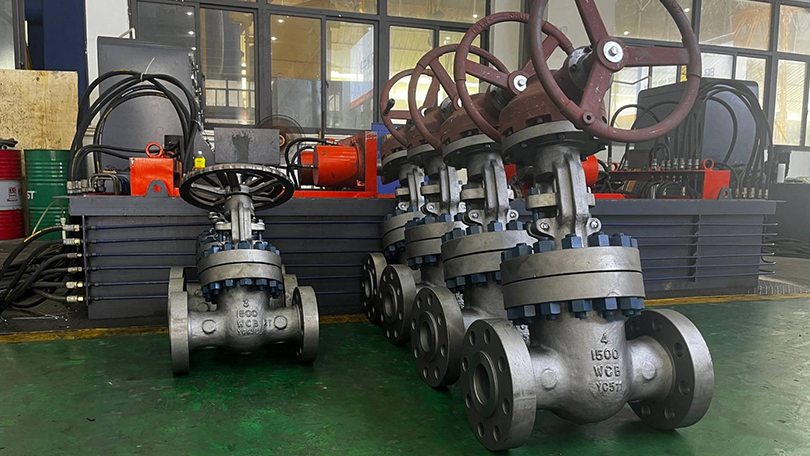
4. Trim Material
The trim designation identifies the materials used for the stem, seat, and closure member. Standard trim designations per API 600 (gate valves) and manufacturer codes include:
- Trim 1 — 13Cr (410 SS) stem, 13Cr seat, 13Cr wedge (standard carbon steel gate valve trim)
- Trim 5 — 13Cr stem, Stellite seat and wedge overlay (high-temp, wear-resistant)
- Trim 8 — 316 SS stem, 316 SS seat, 316 SS wedge (stainless steel throughout)
- Trim 12 — 316 SS stem, Stellite overlay on seat and wedge (corrosion-resistant with hardfacing)
Ball valve tags often show trim as body/ball/seat material, e.g. “WCB/316/PTFE” or “CF8M/316/PEEK”.
5. Manufacturing Standards
The tag will list the standards to which the valve is manufactured. Common standards include:
- ASME B16.34 — Standard for pressure-temperature ratings, dimensions, and materials
- API 600 — Bolted bonnet gate valves for petroleum and natural gas
- API 602 — Compact gate valves for smaller sizes (NPS 4 and below)
- API 608 — Metal ball valves (flanged, threaded, and welded ends)
- API 6D — Pipeline valves (ball, gate, check, plug) for transmission service
- BS 5351 / BS 5352 — British standards for steel ball and gate valves
- EN 12516 — European standard for valve shell design strength
- NACE MR0175 / MR0103 — Standards for valves in sour (H&sub2S) service
6. Maximum Temperature and Pressure Ratings
Most valve tags display Max Temp (usually in °F) and Max Pressure (in PSI or bar). These ratings are interdependent — as temperature increases, the allowable pressure decreases. The tag typically shows the rating at ambient temperature, with a full derating curve in the valve’s technical data sheet.
7. Serial Number and Date of Manufacture
The serial number uniquely identifies the valve for traceability. Also, It can be used to look up the original manufacturing records, material test reports, and pressure test results. Some tags also include a date code or year of manufacture.
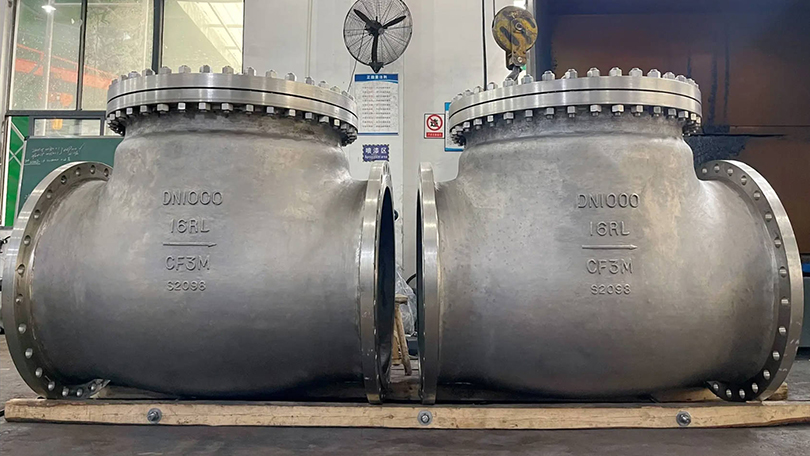
8. Additional Markings
Notably, Depending on the valve type and certification requirements, the tag may also show:
- Flow direction arrow — indicates the orientation for uni-directional valves (check valves, some ball valves)
- WOG rating — Water-Oil-Gas pressure rating (common on bronze and small steel valves)
- SWP rating — Steam Working Pressure (for steam service valves)
- Test pressure — shell test and seat test pressures from factory hydrostatic testing
- Fire-safe marking — indicates compliance with API 607 or ISO 10497 fire test standards
How to Identify a Valve When the Tag Is Missing
Specifically, If the valve tag is corroded, painted over, or missing entirely, you can still identify the valve by:
- Measuring the flange dimensions — flange OD, bolt circle diameter, and number of bolt holes can identify pressure class per ASME B16.5
- Measuring the bore/port size — determines NPS size
- Checking the end-to-end dimension — matched against ASME B16.10 tables to confirm valve type and pressure class
- Examining body markings — many valves have raised lettering on the body with size, pressure class, and material
- Using a portable alloy analyser (PMI) — positive material identification can confirm body and trim chemistry
Frequently Asked Questions
Q1: What does “150LB” mean on a valve tag?
150LB (or Class 150) indicates the pressure class per ASME B16.34. When you get down to it, It means the valve has a maximum allowable working pressure of 285 PSI at 100°F. The pressure rating decreases at higher temperatures.
Q2: What is the difference between WCB and CF8M?
WCB is carbon steel (ASTM A216) — suitable for general industrial service but with limited corrosion resistance. CF8M is 316 stainless steel (ASTM A351) — offers excellent corrosion resistance and is used in chemical, marine, and food processing applications.
Q3: How can I identify the trim material from a valve tag?
Look for a trim designation such as “Trim 1”, “Trim 5”, “Trim 8”, or a specific material listing like “13Cr/Stellite” or “316/PTFE”. Standard trim numbers correspond to specific material combinations defined in API 600 (for gate valves) or the manufacturer’s specification.
Q4: What does NPS mean on a valve?
NPS stands for Nominal Pipe Size — the North American standard for pipe and valve sizing. For example, NPS 6 corresponds to a nominal 6-inch valve, which has an actual outside diameter of 6.625 inches for the connecting pipe.
Q5: What is the highest pressure class for industrial valves?
Standard pressure classes go up to 2500LB (6,170 PSI at 100°F) per ASME B16.34. For specialised applications, higher classes such as 4500LB are available through API 6A for wellhead and subsea equipment.
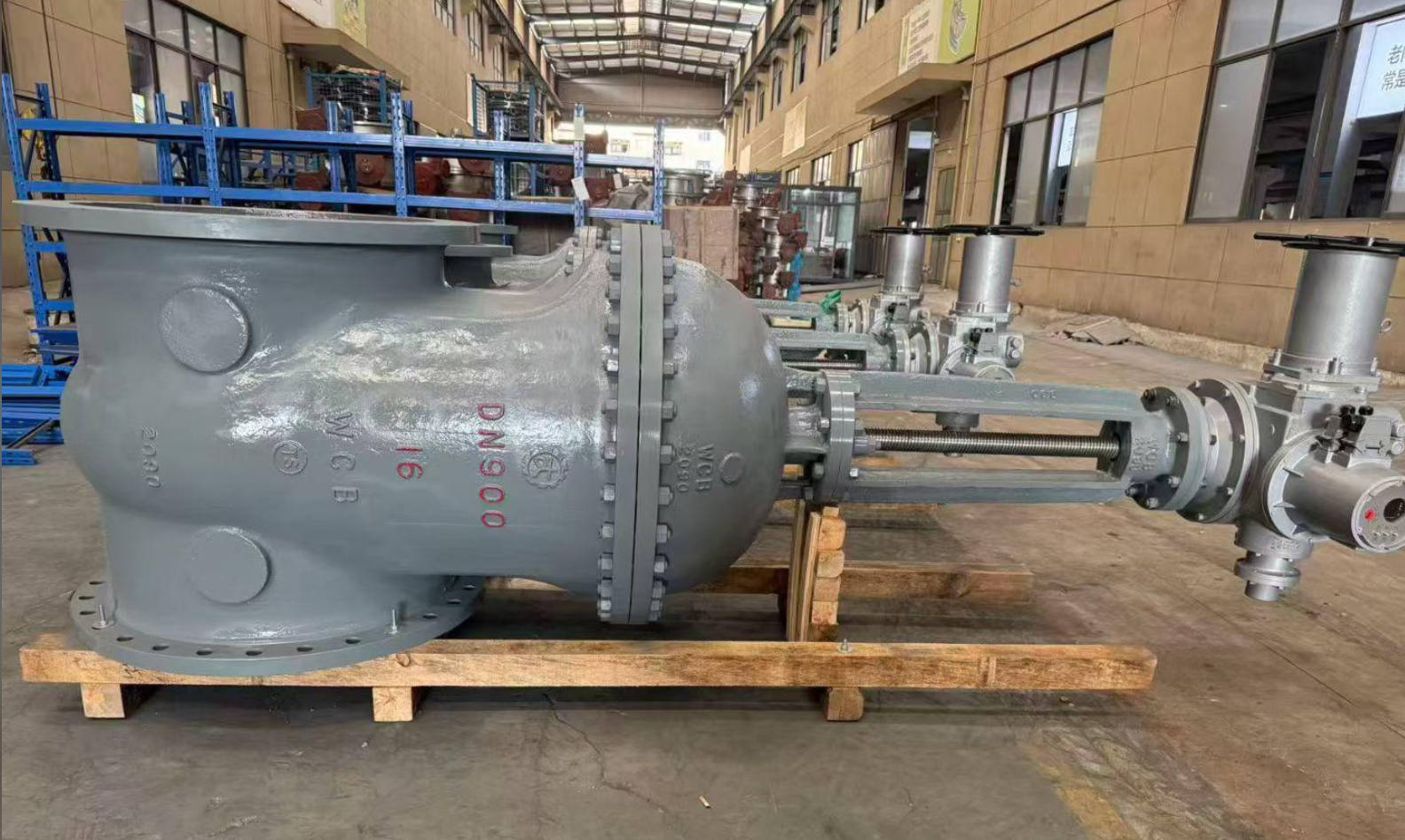
Conclusion
Learning to read a valve tag is a fundamental skill for anyone involved in valve procurement, installation, or maintenance. By understanding the size, pressure class, body material, trim designation, and applicable standards, you can ensure that replacement valves match the original specifications and operate safely within their design limits.
For more information on specific valve types and materials, explore our product pages for industrial gate valves, ball valves, and our comprehensive valve materials guide.
• Valve Trim Materials Chart Guide
• API 602 Gate Valve Guide
• Valve Material Selection Guide