
Industrial Valve Materials & Trim Equivalents: A Complete Selection Guide
This guide covers valve body materials (carbon steel, stainless steel, and alloys), the API Trim numbering system (Trim 1 through 18), a step-by-step material selection framework, and industry-specific recommendations for oil & gas, chemical, power generation, cryogenic, seawater, and food processing applications.
📋 Key Takeaways
- ASTM A216 WCB (carbon steel) and A351 CF8M (stainless) are the most common body materials for general-service valves.
- API Trim numbering system (Trim 1 through Trim 18) standardizes seat, disc, and stem material combinations for interchangeability.
- Material selection depends on fluid corrosiveness, operating temperature, pressure class, and industry-specific standards like NACE MR0175.
- Trim equivalents enable engineers to source compatible valve internals from different manufacturers with confidence.
Selecting the right valve material and trim combination is one of the most critical decisions in industrial valve engineering. An incorrect choice leads to premature failure, costly downtime, and safety hazards. This valve material selection guide covers the body materials and internal trim equivalents used across gate, globe, check, and ball valves — referencing ASTM, ASME, and API standards that matter in real-world procurement. For specific product applications, browse our gate, globe, and check valves or review our Hastelloy vs Titanium corrosion guide for specialized alloy requirements.
1. Valve Body Materials – Specifications & Equivalents
Carbon Steel Body Materials
WCB (ASTM A216 Grade WCB) — The most widely used carbon steel for general-service valves. Suitable for non-corrosive and mildly corrosive media such as water, oil, and gas at temperatures from −29°C to 425°C. Equivalent to DIN 1.0619, JIS SCPH2, and GB WCB.
WCC (ASTM A216 Grade WCC) — Higher-strength variant of WCB with improved impact properties at low temperatures. Used in higher-pressure applications and larger valve sizes. Equivalent to DIN 1.0625, JIS SCPH2-H.
LCB (ASTM A352 Grade LCB) — Low-temperature carbon steel for services down to −46°C. Essential for cryogenic and cold-climate applications. Equivalent to DIN 1.0619 + impact test, JIS SCPL1.
LCC (ASTM A352 Grade LCC) — Higher-strength low-temperature carbon steel with improved notch toughness. Used for critical low-temperature services below −46°C. Equivalent to DIN 1.0650, JIS SCPL2.
Forged Steel: A105 — The standard forged carbon steel for valves, flanges, and fittings. Operating range −29°C to 425°C. For low-temperature service, use A350 LF2 (down to −46°C).
Stainless Steel Body Materials
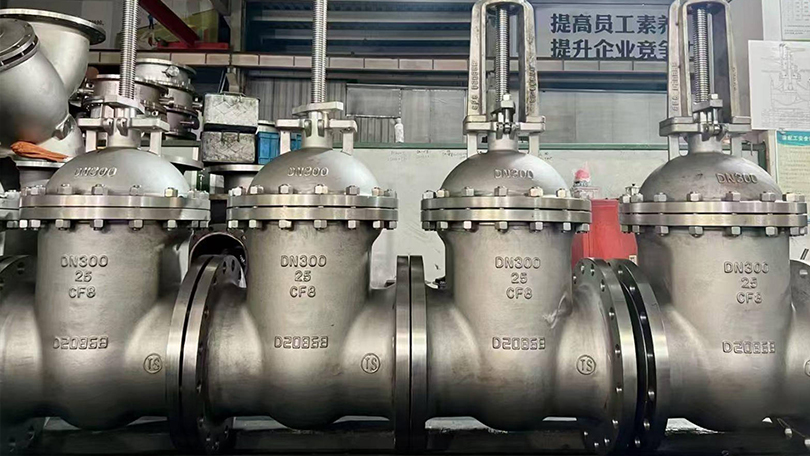
CF8 (ASTM A351 Grade CF8) — Cast 304 stainless steel. Excellent corrosion resistance in oxidizing environments, food processing, and mild chemical service. Temperature range −254°C to 649°C. Equivalent to DIN 1.4308, JIS SCS13A, GB CF8.
CF8M (ASTM A351 Grade CF8M) — Cast 316 stainless steel with molybdenum addition for improved pitting and crevice corrosion resistance. Ideal for seawater, chemical processing, and pulp & paper industries. Equivalent to DIN 1.4408, JIS SCS14A, GB CF8M.
CF3 (ASTM A351 Grade CF3) — Low-carbon 304L equivalent for welded construction where sensitization and intergranular corrosion are concerns. Equivalent to DIN 1.4306, JIS SCS19A.
CF3M (ASTM A351 Grade CF3M) — Low-carbon 316L equivalent for superior weldability and corrosion resistance in aggressive chemical environments. Equivalent to DIN 1.4409, JIS SCS16A.
Forged Equivalent: A182 F304 / F316 — Forged stainless steels for smaller valves and high-pressure applications where cast porosity cannot be tolerated.
Alloy & Special Alloy Body Materials
WC6 (ASTM A217 Grade WC6) — 1.25% Chrome, 0.5% Moly alloy steel for elevated temperature service up to 593°C. Common in power generation and refinery applications. Equivalent to DIN 1.7357, JIS SCPH21.
WC9 (ASTM A217 Grade WC9) — 2.25% Chrome, 1% Moly alloy steel for high-temperature and high-pressure steam services. Used extensively in supercritical power plants. Equivalent to DIN 1.7379, JIS SCPH32.
C5 (ASTM A217 Grade C5) — 5% Chrome, 0.5% Moly alloy for moderate corrosion and high-temperature resistance. Suitable for refinery sour service. Equivalent to DIN 1.7363.
Duplex & Super Duplex (ASTM A890 Grade 4A/5A) — High-strength stainless steels with excellent chloride stress corrosion cracking resistance. Grade 4A (UNS S31803/S32205) for oil & gas offshore, Grade 5A (UNS S32750) for the most aggressive seawater and chemical services.
Nickel Alloys — Monel (ASTM A494 Grade M35-1) for hydrofluoric acid and seawater; Hastelloy C-276 (ASTM A494 Grade CW-12MW) for extreme oxidizing and reducing environments; Titanium (ASTM B367 Grade C-2) for bleach and chlorinated services.
2. Valve Trim Materials – API Trim Numbering System
Common API Trim Designations
| API Trim | Seat / Disc Material | Stem Material | Typical Application |
|---|---|---|---|
| Trim 1 | F6a (13% Cr / 410 SS) | 13% Cr / 410 SS | General service, water, oil, gas up to 425°C |
| Trim 5 | Stellite (Co-Cr alloy) | 18-8 SS (304 SS) | High temperature, erosive services, steam |
| Trim 8 | Stellite | 13% Cr / 410 SS | High temperature with improved stem strength |
| Trim 11 | Full Stellite (seating surfaces) | Hastelloy C | Highly corrosive & high-temperature combined |
| Trim 12 | 316 SS (full hard) | 316 SS | Corrosive chemical service, food processing |
| Trim 16 | Monel | Monel / K-Monel | Hydrofluoric acid, seawater, sour gas |
| Trim 17 | Hastelloy C | Hastelloy C | Severe corrosive environments, bleach, wet Cl₂ |
Note: Trim numbers vary slightly between API 600 (gate valves) and API 602 (forged steel gate/globe/check valves). Always verify the trim table in the applicable standard.
Trim Material Selection by Service Condition
13% Chromium Stainless Steel (410 SS / F6a) — Hardness typically 250-350 HB. Suitable for clean hydrocarbons, water, steam, and mild chemical media. Not recommended for chloride environments above 50 ppm or where hydrogen sulfide is present above NACE MR0175 limits.
18-8 Stainless Steel (304 SS) — Lower hardness (~150 HB) but superior corrosion resistance. Used in chemical, food, and pharmaceutical services. Often hard-faced with Stellite for seating surfaces to improve wear resistance.
Stellite (Co-Cr-W Alloy) — The premier hard-facing material for valve seats and discs. Excellent galling resistance, hot hardness up to 650°C, and outstanding erosion resistance. Applied via welding overlay on the seating surfaces of the seat ring and disc/wedge. Essential for high-temperature steam, erosive slurries, and frequent cycling services.
316 Stainless Steel — Molybdenum-bearing austenitic stainless steel with improved pitting resistance. FAA (Full Austenitic) trim for corrosive chemical and seawater applications. Not as hard as 410 SS — consider hard-facing for abrasive services.
Monel (400 / K-500) — Nickel-copper alloy with exceptional resistance to hydrofluoric acid, seawater, and neutral/alkaline salt solutions. K-500 offers age-hardening for higher strength. Standard trim for HF alkylation units, marine systems, and sour gas handling.
Hastelloy C-276 — Nickel-chromium-molybdenum alloy with near-universal corrosion resistance. Handles wet chlorine, ferric/copper chlorides, strong oxidizing acids, and hot contaminated mineral acids. Used when no other trim material survives.
3. How to Select the Right Material & Trim Combination
Step 1: Define the service conditions
- Fluid composition and concentration
- Operating and design temperature range
- Operating and design pressure
- Flow velocity and erosive potential
- Cycling frequency
Step 2: Check industry standards
- NACE MR0175 / ISO 15156 — Mandatory for sour oil & gas environments containing H₂S. Limits hardness of trim materials (typically ≤ HRC 22 for carbon/low alloy, ≤ HRC 40 for 410 SS, ≤ HRC 35 for duplex).
- ASME B16.34 — Defines pressure-temperature ratings based on body material group. Refer to ASTM International for official material specifications and testing requirements.
- API 600 / 602 / 608 — Specify trim material requirements for gate, globe, check, and ball valves.
Step 3: Evaluate corrosion mechanisms
- General corrosion → Upgrade from carbon steel to 304/316 SS or higher alloy.
- Pitting & crevice corrosion → MO (Molybdenum) content matters. CF8M (2-3% Mo) > CF8.
- Stress corrosion cracking (SCC) → Avoid austenitic SS in hot chloride environments. Use duplex or nickel alloys.
- Sulfide stress cracking (SSC) → NACE compliance required. Hardness control is critical.
- Erosion & cavitation → Stellite hard-facing on seating surfaces. For severe cavitation, consider anti-cavitation trim designs.
Step 4: Material equivalency check
When procuring from different global regions, always cross-reference material specifications. A CF8M (ASTM) body may be quoted as 1.4408 (DIN), SCS14A (JIS), or Z3CNUD19-10 (NF). The chemical composition and mechanical properties must meet or exceed the specified standard. Vornet Valve provides material test certificates (MTC / EN 10204 3.1) with every order for traceability.
4. Material Selection Quick Reference by Industry
| Industry | Recommended Body Material | Recommended Trim |
|---|---|---|
| Oil & Gas (Sweet) | WCB / A105 | Trim 1 (13% Cr) |
| Oil & Gas (Sour / NACE) | WCB / A105 (NACE) | Trim 1 or 5 with hardness control |
| Chemical Processing | CF8M / A182 F316 | Trim 12 (316 SS) or Trim 5 |
| Power Generation (Steam) | WC6 / WC9 | Trim 5 or 8 (Stellite seat) |
| Cryogenic (−196°C) | CF8 / CF8M / A182 F304 | Trim 12 (full 316) |
| Seawater / Offshore | Duplex (A890 4A/5A) | Duplex / Super Duplex |
| Hydrofluoric Acid | Monel / Carbon Steel | Trim 16 (Monel) |
| Pulp & Paper (Bleach) | Hastelloy C / Titanium | Trim 17 (Hastelloy) |
| Food & Pharmaceutical | CF8 / CF3 (304/304L) | Trim 12, full SS |
Valve Material Selection Guide Summary: Why Correct Material Selection Matters
Valve material and trim selection directly impact equipment life, safety, and total cost of ownership. A WCB valve with Trim 1 may cost 50% less than a CF8M valve with Stellite trim — but if the service is wet chlorine, the WCB valve will fail within hours.
Always start with a clear understanding of the process fluid, temperature, pressure, and applicable code requirements. When in doubt, consult the valve manufacturer with a completed data sheet — most premature valve failures trace back to incomplete or incorrect material specifications at the procurement stage.
At Vornet Valve, we manufacture valves in carbon steel, stainless steel, duplex, Monel, Hastelloy, and titanium — with all standard API trims. Each valve is tested and certified to the applicable standard, ensuring full traceability from melt to final assembly.
Need help selecting the right material for your application? Contact our engineering team with your service conditions, and we’ll recommend the optimal body material and trim combination.
Frequently Asked Questions
Q1: What is the difference between WCB and WCC valve bodies?
Both are cast carbon steels per ASTM A216. WCC has higher tensile and yield strength than WCB, with improved impact properties, making it suitable for higher-pressure services and larger valve sizes.
Q2: What does API Trim 5 mean?
API Trim 5 specifies Stellite hard-facing on the seating surfaces (seat ring and disc) with an 18-8 stainless steel stem. It is the most common trim for high-temperature and erosive services.
Q3: Can I substitute CF8M with CF8 in a chemical service?
Not without checking the specific chemical environment. CF8M contains 2-3% molybdenum, which provides significantly better pitting and crevice corrosion resistance than CF8. Substituting CF8 for CF8M in chloride-containing environments will likely result in rapid pitting failure.
Q4: What trim is required for NACE MR0175 compliance?
NACE MR0175 doesn’t mandate a specific trim number but requires hardness control of all pressure-containing and trim materials. For carbon steel bodies, Trim 1 with hardness-controlled 410 SS (≤ HRC 22 or ≤ HRC 40 depending on application) is common. Always verify the specific NACE environment classification.
Q5: What is the maximum temperature for Stellite hard-facing?
Stellite (Co-Cr-W alloy) maintains its hardness up to approximately 650°C (1200°F). Above this temperature, the hard-facing may soften, and alternative materials or cooling designs should be considered.
Q6: What material is used for cryogenic ball valves?
Cryogenic ball valves (down to −196°C / −320°F) typically use CF8M (316 SS) bodies with full 316 SS internals, extended bonnets, and low-temperature impact-tested components. PTFE or PCTFE seat materials are used for the sealing surfaces.
Need Help Selecting Valve Materials for Your Project?
Vornet Valve manufactures valves in carbon steel, stainless steel, duplex, and exotic alloys (Hastelloy, Monel, Titanium, Inconel) with API Trim 1 through 18 options. Contact us for material selection assistance.
• Industrial Gate Valve Selection Guide
• Hastelloy vs Titanium Corrosion Guide
• Ball Valve Complete Guide
• Valve Trim Materials Guide