
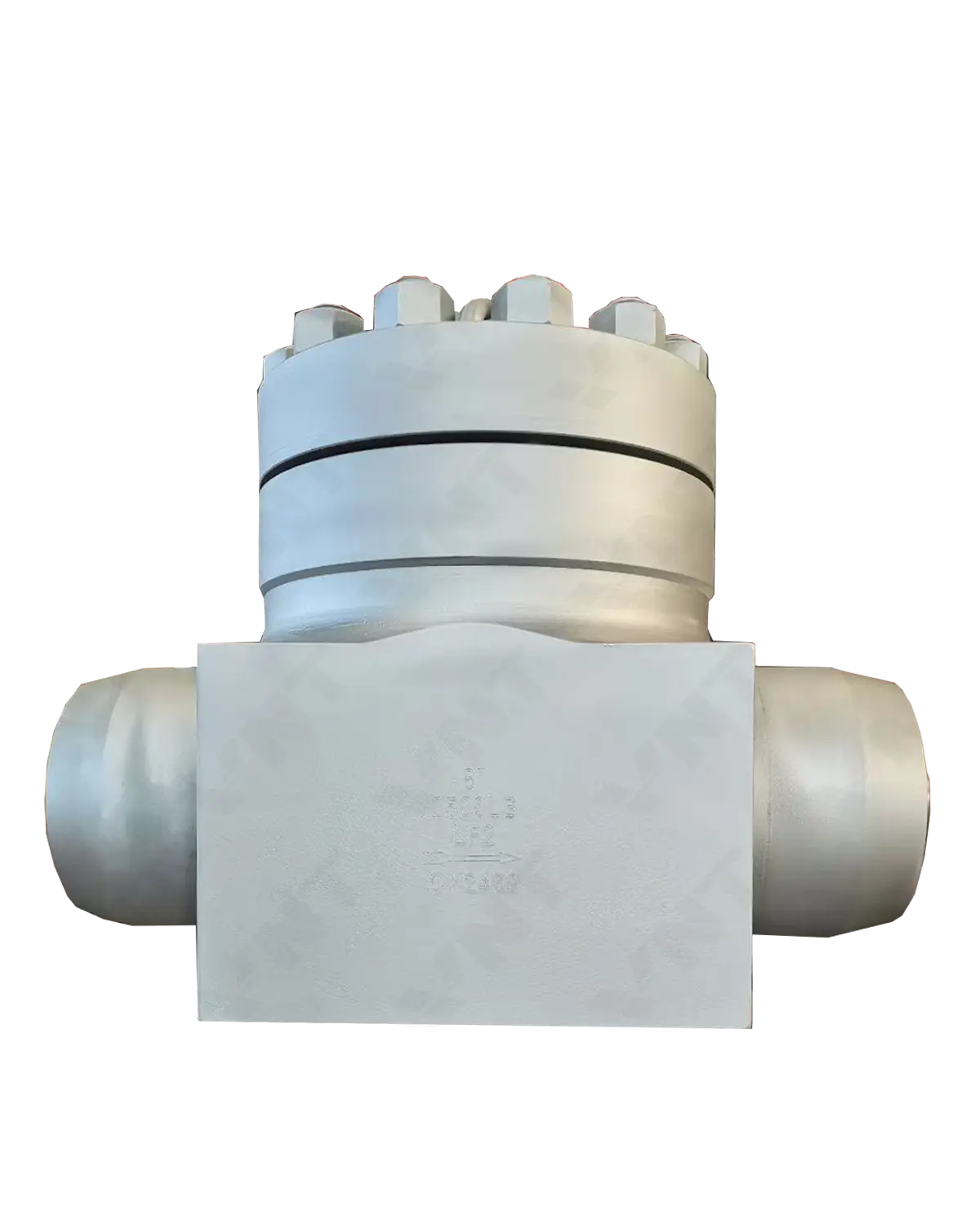
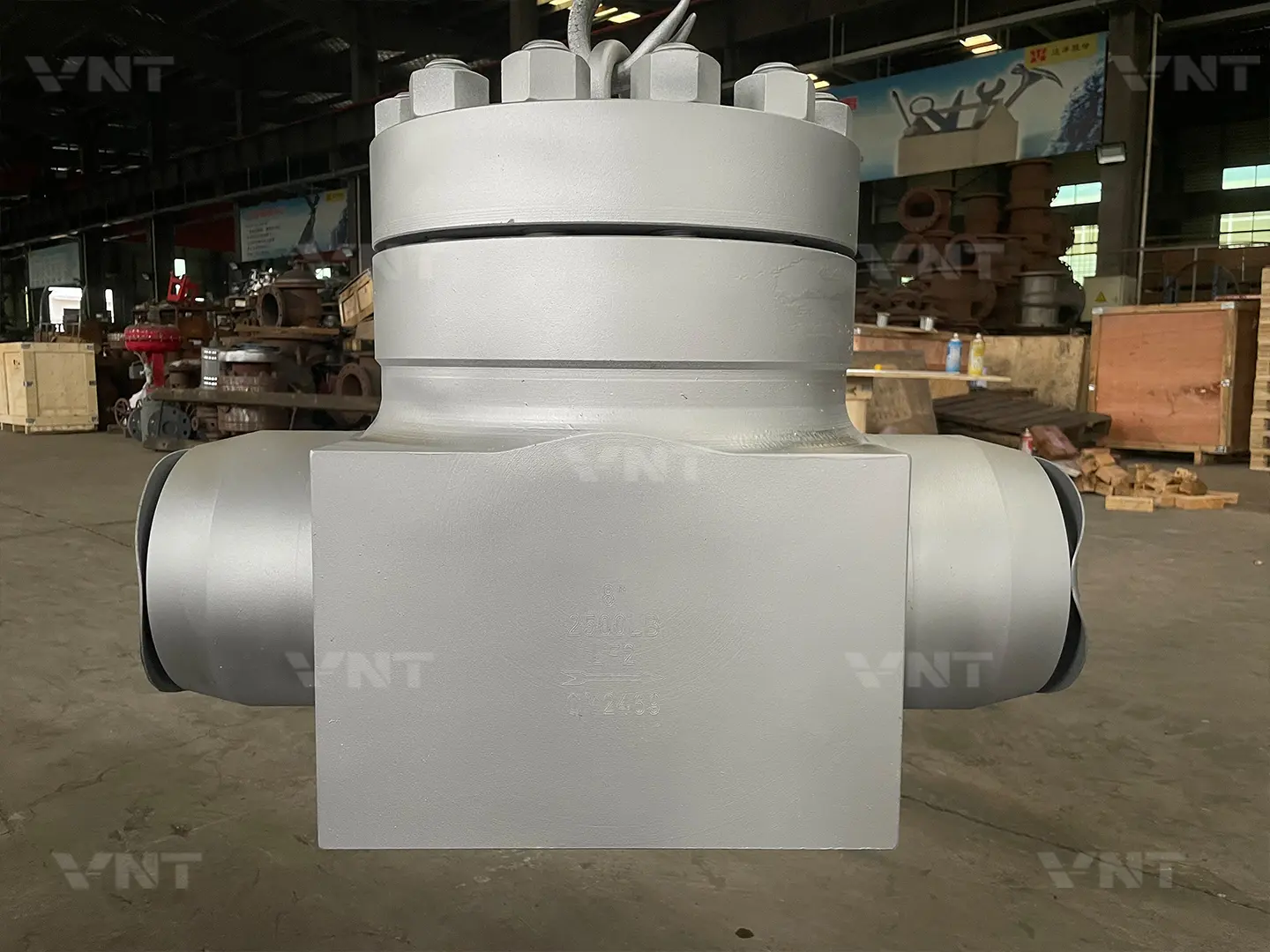
Forged Steel Bolted Bonnet Check Valve for High-Pressure Process Piping
A forged steel bolted bonnet swing check valve for automatic reverse-flow protection in high-pressure process piping.
| Size Range | 2”–30” (DN50–DN750) |
|---|---|
| Pressure Rating | Class 150–2500 (PN16–PN420) |
| Body Material | Carbon steel, alloy steel, stainless steel, duplex steel, etc. |
| Connection Type | RF, BW, RTJ, etc. |
Frequently Asked Questions
Yes. The confirmed internal structure is a swing-type check mechanism. The bolted bonnet refers to the pressure-retaining body-to-bonnet joint.
Install the valve in horizontal piping with the bonnet facing upward. Vertical upward-flow installation is permitted only when confirmed by the approved drawing.
Available pressure ratings are Class 150–2500 (PN16–PN420), subject to size, material and project requirements.
RF, BW and RTJ end connections are available, subject to valve size, pressure class and the approved piping specification.
Provide NPS or DN, pressure class, body and trim materials, end connection, medium, temperature, flow direction, installation orientation, testing and documentation requirements.
Product Overview
This forged steel bolted bonnet swing check valve uses a confirmed swing-type internal structure for automatic reverse-flow protection. Forward flow opens the valve, while reverse flow causes the closure element to return to the seat.
The forged pressure-containing body and maintainable bolted bonnet are suited to demanding refinery, petrochemical, power and industrial process piping. Final suitability depends on pressure-temperature rating, material grade, trim, end connection, installation orientation and the approved project datasheet.
Install the valve in horizontal piping with the bonnet upward unless vertical upward-flow service is specifically approved. Flow direction, minimum operating velocity and potential slam risk should be reviewed for the actual system.
- Swing-Type Structure: Confirmed internal configuration for automatic non-return duty
- Bolted Bonnet Joint: Maintainable pressure-retaining body-to-bonnet connection
- Forged Body Materials: Carbon, alloy, stainless or duplex steel options
- Project-Specific Ends: RF, BW or RTJ connections subject to size and class
Related Check Valve Selection Guides
← Back to Check Valve ProductsDiscuss Your Forged Steel Bolted Bonnet Check Valve Requirements
Send your datasheet or line conditions for engineering review and quotation.
Applications, Materials and Engineering Selection
Use the project datasheet to confirm valve size, pressure class, end connection, materials, temperature, medium, flow direction, installation orientation and inspection scope.
Typical Applications
- Refinery and petrochemical process piping
- Steam and high-pressure utility lines in power plants
- Pump and compressor discharge systems requiring reverse-flow protection
Material and Trim Options
Carbon, alloy, stainless and duplex steel body materials are available. Seat, disc, hinge components, bolting and gasket selections must match the pressure-temperature rating, medium and corrosion requirements.
Technical Points to Verify
- Confirmed swing-type internal structure
- Flow direction and approved installation orientation
- Pressure and leakage testing to the contract standard
- MTC, PMI, NDE and inspection records when specified
Related: Swing vs Spring Check Valve · Check Valve Types Guide · High-Pressure Valve Solutions
Procurement and Inspection Checklist
Specify this valve from the complete service duty rather than the bonnet style alone. The confirmed swing-type structure, piping layout and operating conditions must be reviewed together.
- Service data: state NPS or DN, pressure class, medium, design pressure, operating temperature and flow direction.
- Construction: confirm body and trim materials, bolted bonnet joint, RF/BW/RTJ ends, seat design and approved installation orientation.
- System review: check minimum operating velocity, expected flow variation and potential slam or water-hammer risk.
- Inspection: request MTC, heat-treatment records, dimensional report, shell and seat tests, plus PMI or NDE when specified.
Review the swing versus spring check valve guide, compare power and energy applications, or send the project datasheet for engineering review.