
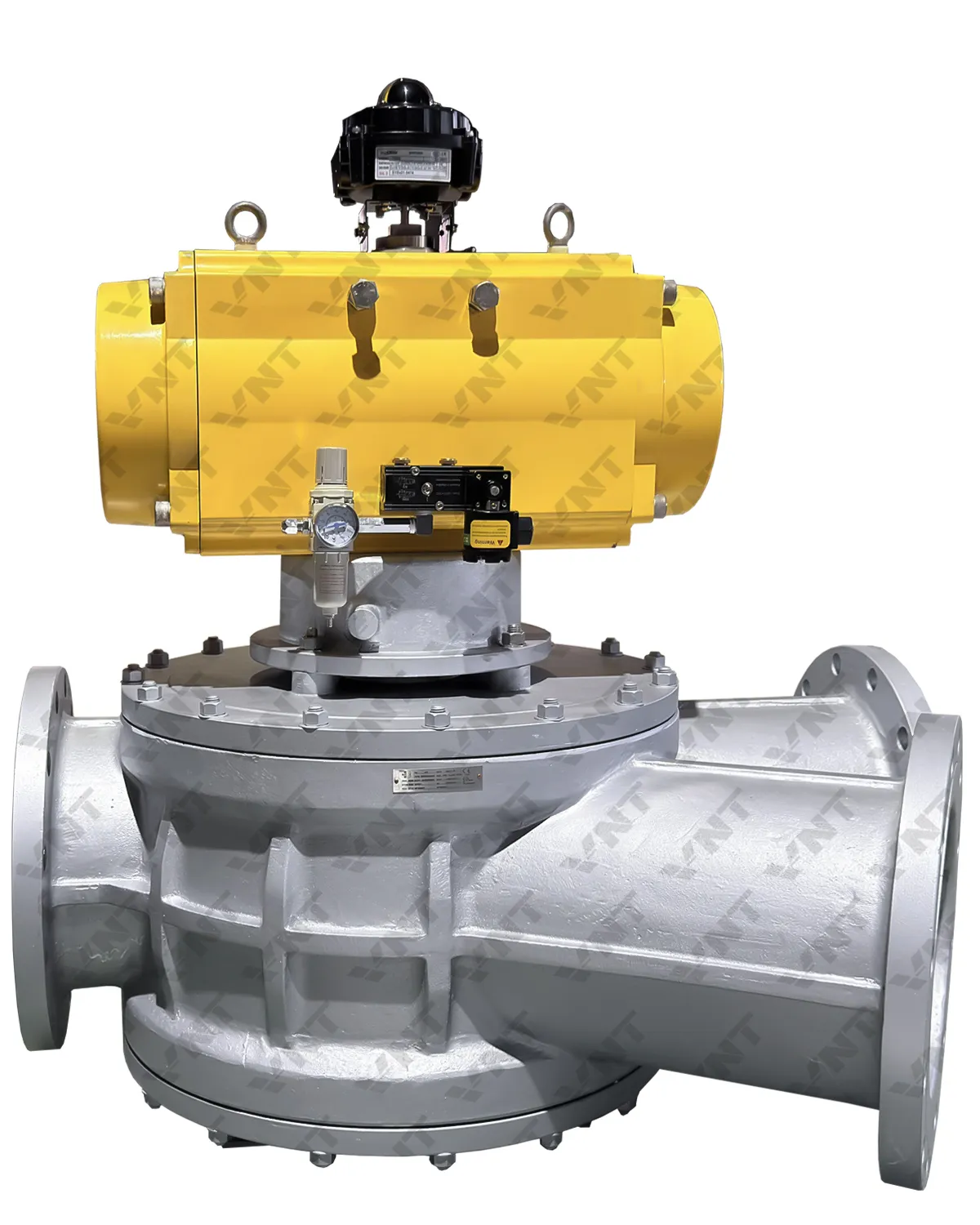
Diverter Valve for Pneumatic Conveying Systems
Diverting or converging valve for fine powder, inert gas and difficult-material pneumatic conveying systems.
| Size Range | 2″–12″ (DN50–DN300) |
|---|---|
| Pressure Rating | Class 150–300 (PN16) |
| Body Material | Aluminum alloy, carbon steel, stainless steel, etc. |
| Connection Type | FF |
| Temperature Range | -10℃–80℃ |
Frequently Asked Questions
It can operate in diverting or converging mode.
The product specification states that it can direct almost all materials, including easily clogging materials.
Yes. Fine powder and inert-gas conveying systems are specifically listed.
Review the conveyed material, diverting or converging arrangement, temperature, pressure and FF connection.
Provide the material characteristics, conveying gas, flow path, size, pressure, temperature, body material, quantity and drawings.
A diverter valve routes the full material stream to one of two outlets, or merges two inlets into one outlet. It does not proportionally split the flow. Where proportional splitting is required, a flow-splitter or control valve should be specified instead.
Aluminum alloy, carbon steel and stainless steel are offered. Selection is driven by the conveyed medium, abrasiveness and corrosiveness, the particle size, the working temperature and the service environment rather than by line pressure alone.
No. The diverter valve is a routing device. It redirects the material without stopping or modulating the stream, which keeps pressure drop low and avoids damaging fragile or easily clogging products.
Support the connecting pipework independently so the valve body carries no pipeline load, verify the gasket and FF flange faces against the line standard, and check for dead legs immediately upstream where settled powder can cause bridging.
Product Overview
The Vornet Diverter Valve directs material flow within pneumatic conveying systems and can be configured for either diverting or converging operation.
The product specification states suitability for almost all conveyed materials, including easily clogging products, fine powders and inert-gas conveying systems.
Project configuration should follow the confirmed temperature, pressure, body material and FF connection requirements together with the required flow-path arrangement.
- Diverting or Converging: Supports both conveying modes.
- Difficult Materials: Listed for easily clogging materials.
- Fine-Powder Service: Suitable for fine powder conveying.
- Inert-Gas Systems: Included in the original application scope.
Choosing the Right Diverter Valve
When specifying a diverter valve for a pneumatic conveying system, confirm the conveying mode (diverting or converging), the particle size and abrasiveness of the material, and the conveying gas used. The working pressure, temperature and flange connection must match the upstream and downstream line specification.
For fine powders and inert-gas systems the valve body is offered in aluminum alloy, carbon steel or stainless steel depending on the conveyed medium and service environment. Always provide the material characteristics and flow-path arrangement so the correct seat and body configuration can be confirmed for the project.
How a Diverter Valve Works in a Pneumatic Conveying Line
A pneumatic diverter valve is a flow-routing device installed on a pneumatic conveying line. Instead of stopping or throttling the material stream, it redirects it from one pipe run to another, or merges two incoming streams into a single outgoing line. The selection between diverting and converging duty is normally fixed at the project stage, because the internal flow path and the inlet/outlet geometry differ between the two arrangements.
In diverting duty, one inlet feeds either of two outlets. Product is routed to a silo, a receiving hopper or a secondary process line without stopping the conveying gas. In converging duty, two inlets feed one common outlet, allowing two feed points to discharge into the same receiving system. Both modes use the same body platform but a different internal flow-path configuration.
Because the valve does not modulate flow, pressure drop is low and the material is not disturbed as it passes. This makes the design suitable for fragile or easily clogging products, fine powders and inert-gas conveying systems where a positive shut-off at speed is not required.
Diverting vs Converging: Selecting the Correct Arrangement
- Diverting (one-in, two-out): Use when a single feed point must serve two separate destinations — for example a buffer silo and a bagging line, or two different storage bins. Confirm that only one outlet is live at a time.
- Converging (two-in, one-out): Use when two feed points discharge to a common receiving line. Check that the conveying gas rates from both inlets are compatible with the downstream line size.
- Material path: State the required flow-path arrangement on the drawing so the correct seat and body configuration can be confirmed before manufacture.
If your process needs proportional splitting rather than full diversion, a diverter valve is normally the wrong device — specify a flow-splitter or a control valve instead. The diverter is a routing device, not a regulating device.
Body Materials and Service Suitability
The body and internal parts are offered in aluminum alloy, carbon steel and stainless steel, selected against the conveyed medium and the service environment rather than against line pressure alone. The main selection criteria are abrasiveness, corrosiveness, particle size, temperature and whether the conveying gas is inert or reactive.
| Body material | Typical duty | Notes |
|---|---|---|
| Aluminum alloy | Light, non-abrasive powders; food and plastics conveying | Lowest weight; check compatibility with the conveyed medium |
| Carbon steel | General industrial powders, granular and pelletized products | Good strength-to-cost ratio for standard duty |
| Stainless steel | Corrosive or reactive media; chemical and inert-gas systems | Selected where the medium or environment attacks carbon steel |
For abrasive or easily clogging materials, confirm the internal clearances and the wetted-path finish with the factory, because clearances that are too tight can bridge on fine powder while clearances that are too open allow bypass leakage.
Key Specification Data to Confirm Before Ordering
The following data set is what the engineering team needs to confirm a configuration and issue a firm quotation:
- Conveyed material (name, particle size, bulk density, abrasiveness, moisture, temperature)
- Operating mode — diverting or converging
- Flow-path arrangement and direction of travel
- Nominal size and connection type (FF flange, other)
- Working pressure and working temperature
- Required body material
- Conveying gas (air, nitrogen or other inert gas)
- Quantity and any drawing or interface constraints
Providing the full data set in the first enquiry avoids repeated clarification and shortens the lead time from quotation to shipment.
Installation Notes for Powder and Fine-Material Systems
Mount the valve so that the flow path follows the system drawing and so that the actuator has clear access for maintenance. Support the connecting pipework independently of the valve body — the valve should not carry pipeline load. Before commissioning, verify that the gaskets, flange faces and FF connection match the line standard, and that the inert-gas purge (where applicable) is connected and tested.
For fine-powder duty, check the line for dead legs immediately upstream of the valve, because settled powder in a dead leg is a common cause of bridging and false blockage alarms. For easily clogging materials, confirm the recommended inspection interval with the factory based on the actual particle characteristics.
Common Applications of Pneumatic Diverter Valves
- Fine powder handling — flour, starches, pigments and fine chemical powders where the material must be routed without degradation.
- Inert-gas conveying — systems where the product must be kept under nitrogen or another inert gas, so any routed path must remain gas-tight.
- Difficult and easily clogging materials — products that bridge or build up in more restrictive valve designs.
- Multi-destination receiving — routing one feed to multiple silos, hoppers or packing lines.
- Multi-source collection — converging two feed points into a single receiving line.
See the application pages for the valve packages used in related process industries, and the industrial valve selection guide for the wider selection method.
Related Product Selection Guides
← Back to Other Valve ProductsDiscuss Your Diverter Valve Requirements
Send your conveying material and flow-path arrangement for technical review.