
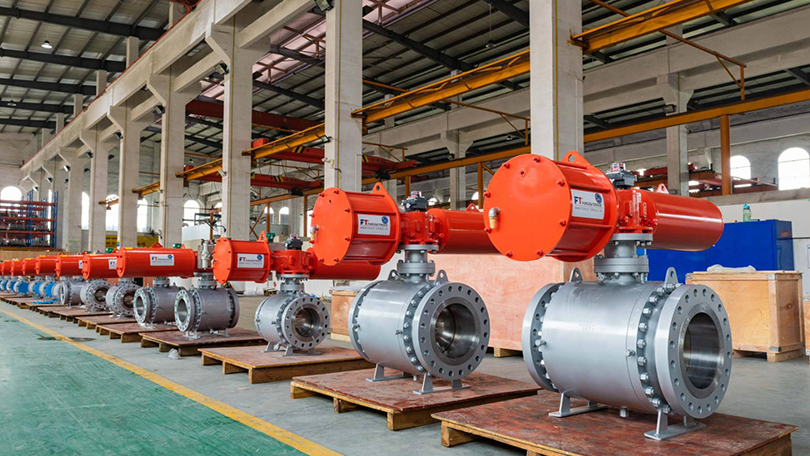
Gate Valve vs Ball Valve: Which One Should You Choose?
📋 Key Takeaways
- Gate valves provide straight-through flow with minimal pressure drop but require multiple turns for full operation.
- Ball valves offer quarter-turn operation making them ideal for quick shutoff and automated control system integration.
- Gate valves excel in applications requiring full bore, unobstructed flow and are preferred for isolation services.
- Ball valves provide tighter sealing and are preferred for throttling, isolation, and high-cycle applications over gate valves.
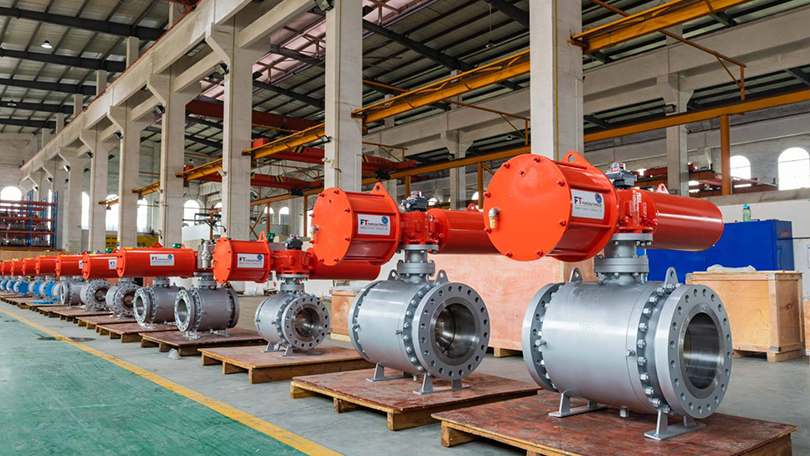
What Is a Gate Valve?
A gate valve works with a sliding wedge or parallel disc that moves up and down, perpendicular to the flow. Fully open? The gate disappears into the bonnet — zero obstruction in the bore. That’s its superpower: unobstructed straight-through flow. But here’s the catch — it’s designed for fully open or fully closed only. Never for throttling.
You’ll find gate valves wherever minimal pressure drop matters and the valve stays either open or closed. Oil and gas pipelines. Water treatment plants. Power generation. Chemical processing. Anywhere the valve isn’t cycled constantly.
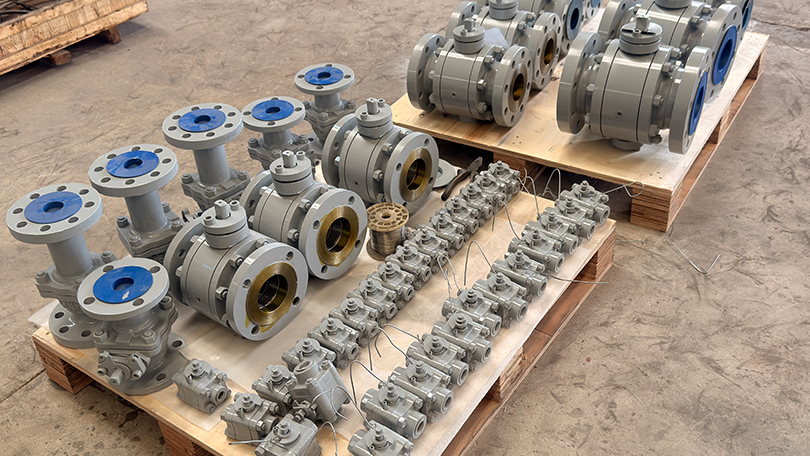
What Is a Ball Valve?
A ball valve has a ball with a hole drilled through the middle. Turn the handle 90 degrees — that’s it, full open to full close. No cranking. No multiple rotations. And here’s what really matters: a ball valve can sit untouched for years and still seal bubble-tight on the first close. Try that with a gate valve.
Ball valves are the go-to for emergency shutdown systems, high-pressure gas, hydrocarbon isolation — any application where a reliable seal at high temp and pressure is non-negotiable. Browse our full range of industrial valves for more options.
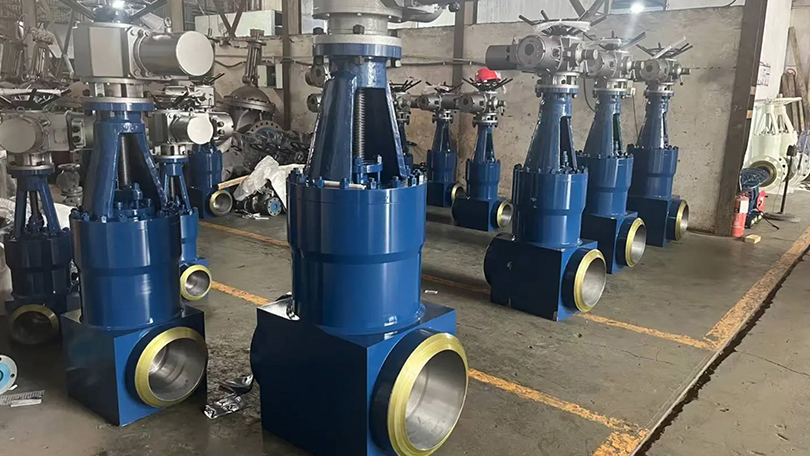
Key Differences: Gate Valve vs Ball Valve
| Feature | Gate Valve | Ball Valve |
|---|---|---|
| Operating Principle | Linear motion (multi-turn) | Rotary motion (quarter-turn) |
| Shut-Off Capability | Good (metal-to-metal seal) | Excellent (bubble-tight, soft or metal seats) |
| Throttling | Not recommended | Moderate (with V-port or trunnion designs) |
| Pressure Drop (Fully Open) | Very low (full bore) | Low to very low (full port) |
| Speed of Operation | Slow (many turns) | Fast (90° turn) |
| Size Range | 1/2″ to 72″+ | 1/4″ to 60″+ |
| Cost (Initial) | Lower for large sizes | Higher for larger sizes |
| Maintenance | Higher (packing, seat lapping) | Lower (self-lubricating seats common) |
| Bi-Directional | Yes | Yes (most designs) |
| Typical Service Life | Moderate | Long (especially with soft seats in clean service) |
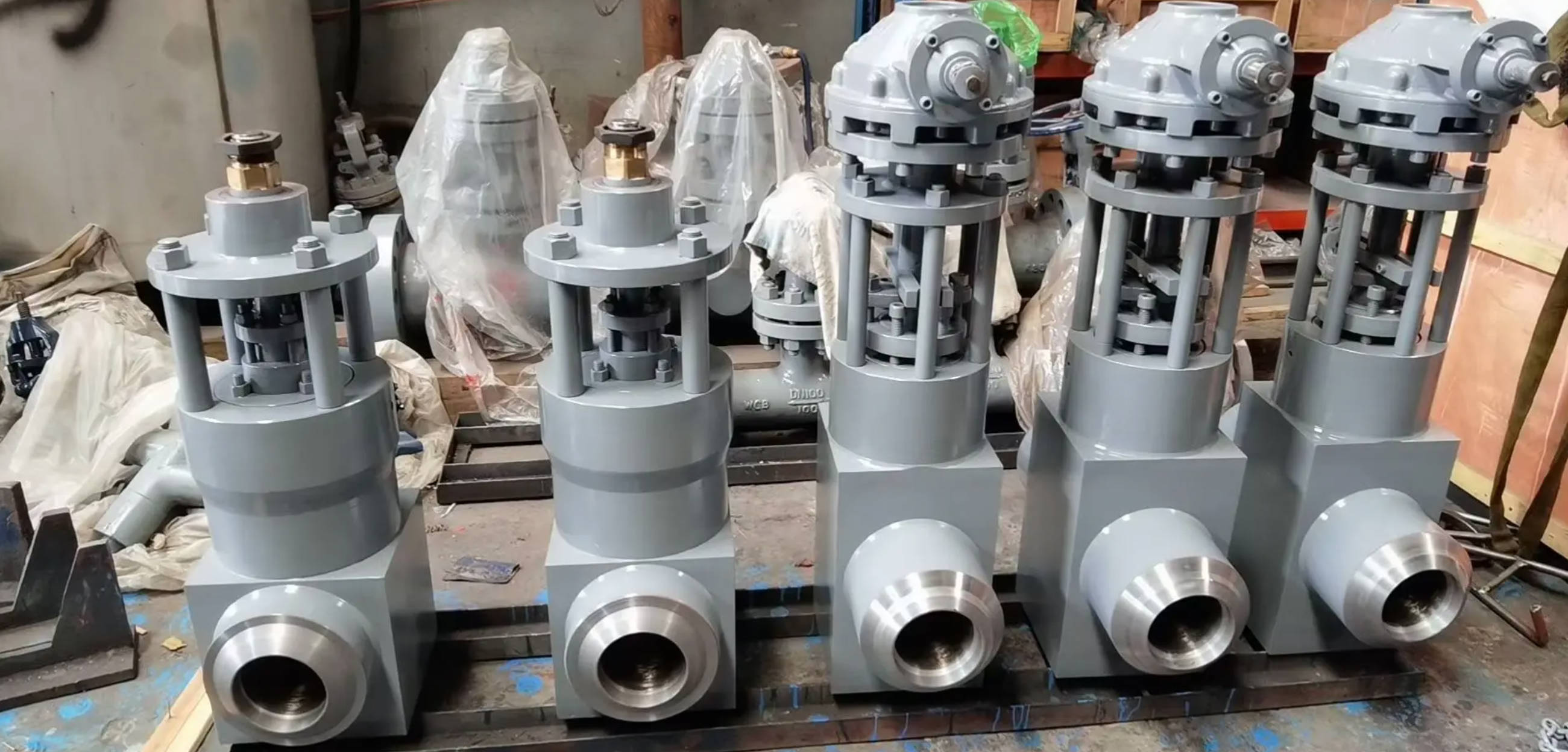
Operating Principle Comparison
The difference comes down to motion. Gate valve: you spin. And spin. And spin some more. Rising stem or non-rising stem, it’s still a multi-turn affair to get that gate from open to closed. Ball valve: one quarter-turn. Ninety degrees. Done.
Need fast shut-off — like an emergency shutdown valve? Ball valve, no question. Working on a 36-inch crude line where slamming a valve shut would send a pressure surge through the whole system? Gate valve. Slow and steady wins that race.
Flow Control and Throttling
Do not — repeat, do not — use a gate valve for throttling. Crack it open partway and that high-velocity flow chews up the seat and gate surfaces. Erosion, vibration, damage. Give it a few cycles and you’ll have a valve that won’t seal when fully closed. I’ve seen it happen. It’s expensive.
Ball valves can handle some throttling — in specific configurations. A V-port or segmented ball valve gives you controlled flow. But a standard floating ball valve used for throttling? You’re asking for seat damage. If you need precise flow control, get a control valve or needle valve. Don’t make this harder than it needs to be.
Pressure Drop and Flow Capacity
Full open, the gate valve’s gate is out of the way completely. Zero obstruction. The lowest pressure drop you’ll get from any valve type on the market. Period.
A full-port ball valve matches the pipe ID — nearly as good as a gate valve on pressure drop. A reduced-port (standard) ball valve? Smaller bore, higher pressure drop, around 5-10% more. If every PSI counts in your system, go full-port ball or gate valve.
Shut-Off Performance
On shut-off, ball valves run circles around gate valves. Soft-seated versions — PTFE, PEEK, Nylon — give you bubble-tight shut-off at rated pressure. Metal-seated designs handle fire-safe requirements for high-temp hydrocarbon service. No contest.
Gate valves seal metal-to-metal. They can hold tight when new, but over time? Seat wear, thermal cycling, debris in the line — leakage creeps in. If your application says “zero leakage, no exceptions,” spec a ball valve.
Cost Analysis
Here’s the cost reality: up to 4 inches, a ball valve is usually cheaper than a gate valve at the same pressure class. At 6 inches and above, gate valves flip the equation — they get cheaper, especially in high-pressure classes.
But don’t stop at the purchase price. Total cost of ownership is where ball valves shine — they just need less maintenance. Gate valves? Periodic packing adjustment, seat lapping, regrinding. Especially in high-temperature service, that adds up fast.
Applications: When to Choose Each
Choose a Gate Valve When:
- You need a valve for fully open or fully closed service only
- The pipeline is large diameter (12″ or larger)
- Minimal pressure drop is critical
- Fluid contains some solids or slurries
- Cost is a primary concern in large sizes
- Application involves high-temperature steam or thermal cycling
Choose a Ball Valve When:
- You need bubble-tight shut-off
- Quick quarter-turn operation is required
- The valve is automated with an actuator
- Service involves hydrocarbons, gases, or chemicals
- The valve operates infrequently and must seal reliably after long idle periods
- You need fire-safe or anti-static design features
Frequently Asked Questions
Q1: Can a gate valve be used for throttling?
No. Gate valves should only be used in fully open or fully closed positions. Partial opening causes high-velocity flow across the seat and gate surfaces, leading to erosion, vibration, and premature failure.
Q2: Which valve is better for high-pressure applications?
Both gate and ball valves are available in high-pressure classes (up to 2500LB and beyond). For critical isolation at high pressure, ball valves with trunnion-mounted design and fire-safe certification are often preferred due to their superior sealing performance.
Q3: Are ball valves bi-directional?
Yes. Most ball valve designs — both floating and trunnion-mounted — provide bi-directional shut-off capability. Some specialized designs may be uni-directional; always check the manufacturer’s specification.
Q4: What is the lifespan of a gate valve vs a ball valve?
A gate valve in clean, non-corrosive service can last 15-25 years with proper maintenance. Ball valves can exceed 20-30 years in similar conditions, especially with soft seats that self-compensate for minor wear. Service conditions, cycle frequency, and fluid characteristics significantly affect both.
Conclusion
Here’s the bottom line. Gate valves own the large-diameter, low-pressure-drop space — anywhere the valve sits fully open or closed and you need zero flow restriction. Ball valves win everywhere else: better shut-off, faster operation, less maintenance. For most process applications, the ball valve is the safer bet.
Want to go deeper on ball valve types, materials, and selection criteria? Check out our Ball Valve Complete Guide. Or browse our full product range.
Need a Gate Valve or Ball Valve for Your Project?
Vornet Valve supplies gate valves and ball valves in sizes NPS 1/2″ to 60″, Class 150 to 2500, in carbon steel, stainless steel, and alloy materials. API 600 and API 6D certified.
• API 600 Globe Valve vs Gate Valve Guide
• Ball Valve Complete Guide
• Gate Valve vs Ball Valve Comparison