
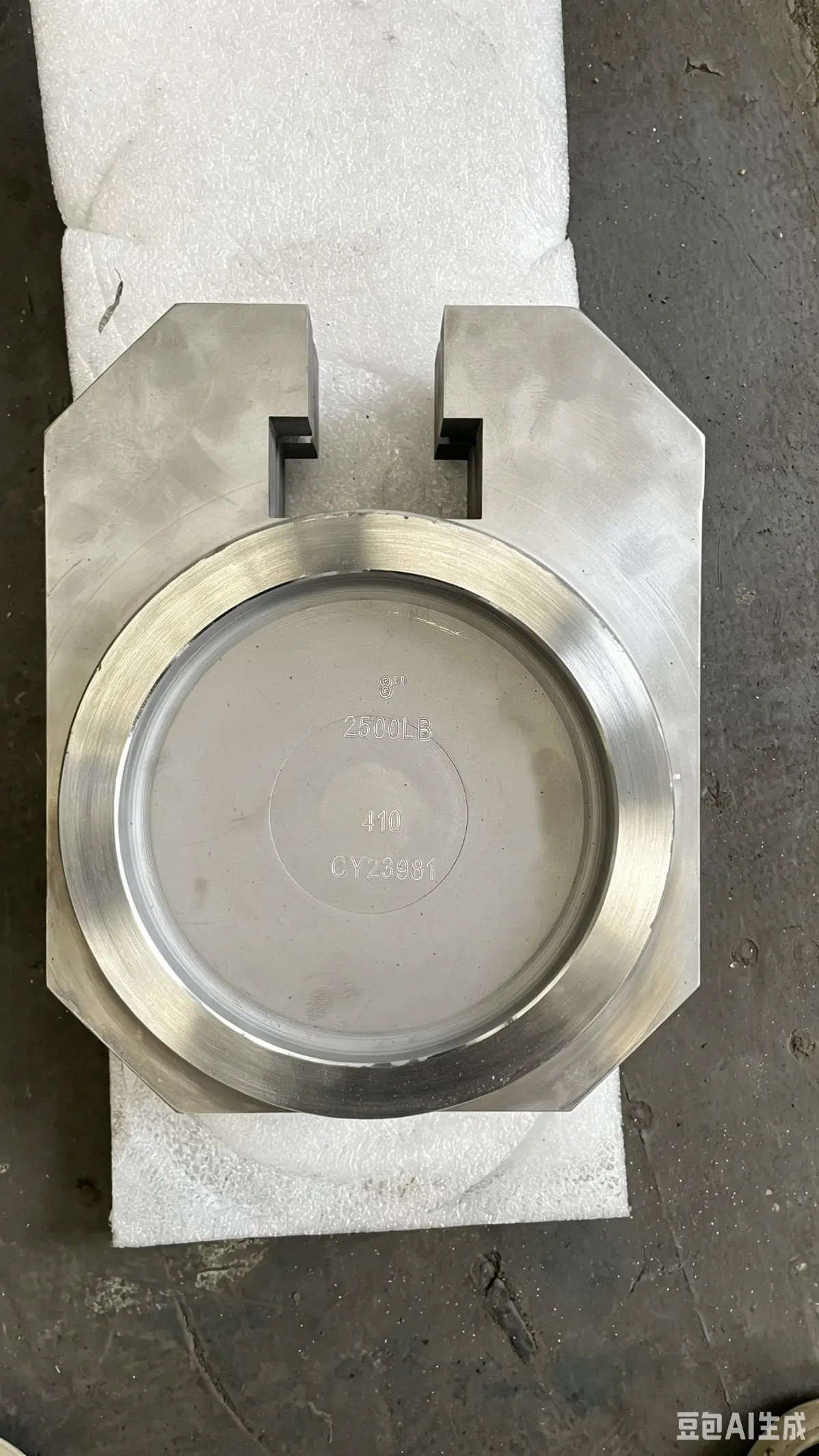
Why Stellite Matters in Valve Manufacturing
In demanding industrial environments — high-temperature refining, sour gas processing, slurry-laden pipelines — conventional valve materials fail through a combination of wear, erosion, and corrosion. Stellite cobalt-based alloys have become the go-to solution for valve seats, discs, and trim components that must withstand these extreme conditions simultaneously.
This article examines the two most widely used Stellite grades in the valve industry — Stellite 3/3PM and Stellite 6/6PM — with real-world performance data from refinery and offshore installations.
Stellite 3 / 3PM: Maximum Wear Resistance at High Temperature
Typical Composition (wt%)
- Cobalt (Co): 55–65%
- Chromium (Cr): 28–32%
- Tungsten (W): 8–10%
- Carbon (C): 1.0–1.5%
Mechanical & Thermal Properties
- As-cast hardness: HRC 40–45; up to HRC 50+ after heat treatment
- Hot hardness: HRC ≥ 42 at 800°C
- Tensile strength: ≥ 800 MPa at room temperature; ≥ 500 MPa at 600°C
Application Case: FCCU Control Valves
In fluid catalytic cracking units (FCCU) at refineries, Stellite 3PM is commonly used for hardfacing valve seats and plugs to resist continuous erosion from fine catalyst particles entrained in the crude oil stream. One refinery recorded only 0.03 mm of sealing surface wear after 2,000 hours of continuous operation — approximately 4× longer service life compared to conventional stainless steel or tungsten carbide alternatives.
Stellite 6 / 6PM: Balanced Performance for Multi-Phase Flow
Typical Composition (wt%)
- Cobalt (Co): 60–65%
- Chromium (Cr): 30–35%
- Tungsten (W): 5–7%
- Carbon (C): 1.5–2.0%
Mechanical & Corrosion Properties
- As-cast hardness: HRC 45–50
- Impact toughness: AKV ≥ 20 J at room temperature
- Corrosion resistance: In H₂S-containing acidic environments, pitting potential is approximately 0.3 V higher than 316L stainless steel, significantly improving localized corrosion resistance
Application Case: Offshore Gas Throttle Valves
On an offshore platform, Stellite 6PM hardfaced throttle valves operating in high-velocity gas streams with 5% sand content showed no visible wear after 1,500 hours. The pressure drop remained stable at 0.2 MPa throughout the test period, confirming the alloy’s reliability in severe multi-phase flow conditions.
The Science Behind Stellite Performance
Stellite’s exceptional properties arise from a precisely engineered multi-element synergy:
Cobalt Matrix — The Tough Foundation
55–65% cobalt provides high toughness and thermal stability. Its coefficient of thermal expansion (~12 × 10⁻⁶/°C) closely matches carbon and low-alloy steels, significantly reducing thermal stress cracking during weld overlay or hardfacing operations.
Chromium — The Oxidation Shield
27–35% chromium forms a dense, self-healing Cr₂O₃ oxide film at elevated temperatures, reducing the oxidation rate at 1,000°C by approximately 80% compared to conventional heat-resistant steels.
Tungsten-Carbon Hard Phases — The Reinforcement
5–12% tungsten combines with carbon to form MC and M₆C-type hard carbides, dispersed throughout the matrix. These act like reinforcing bars in concrete, dramatically improving resistance to abrasive and fretting wear.
Trace Elements — Fine-Tuning Performance
- Silicon (≤ 1%): Improves melt fluidity during casting
- Iron (3–5%): Reduces cobalt content without significant performance loss, optimizing cost
- Nickel (0.5–1.0%): Enhances low-temperature toughness, broadening the application temperature window
Conclusion
Through precise composition control, advanced powder metallurgy (PM) processing, and optimized hardfacing techniques, Stellite 3 and Stellite 6 alloys solve the multi-challenge problem of simultaneous high temperature, high pressure, severe corrosion, and heavy wear — conditions where conventional valve materials consistently fail.
The result is not just improved performance, but reduced total lifecycle costs and higher system reliability across refining, petrochemical, power generation, and offshore applications.
For valve specification support and Stellite-trimmed valve inquiries, contact Vornet Valve.