
VORNET Small-Bore Forged Steel Trunnion-Mounted Ball Valves for a Chemical Industry Project in Türkiye
Project Overview
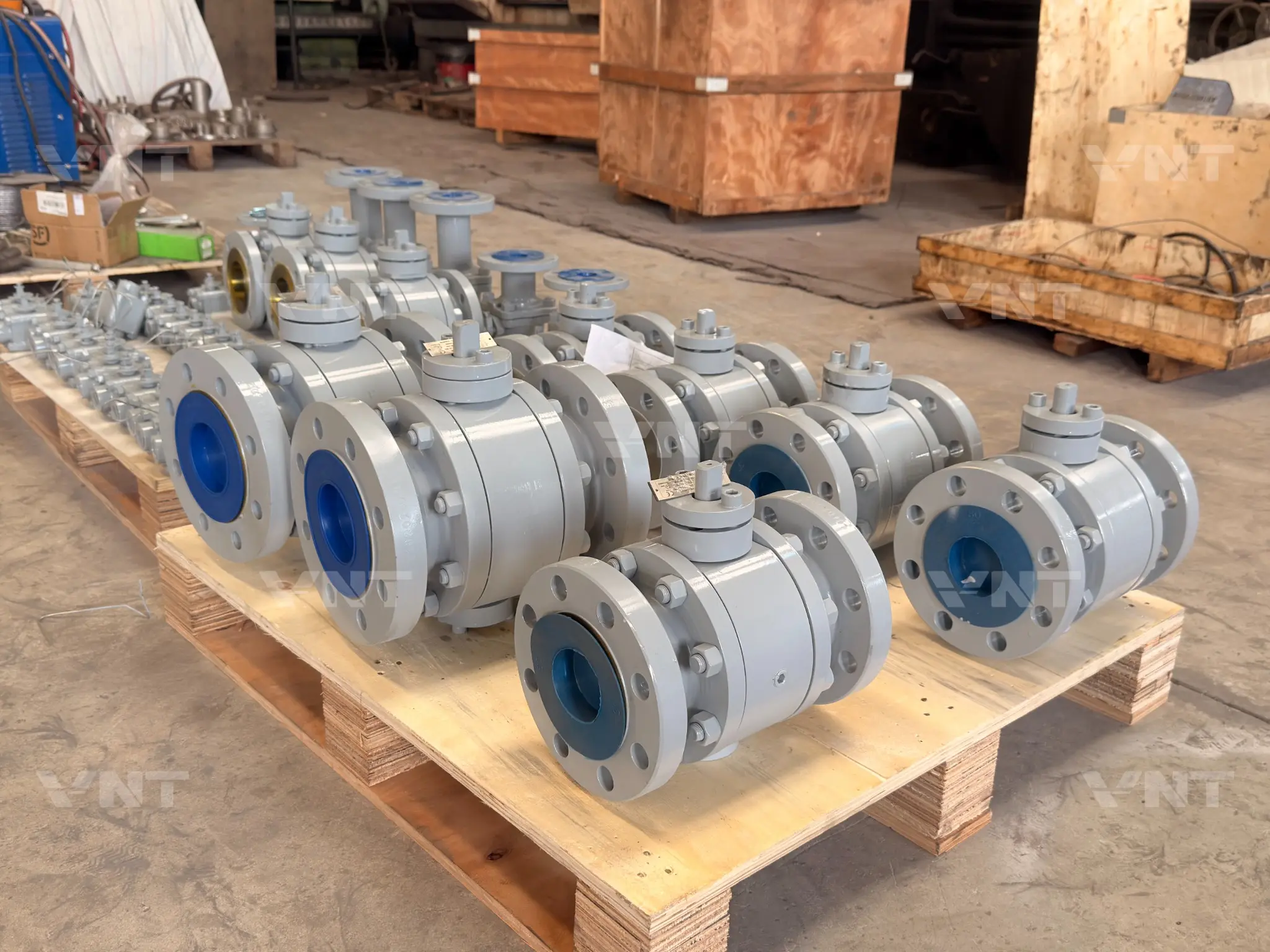
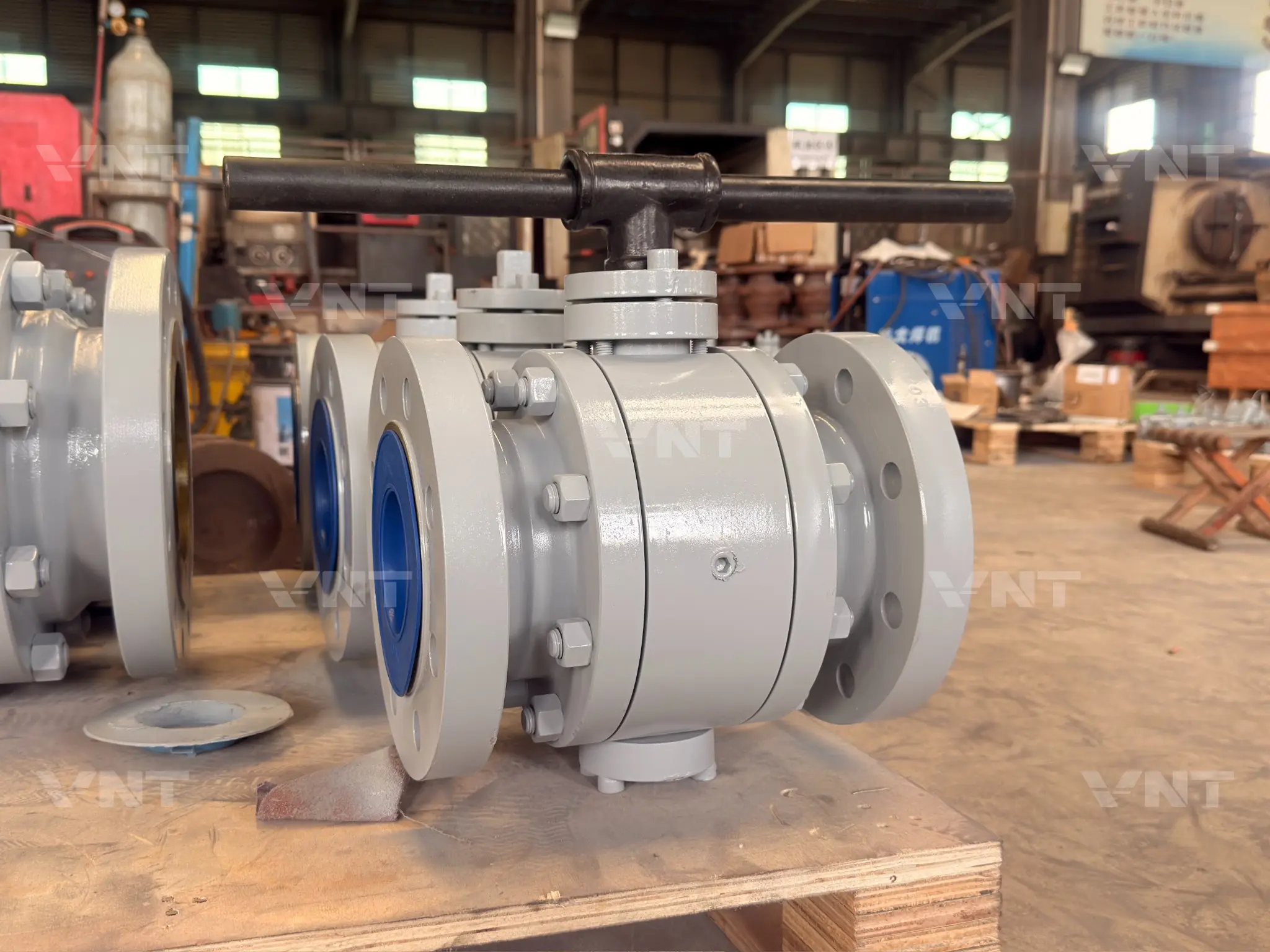
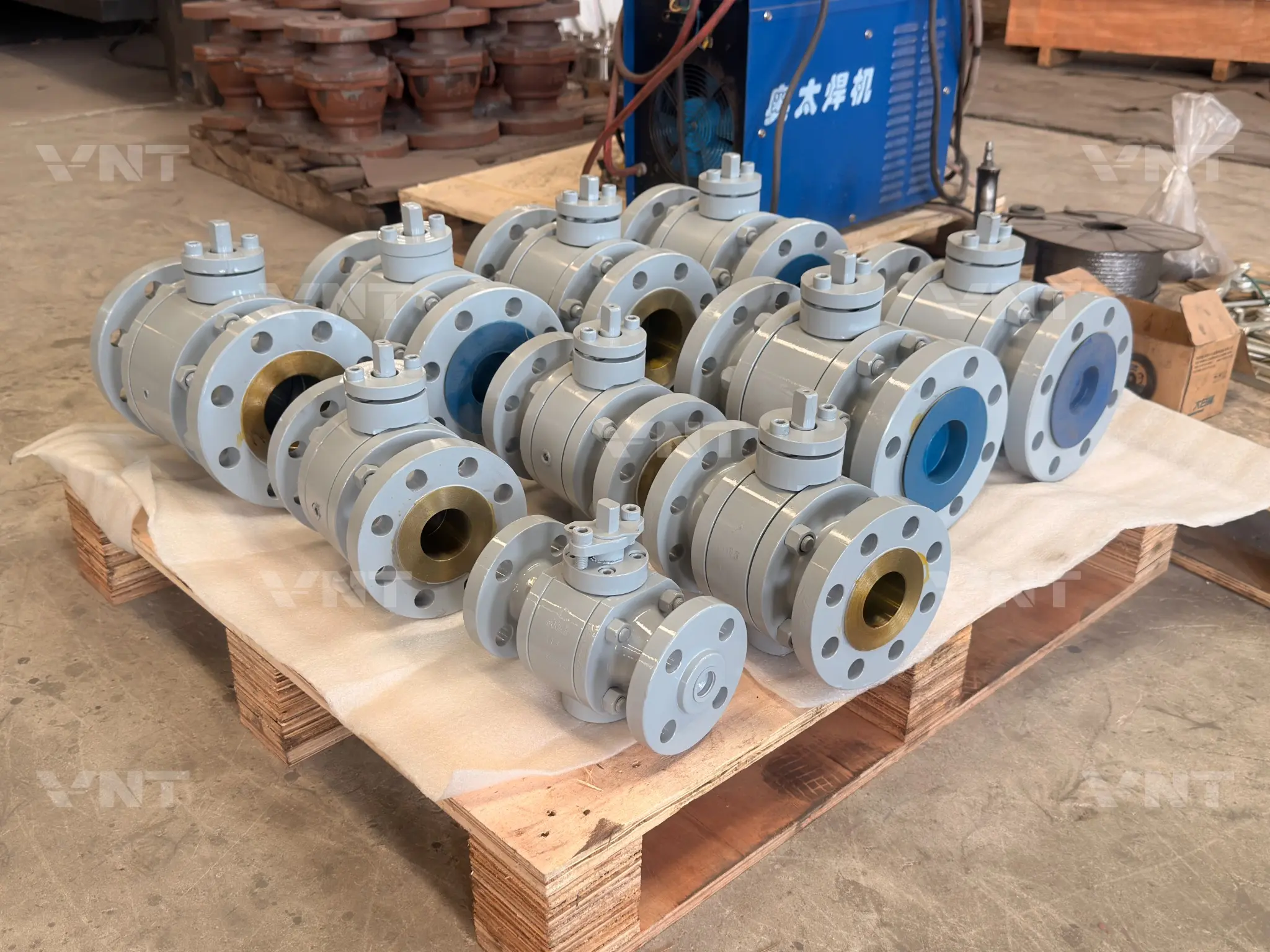
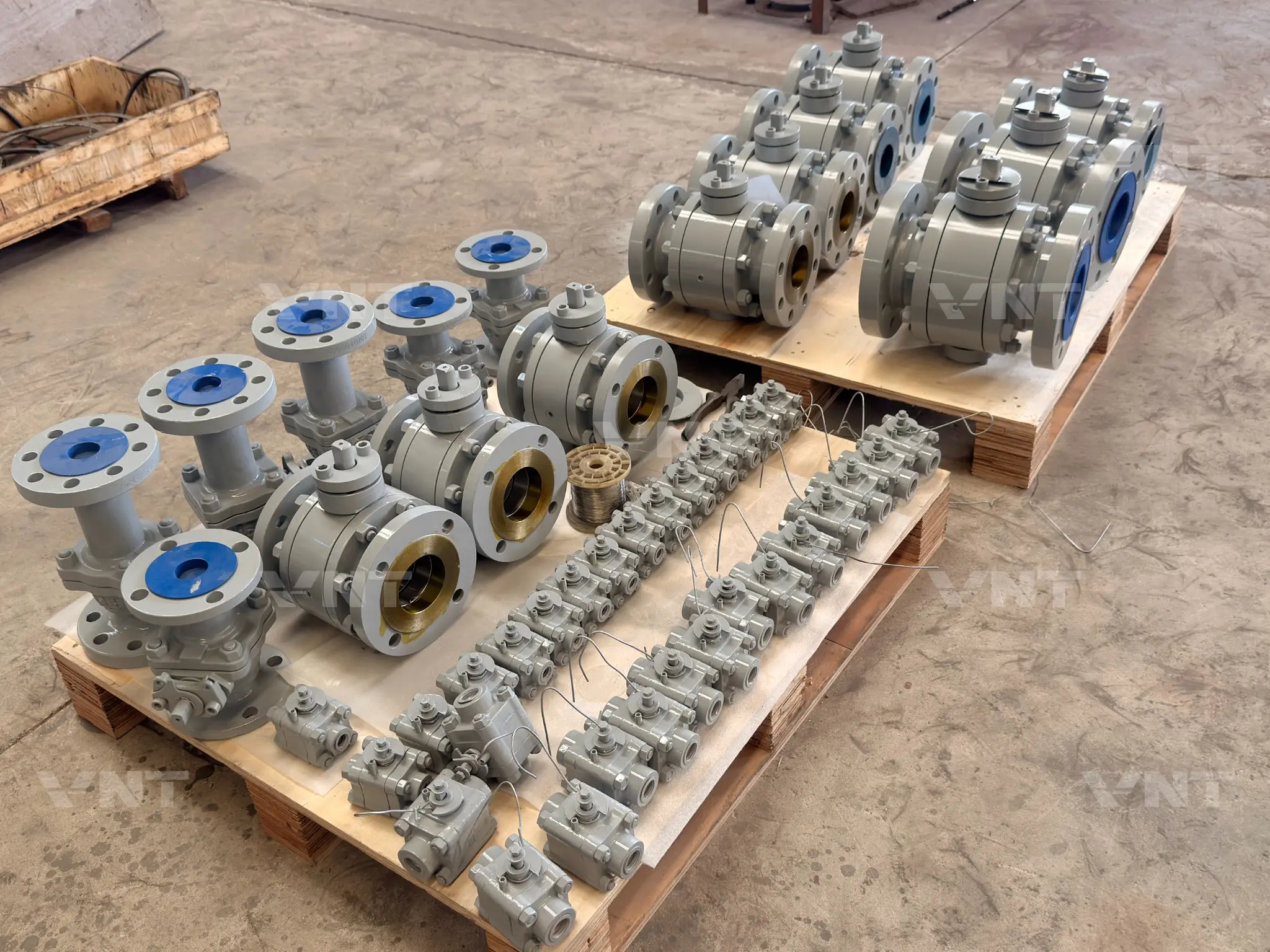
This batch covers 2-inch through 6-inch Class 300 trunnion-mounted ball valves with flanged end connections for a chemical industry project in Türkiye. The photographs record multiple valve sizes organized during production.
Each valve is manufactured according to the approved technical specification, valve data sheet and inspection plan to ensure that the body, trim, seats, end connections and operating arrangement meet the service requirements.
In a trunnion-mounted ball valve, the ball is supported at the top and bottom. Springs press the seats against the ball’s sealing surfaces to achieve tight shut-off. This design is widely used where reliable isolation, simple quarter-turn operation and efficient maintenance are required.
Send Your Valve Specifications| Valve Type | Trunnion-Mounted Ball Valve |
|---|---|
| Size Range | 2″–6″ (NPS 2–6) |
| Pressure Class | ASME Class 300 |
| End Connection | Flanged |
| Operation | Lever |
Quality Control & Surface Treatment
Each valve undergoes shell strength and seat sealing tests. Valve dimensions are inspected against the approved technical requirements, and finished surfaces are visually checked for smoothness and visible defects.
These checks help confirm dimensional accuracy, sealing performance and surface quality before delivery.
How does a trunnion-mounted ball valve seal?
The ball is supported at the top and bottom, while springs press the seats against the ball’s sealing surfaces to achieve tight shut-off.
What is the difference between a floating and trunnion ball valve?
A floating valve uses the seats and stem to support the ball, while a trunnion-mounted valve mechanically supports the ball at the top and bottom. Floating designs are generally compact for smaller sizes; trunnion designs are commonly considered for larger sizes, higher pressure or applications requiring lower operating torque.
What information is needed for a quotation?
Please provide nominal size, pressure class, flange standard and facing, body and trim materials, bore, seat material, operating temperature, process medium, operator type, testing standard and required documentation. Vornet can then review the configuration against the project conditions.
Can the operator and materials be customized?
Yes. Lever, gear or bare-stem arrangements and project-specific material combinations can be reviewed. Final selection depends on valve size, torque, medium, temperature, applicable standard and purchase specification.