
Need a Quote for This Valve?
Get pricing, lead time, and technical specifications within 24 hours.
We reply within 24 hours, usually same day.
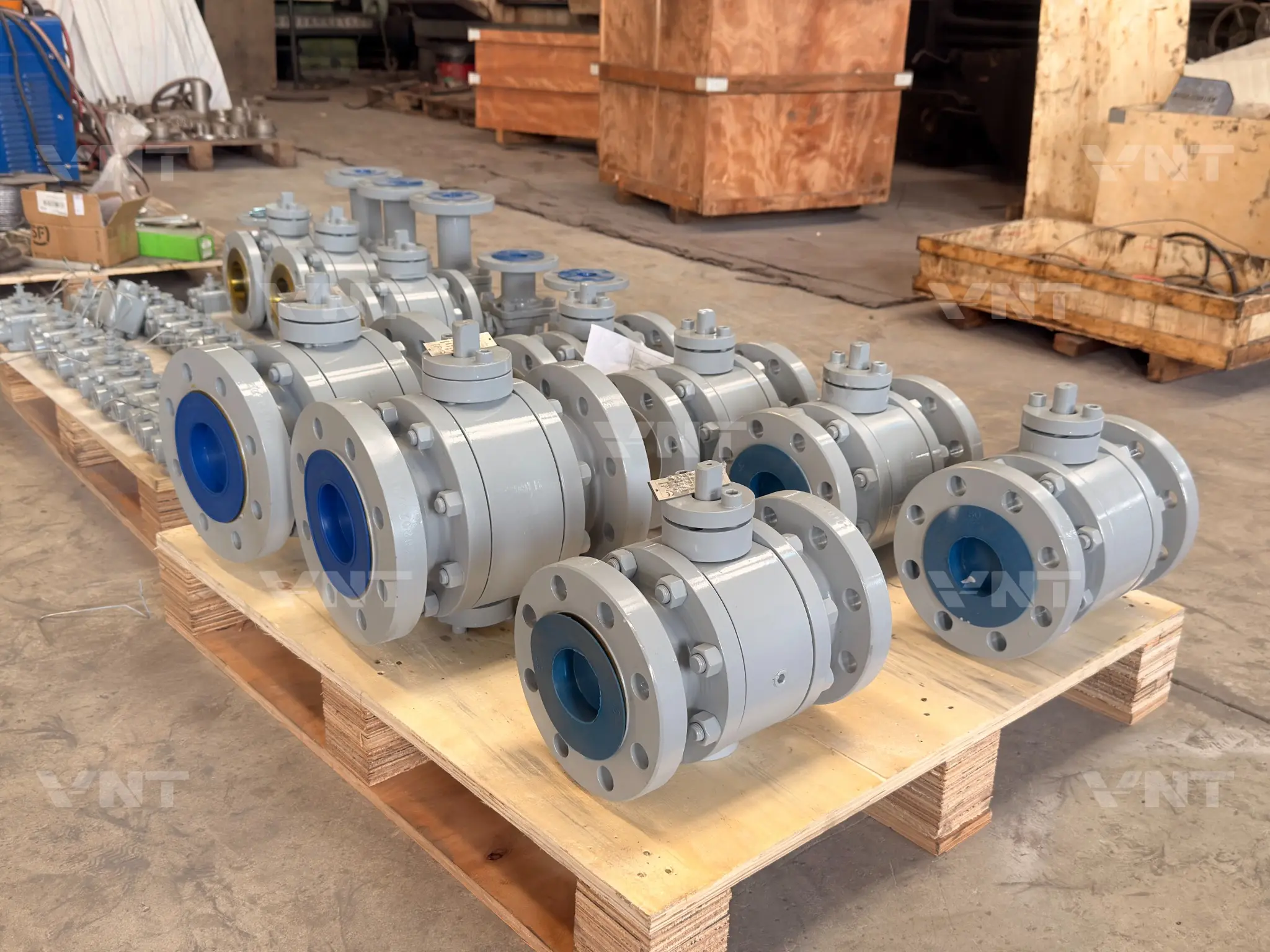
2″–6″ Class 300 Floating Flanged Ball Valves in Production
This workshop batch covers 2-inch through 6-inch Class 300 floating ball valves with flanged end connections. The photographs record multiple sizes organized during production and prepared for project-controlled inspection, testing and delivery.
Floating ball valves are a practical quarter-turn shut-off solution for small and medium nominal sizes. Each valve configuration is produced against the approved purchase specification, valve data sheet and inspection plan so the body, trim, seats, end connection and operator match the service requirements.
Technical Specifications
| Valve Type | Floating Ball Valve |
|---|---|
| Size Range | 2″–6″ (NPS 2–6) |
| Pressure Class | ASME Class 300 |
| End Connection | Flanged |
| Bore | According to approved project data sheet |
| Body & Trim | According to approved material specification |
| Seat Arrangement | Selected for the specified medium and operating conditions |
| Operation | Bare stem, lever or gear operator according to project requirements |
Floating Ball Valve Construction
In a floating ball valve, the ball is supported by the stem and seats rather than fixed by a lower trunnion. Under line pressure, the ball moves slightly toward the downstream seat to support tight shut-off. This compact construction is widely used where reliable isolation, simple quarter-turn operation and efficient maintenance are required.
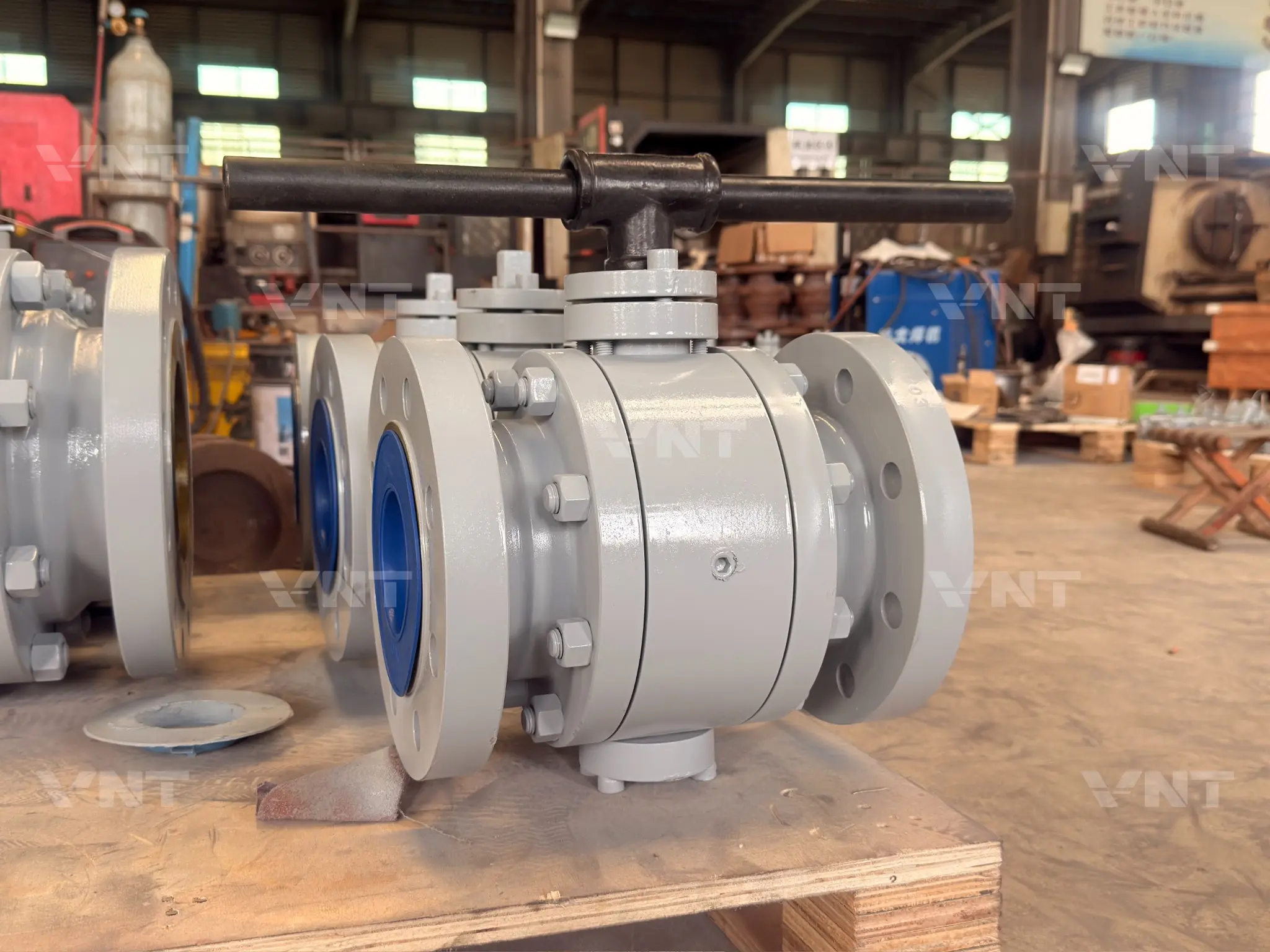
Production Identification
Different sizes in one order must remain clearly identifiable throughout production. Valve dimensions, pressure class, material records and operating arrangement are checked against the approved documents before the batch moves to the next production or inspection stage.
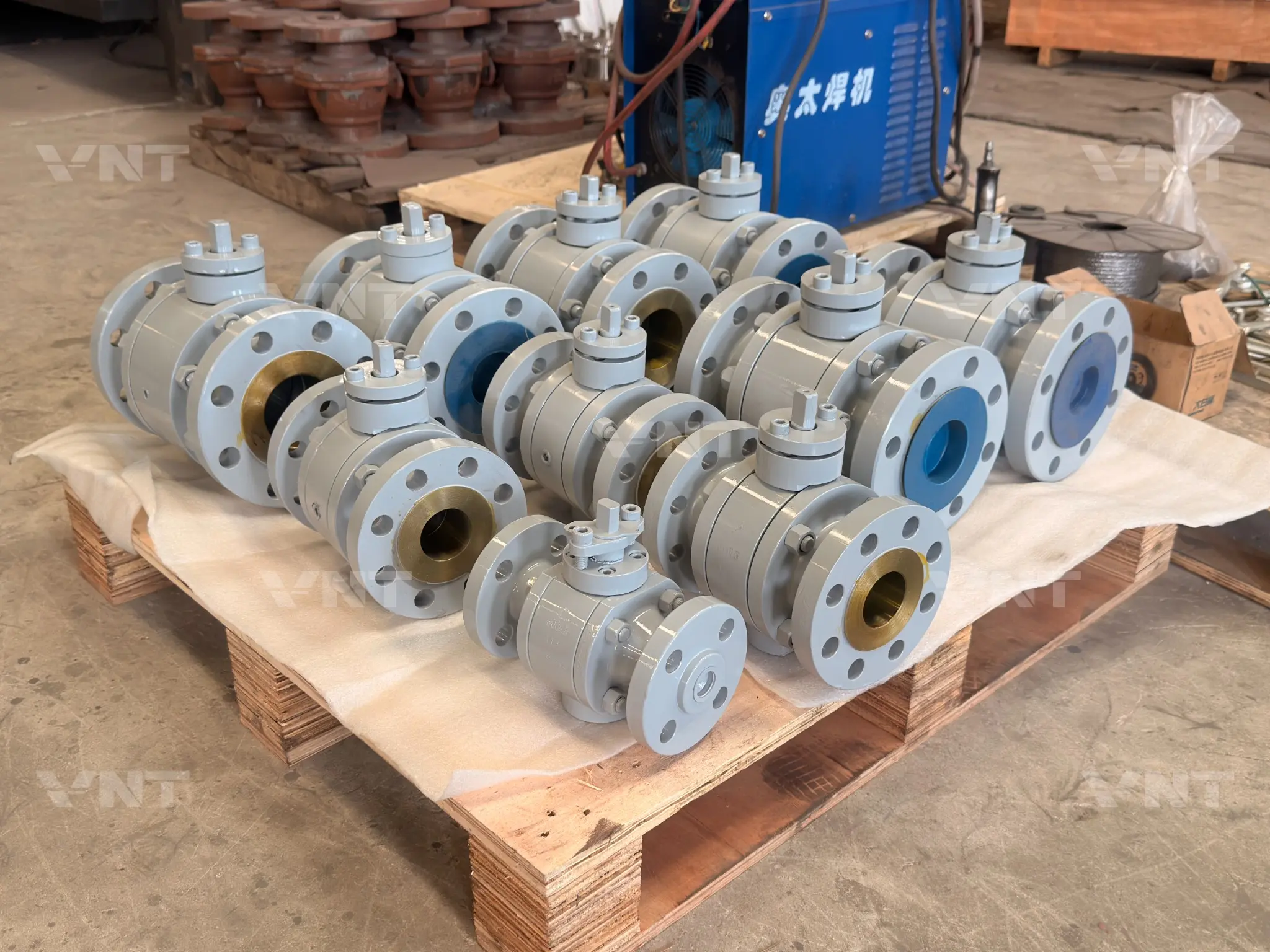
Quality & Testing
Inspection and testing are performed according to the agreed purchase specification and inspection and test plan. Depending on the order requirements, the control process can include material-document review, dimensional inspection, visual examination, operational checks, shell testing and seat leakage testing, followed by documentation review before release.
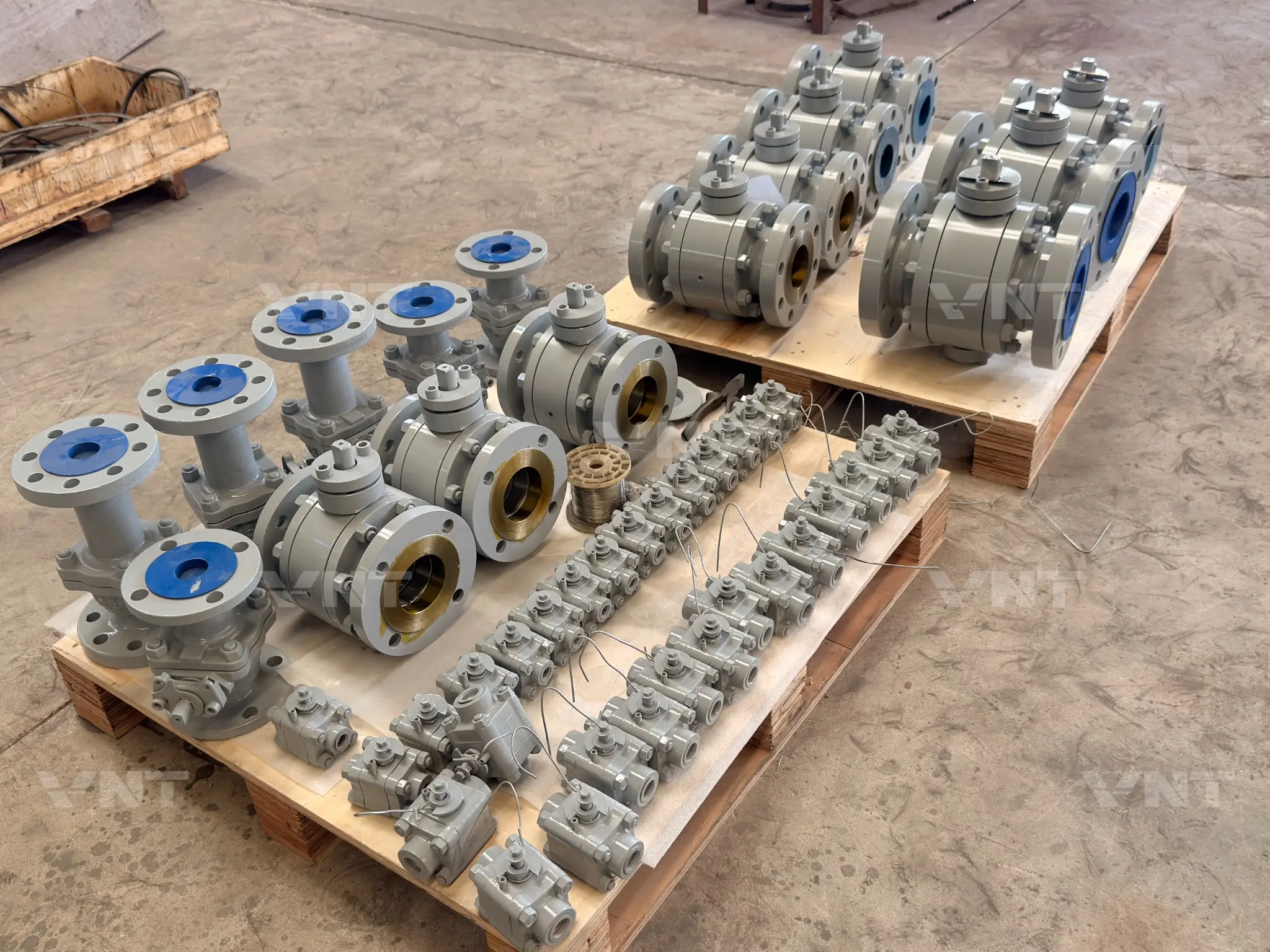
Project-specific details such as flange standard, bore, seat material, fire-safe or anti-static requirements, coating, marking and documentation should be stated at the inquiry stage. Confirming these items early helps keep technical review, manufacturing and final release aligned with the intended service.
Frequently Asked Questions About Floating Ball Valves
What is a floating ball valve?
A floating ball valve is a quarter-turn valve whose ball is not anchored by a lower trunnion. Line pressure moves the ball slightly against the downstream seat, helping create shut-off. The design is compact and commonly selected for small and medium sizes.
What is the difference between a floating and trunnion ball valve?
A floating valve uses the seats and stem to support the ball, while a trunnion-mounted valve mechanically supports the ball at the top and bottom. Floating designs are generally compact for smaller sizes; trunnion designs are commonly considered for larger sizes, higher pressure or applications requiring lower operating torque.
What information is needed for a quotation?
Please provide nominal size, pressure class, flange standard and facing, body and trim materials, bore, seat material, operating temperature, process medium, operator type, testing standard and required documentation. Vornet can then review the configuration against the project conditions.
Can the operator and materials be customized?
Yes. Lever, gear or bare-stem arrangements and project-specific material combinations can be reviewed. Final selection depends on valve size, torque, medium, temperature, applicable standard and purchase specification.
Need Class 300 Floating Flanged Ball Valves?
Send your size range, materials, flange standard, operating conditions and inspection requirements. Our team will review the specification and prepare a project-based quotation.
Click below to send us an inquiry. We typically respond within 24 hours.